
Loading SaaS profile...
Loading SaaS profile...
Audit, track, and optimize your digital presence across AI engines like ChatGPT, Perplexity, Claude, and Google AI Overviews.
Monitors brand citation frequency and placement across major conversational AI platforms in real time Calculates unified AI Visibility Scores to benchmark brand presence against industry competitors Identifies contextual content gaps where LLMs draw from rival platforms to answer high-intent queries Recommends structural, schema-level changes to increase probability of extraction by AI search crawlers Tracks the transformation of traffic signals from direct featured snippet wins to down-funnel pipeline revenue stages
Algorithmic Tracking: Measuring mentions directly inside generative answers targets the real areas where modern buyer discovery occurs. Actionable Gaps: Revealing exactly which source documents competitors use to secure citations maps out clear structural blueprints. Non-Commodity Validation: Steering content engines toward deep first-party data structures mirrors the precise quality standards models require. Pipeline Attribution: Connecting AI search engine citation wins to CRM stages eliminates reliance on misleading superficial visibility metrics.
Category: Marketing & Growth
Team Size: 2-10
Visit Website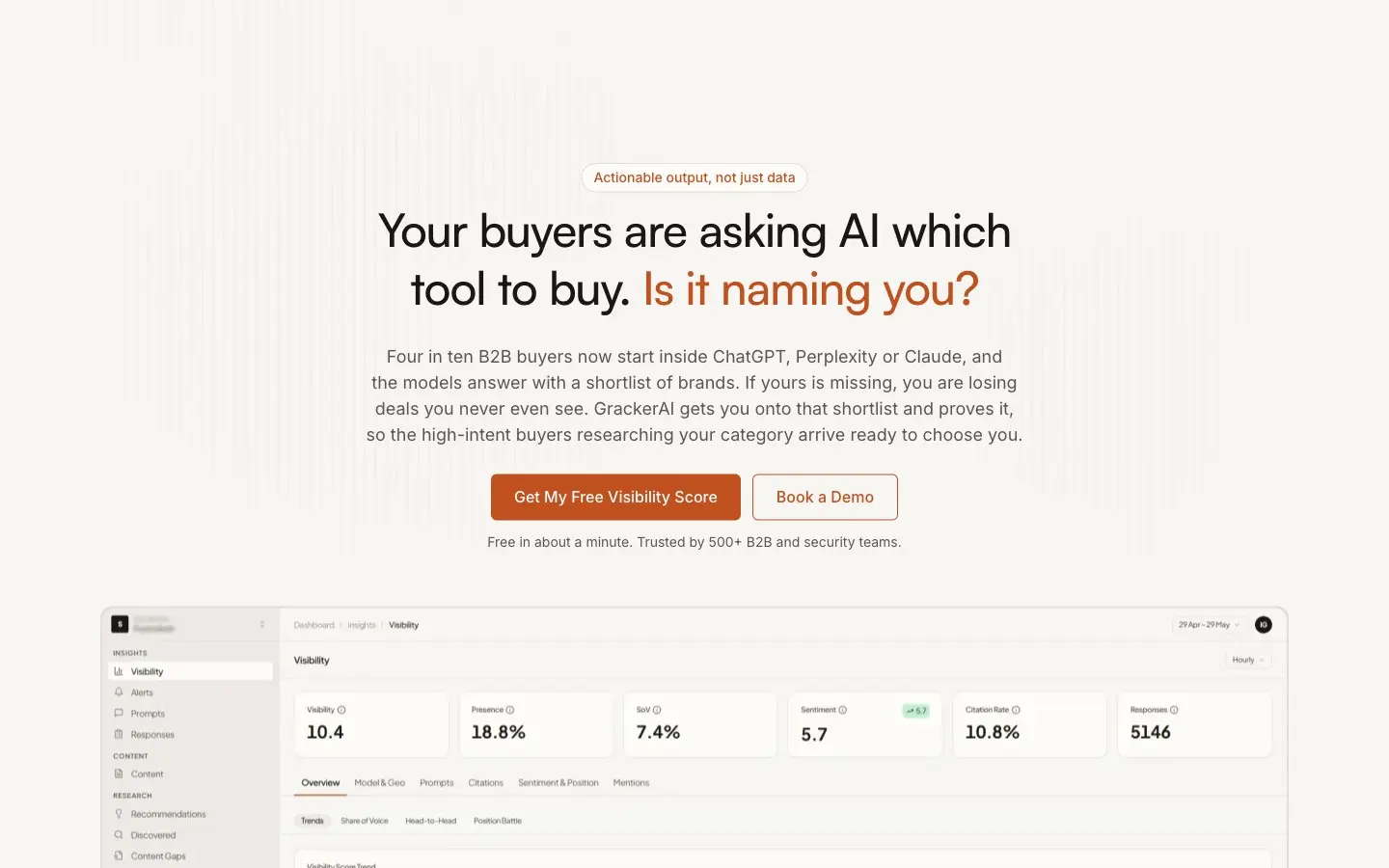
AEO GEO AI (also broadly leveraged through dedicated toolkits like GrackerAI and Arvow) is a next-generation generative search visibility platform designed for modern B2B SaaS, tech startups, and digital marketing agencies. The software systematically tracks whether your brand is being actively cited or omitted by frontier large language models, evaluates your algorithmic topical authority, and delivers structural recommendations to help content teams transform standard website real estate into highly extractable, non-commodity assets that AI systems trust and recommend.
Conceived during the massive shift from classic list-based search interfaces to direct answer-engine interfaces, AEO GEO AI was built by an agile team of search infrastructure engineers and growth marketers. They recognized that standard keyword-stuffing methodologies were failing as LLMs routinely prioritized clear, well-structured comparison charts and expert first-party perspectives over legacy high-backlink domain footprints.