
Loading SaaS profile...
Loading SaaS profile...
A no-code development platform that allows anyone to build mobile and web apps from existing data.
Automatically generates app UI from cloud-based spreadsheets and databases. Enables data capture through images, signatures, geolocation, barcodes, and NFC. Features automated workflow rules for notifications, assignments, and logic triggers. Provides offline access with automated data syncing upon internet reconnection. Includes AI-driven features like OCR (optical character recognition) and predictive modeling.
Accessibility: Removes the technical threshold of app development, turning 'spreadsheet people' into 'app builders'. Integration: Works natively with Google Workspace, requiring zero-configuration setup for Sheets users. Speed: Reduces development cycles from months to days for internal productivity tools. Offline Power: Specifically optimized for field workers who need robust apps in low-connectivity areas.
Category: AI & Automation
Team Size: 100-250
Visit Website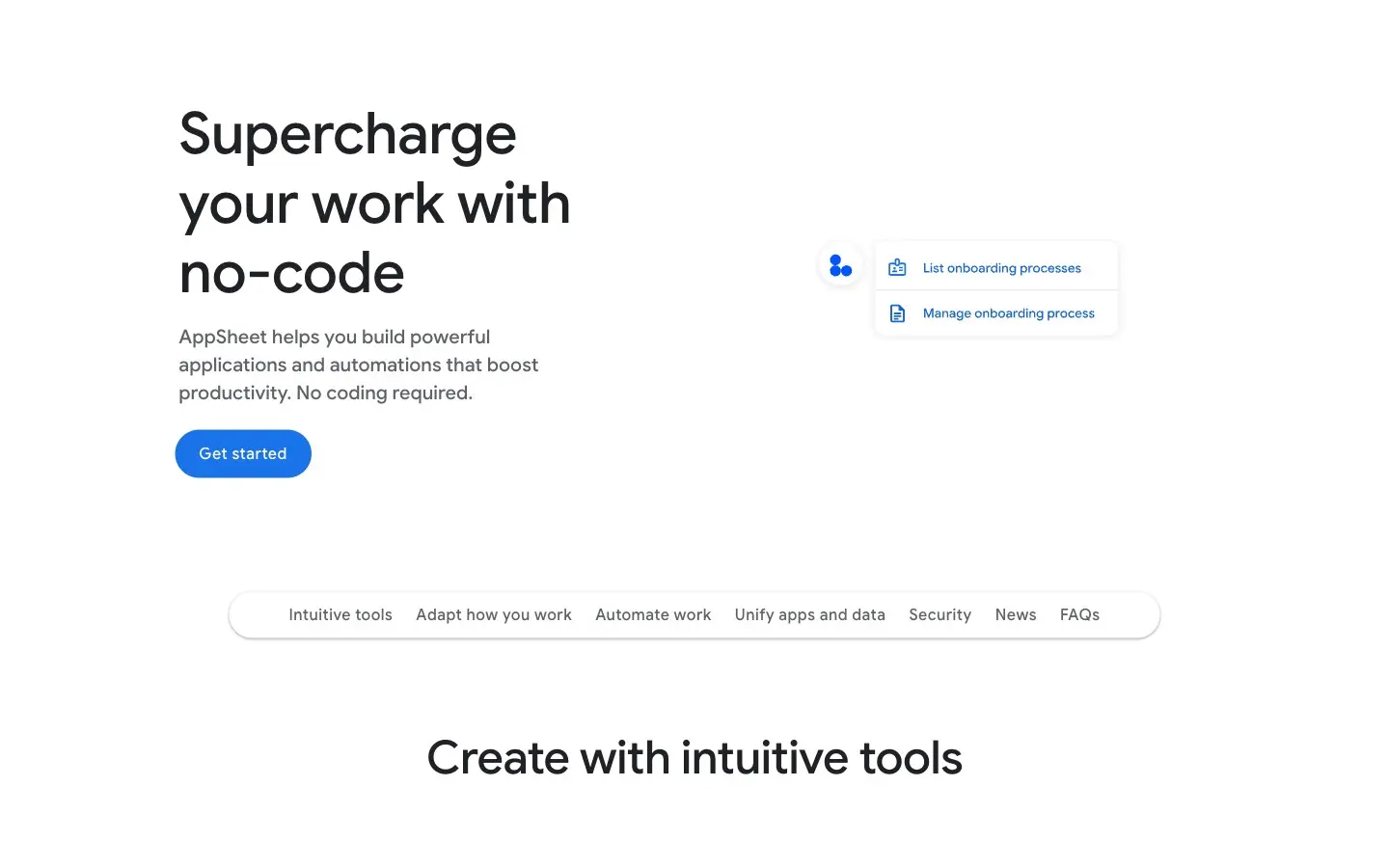
AppSheet is a leading no-code platform that enables business users to create functional, enterprise-grade applications without writing a single line of code. It unifies data from sources like Google Sheets, Excel, and SQL databases, automatically generating interactive app interfaces. Acquired by Google in 2020, AppSheet is now a core component of Google Workspace, focusing on automating workflows and digitizing field operations.
Founded in 2014 by Praveen Seshadri and Brian Sabino in Seattle. Praveen, a former Microsoft engineer and academic, realized that billions of people used spreadsheets to manage data but had no easy way to turn that data into mobile-first experiences. He built AppSheet to empower the 'non-technical masses'.