Loading SaaS profile...
Loading SaaS profile...
Capture, analyze, and prioritize customer feedback automatically to build data-driven product roadmaps.
Aggregates descriptive feature requests from customer success platforms, CRM tools, and internal channels Deploys public or private voting boards to collect and manage customer feedback easily Prioritizes product ideas dynamically by linking user inputs straight to account ARR and opportunity metrics Extracts and clusters conversational feedback themes using native AI processing layers Publishes automated, professional software changelogs and pushes update alerts directly to tracking threads
Unified Feedback Base: Merging scattered feedback text into a clean centralized database prevents customer feature requests from getting lost. Revenue Impact Filters: Grouping tracking indices by client contract values surfaces absolute pipeline impact metrics instantly. Automated Loops: Keeping target requestors automatically informed when features enter code production limits maximizes post-launch satisfaction. High-Velocity Roadmaps: Translating customer votes straight into visual timelines eliminates reliance on speculative product decisions.
Category: Productivity
Team Size: 11-25
Visit Website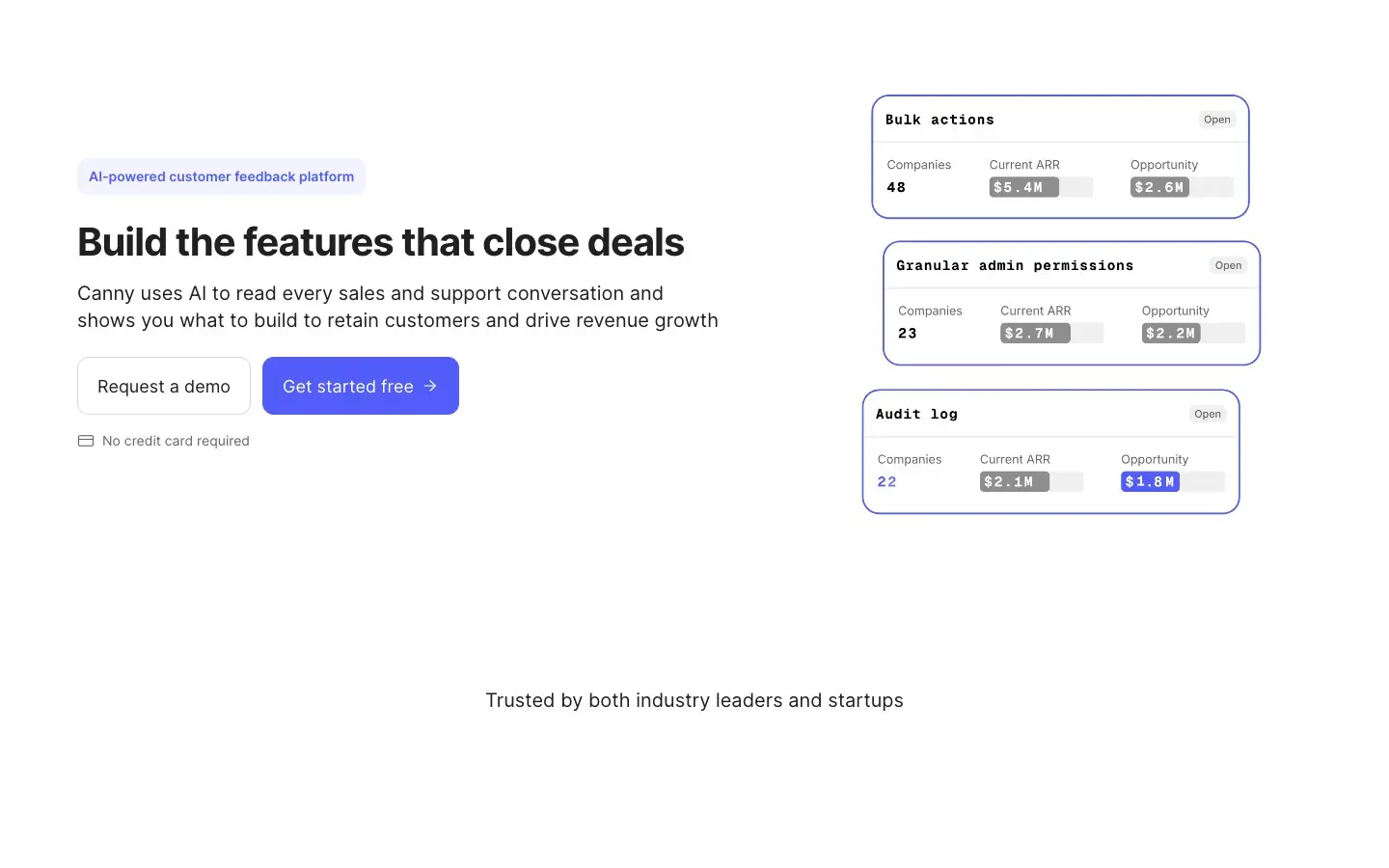
Canny is a foundational product management and customer feedback software platform built to help product, engineering, and customer success teams centralize inputs across multiple communication pipelines. The system automatically surfaces actionable feature requests, unifies public voting boards, calculates revenue-based priorities, and announces product updates via integrated changelogs—empowering businesses to close the communication loop with users efficiently while keeping product roadmaps aligned with business value.
Canny was founded in 2017 by tech duo Andrew Rasmussen and Sarah Hum. Driven by personal frustration with the chaotic process of sorting customer feedback across a mess of disconnected chat apps, spreadsheets, and support systems while working on previous projects in San Francisco, they bootstrapped a simple, unified tool. They spent years operating as digital nomads while scaling the product organically past significant recurring revenue milestones.