
Loading SaaS profile...
Loading SaaS profile...
Advanced AI conversational assistant for reasoning, coding, and analysis.
Provides advanced natural language processing for complex reasoning, brainstorming, and creative writing tasks. Enables production-level software development by generating, debugging, and optimizing multi-language code architecture. Facilitates visual and multimodal analysis by interpreting charts, documents, and technical diagrams with high precision. Offers agentic capabilities for automated project management, task tracking, and specialized data synthesis. Supports real-time web interaction and file processing for dynamic, context-heavy problem solving.
Frontier-level reasoning models provide industry-leading performance across varying task complexities and computational needs. Deep integration into major enterprise ecosystems like Microsoft Azure and workplace tools minimizes workflow friction. High-leverage agentic capabilities allow teams to achieve significant productivity gains by automating multi-step technical workflows. Robust safety protocols and Constitutional AI alignment ensure reliability for sensitive enterprise and regulatory environments. Massive scalability allows the system to process billions of daily prompts, establishing it as essential digital infrastructure.
Category: AI & Automation
Team Size: 100+
Visit Website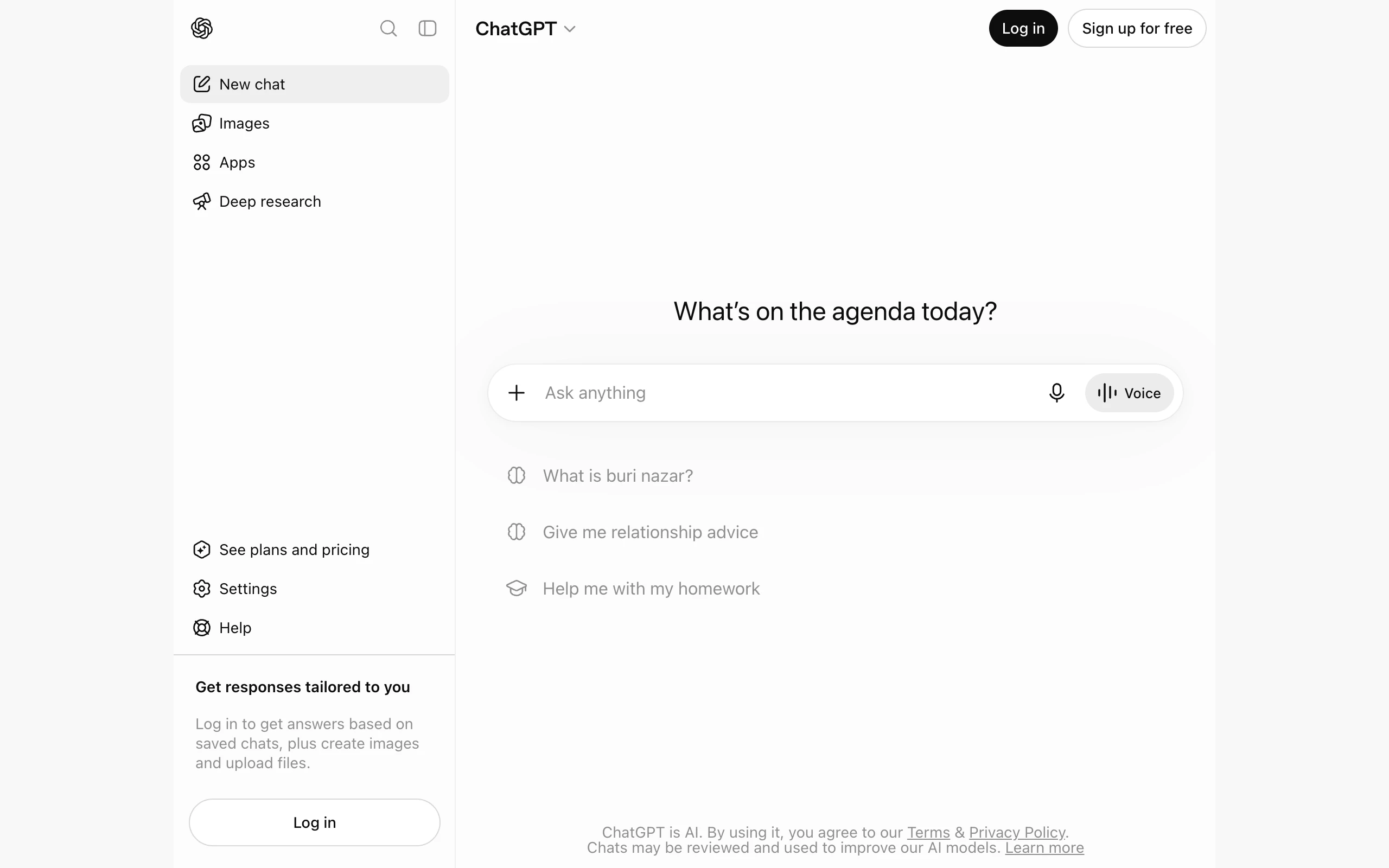
ChatGPT is the flagship AI conversational platform developed by OpenAI, designed to assist users with writing, research, complex reasoning, and coding tasks. It leverages powerful large language models to process natural language queries and provide context-aware, multimodal responses. Used globally by individuals and 92% of Fortune 500 companies, it serves as a critical infrastructure tool for modern professional and personal workflows.
OpenAI was founded in 2015 as a non-profit research organization by Sam Altman, Ilya Sutskever, Greg Brockman, and others, with a mission to develop safe artificial general intelligence. It has since transitioned into a public benefit corporation, launching ChatGPT in late 2022 to bring advanced AI capabilities to the general public.