Loading SaaS profile...
Loading SaaS profile...
Hybrid AI search engine for academic research.
Provides semantic search over 236 million papers using SPECTER2 dense vectors and cross-encoder reranking. Offers a native MCP endpoint enabling AI coding agents to execute deep literature reviews autonomously. Features a plain JSON API for programmatic access to academic data without complex authentication overhead. Allows free web-based literature exploration with no sign-up requirements for individual researchers. Delivers high-precision research results by combining traditional keyword indexing with modern neural search techniques.
Native MCP support allows AI agents to bypass traditional API rate limits for deep literature research. Hybrid search architecture ensures both high recall and relevance by fusing keyword and dense vector indices. JSON-first API design simplifies the integration process for developers building agentic research workflows. Unrestricted access model for the web interface promotes rapid adoption and ease of use for students and academics. Vector search optimization enables the entire corpus of 236 million papers to be served efficiently on a single infrastructure box.
Category: AI & Automation
Team Size: 1
Visit Website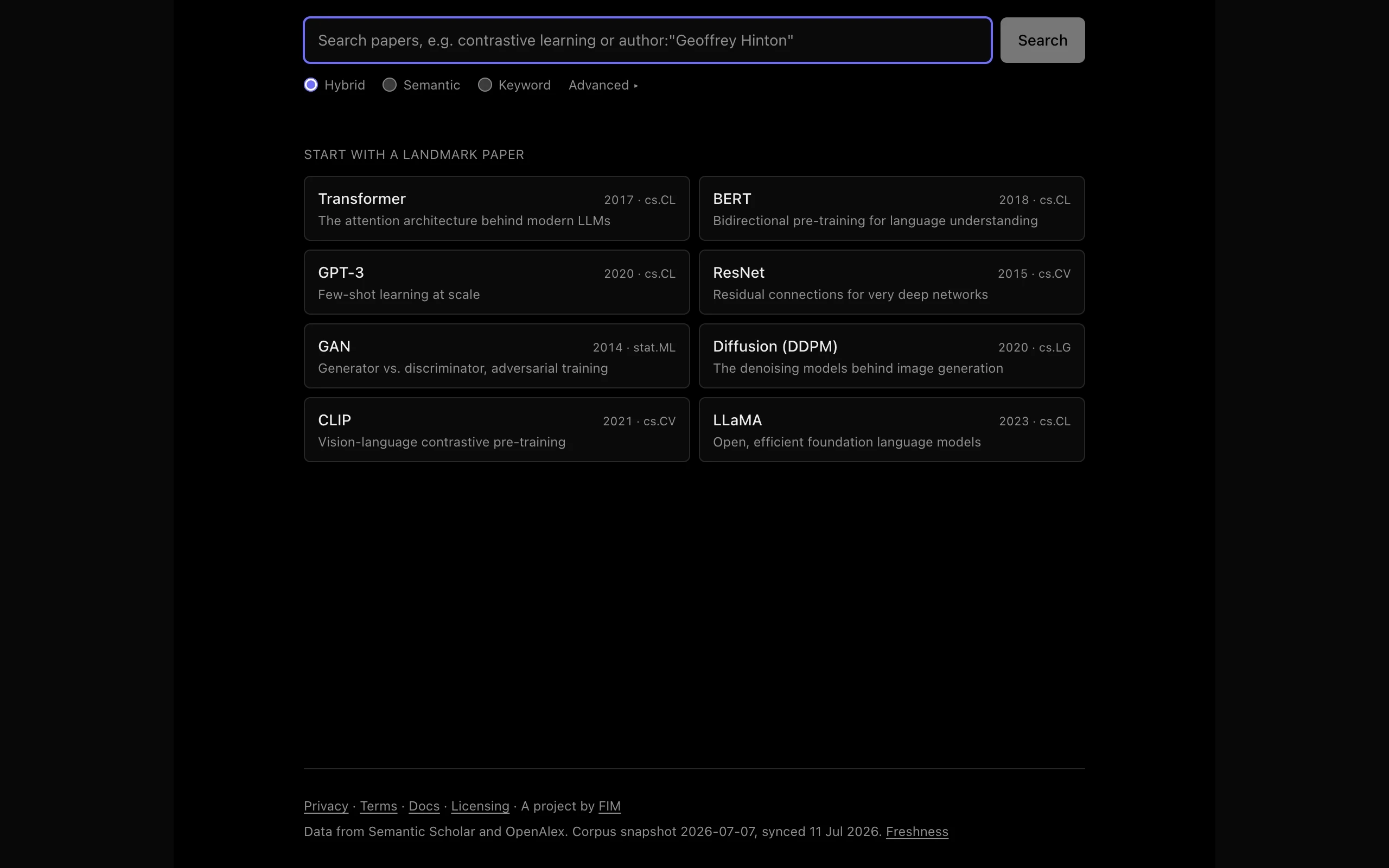
Cito is a hybrid search engine built over the Semantic Scholar corpus, containing over 236 million academic papers. It fuses keyword indexing with dense vector search and cross-encoder reranking to provide precise literature discovery. Designed for AI agents, it features a plain JSON API and a native MCP endpoint that allows tools like Claude Code to perform deep research without facing restrictive upstream rate limits.
Cito was launched in 2026 as a solution to the frustration of existing academic APIs throttling AI agents during deep research tasks. Built by researchers for researchers, it provides a performant, agent-friendly alternative that keeps the Semantic Scholar corpus accessible and searchable for automated workflows.