
Loading SaaS profile...
Loading SaaS profile...
The persistent open-source environment layer for all your AI agents.
Deploys AI automation agents to handle routine business tasks. Extracts and processes unstructured data from various sources. Connects multiple software tools to create seamless workflows. Reduces manual data entry and human error in operations.
Decouples key skills and memory layers securely from specific AI models Runs workspaces inside Intel TDX hardware-encrypted isolated environments Supports 500 plus software app integrations natively via Composio connectors Unified open-source CLI that simplifies multi-agent local state synchronization Maintains cross-framework persistent context across model version upgrades
Category: AI & Automation
Team Size: 2-10
Visit Website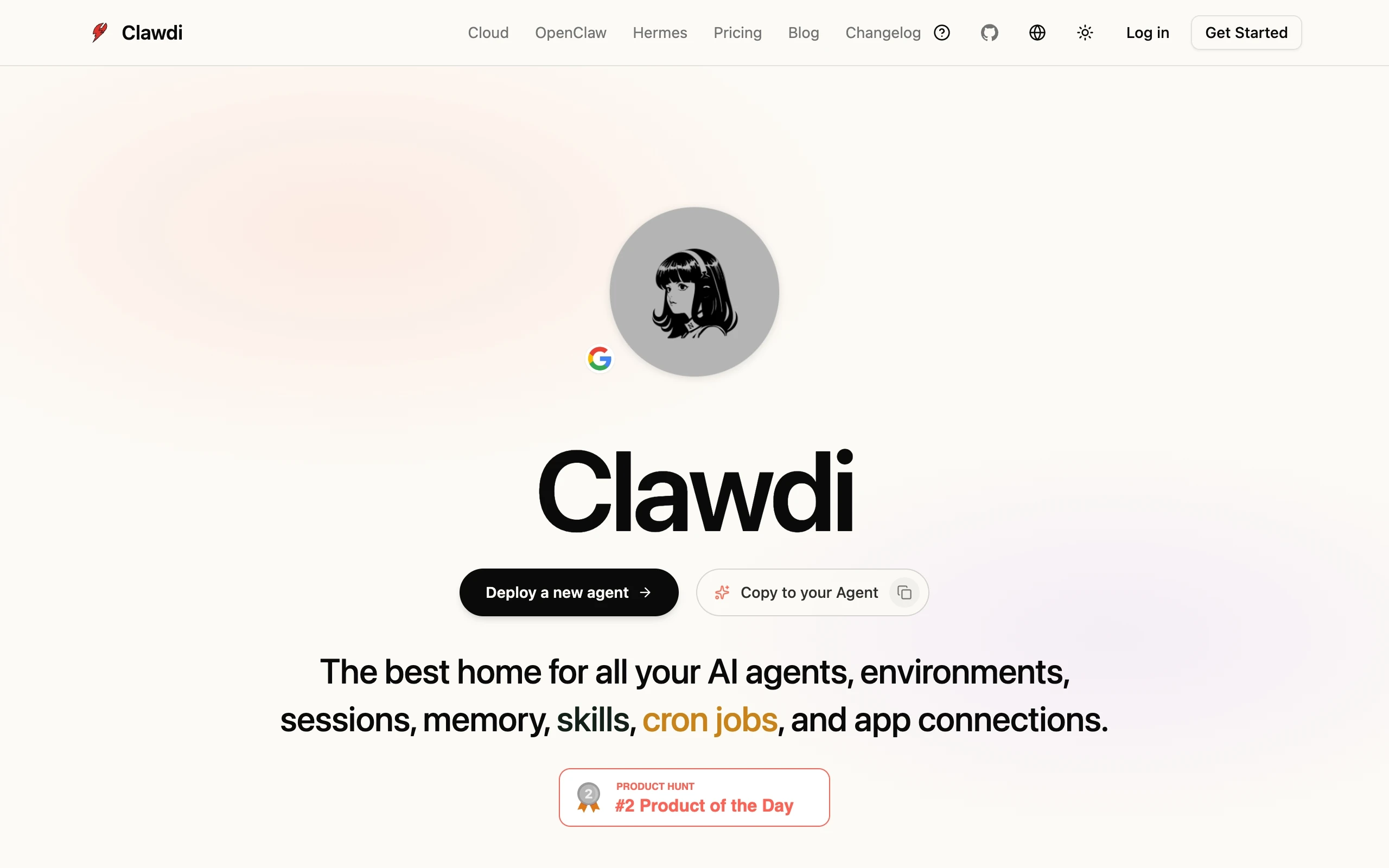
Clawdi is an open-source agent environment layer and hosting platform designed to decouple an AI agent's memory, skills, API secrets, and application integrations from its underlying execution model engine. It provides cross-framework stability by serving as a unified backend infrastructure for frameworks like Claude Code, OpenClaw, Codex, and Hermes. By allowing users to freely switch engines without rebuilding context, it functions as a highly secure, hardware-encrypted cloud control center. Clawdi optimizes agent execution via its pluggable runtime, native desktop CLI tool, and multi-channel messaging endpoints.
Clawdi was developed in early 2026 by an independent open-source team seeking to eliminate the frustrating infrastructure rebuilding process when switching between emerging AI agent architectures. Recognizing that developers lost multi-week engineering efforts replicating cron tasks, API keys, and memory states upon shifting engines, they built an abstraction layer to isolate the developer's operational space from rapid model evolution.