
Loading SaaS profile...
Loading SaaS profile...
A comprehensive digital asset platform providing cryptocurrency exchange, brokerage, institutional custody, and payment solutions globally.
Digital Asset Brokerage Institutional Crypto Custody Staking and Yield Generation Merchant Payment Gateway Developer Blockchain Infrastructure
Houses secure custody solutions protecting billions in digital currency assets under audited regulatory supervision Supports seamless direct bank transfer and local fiat on-ramps to optimize onboarding speed Delivers a unified product suite spanning basic consumer accounts up to high-volume algorithmic trading desks Integrates deep institutional liquidity buffers to handle large block transaction fills with minimal price slippage Operates the Layer-2 Base blockchain network to enable low-fee, high-throughput decentralized processing apps
Category: Business & Operations
Team Size: 100+
Visit Website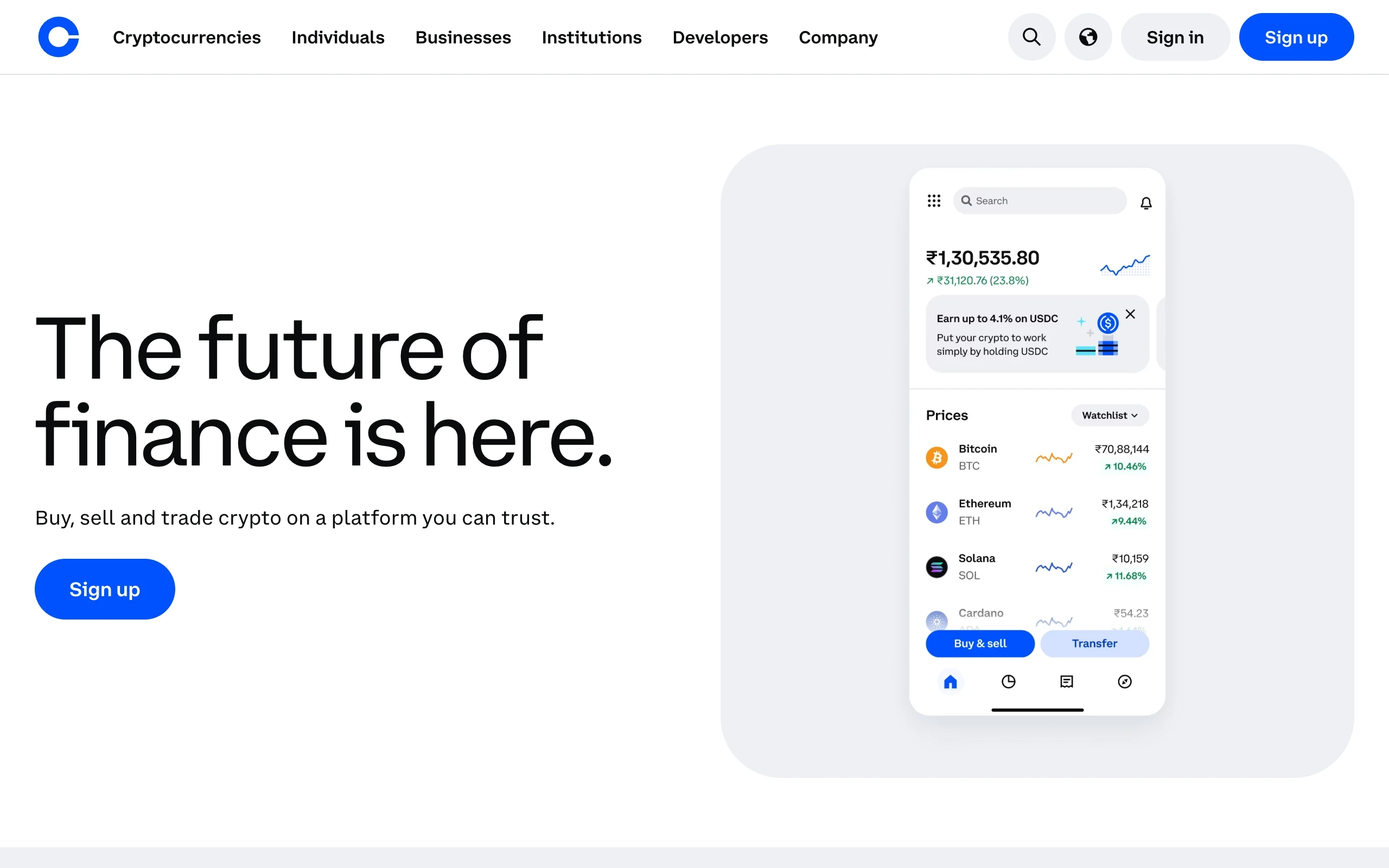
Coinbase is an integrated digital financial architecture and exchange engineered to facilitate secure cryptocurrency trading, institutional custody, and Web3 ecosystem development. The platform provides a multi-tier product stack containing consumer retail accounts, high-volume advanced trading interfaces, enterprise staking frameworks, and automated commerce checkouts. By operating fully regulated pathways across more than 100 countries, it bridges traditional fiat banking operations directly with decentralized public ledgers. Coinbase serves millions of everyday retail investors, multi-asset hedge funds, corporate treasuries, and decentralized autonomous application developers to confidently manage their digital financial exposure.
Coinbase was founded in June 2012 by former Airbnb software engineer Brian Armstrong and former Goldman Sachs trader Fred Ehrsam in San Francisco, California. Recognizing that interacting with the early Bitcoin network required deep cryptography expertise and manually managing raw command-line tools, the founders built an accessible web portal to simplify digital coin acquisition. By combining secure institutional storage security with intuitive bank transfer automation, they structured a compliant framework that transformed digital currency from an underground tech niche into a mainstream financial asset class.