Loading SaaS profile...
Loading SaaS profile...
Docker logs and container management without heavy logging stacks.
Streams container stdout and stderr logs in real time over WebSockets with autoscroll, search, and highlighting features. Provides container lifecycle management capabilities allowing users to start, stop, restart, or delete workloads. Monitors real-time CPU and memory metrics side-by-side with container log output. Enforces team security with JWT sessions, SQLite audit records, and container-level role-based access control.
Single-container deployment mounts the Docker socket directly for rapid setup under a minute. Extremely lightweight resource consumption runs comfortably on low-capacity virtual private servers. Built-in RBAC and security audit logs provide enterprise-grade access control out-of-the-box. Companion mobile and desktop applications enable remote monitoring without web browser dependency.
Category: Utilities & System Tools
Team Size: 1
Visit Website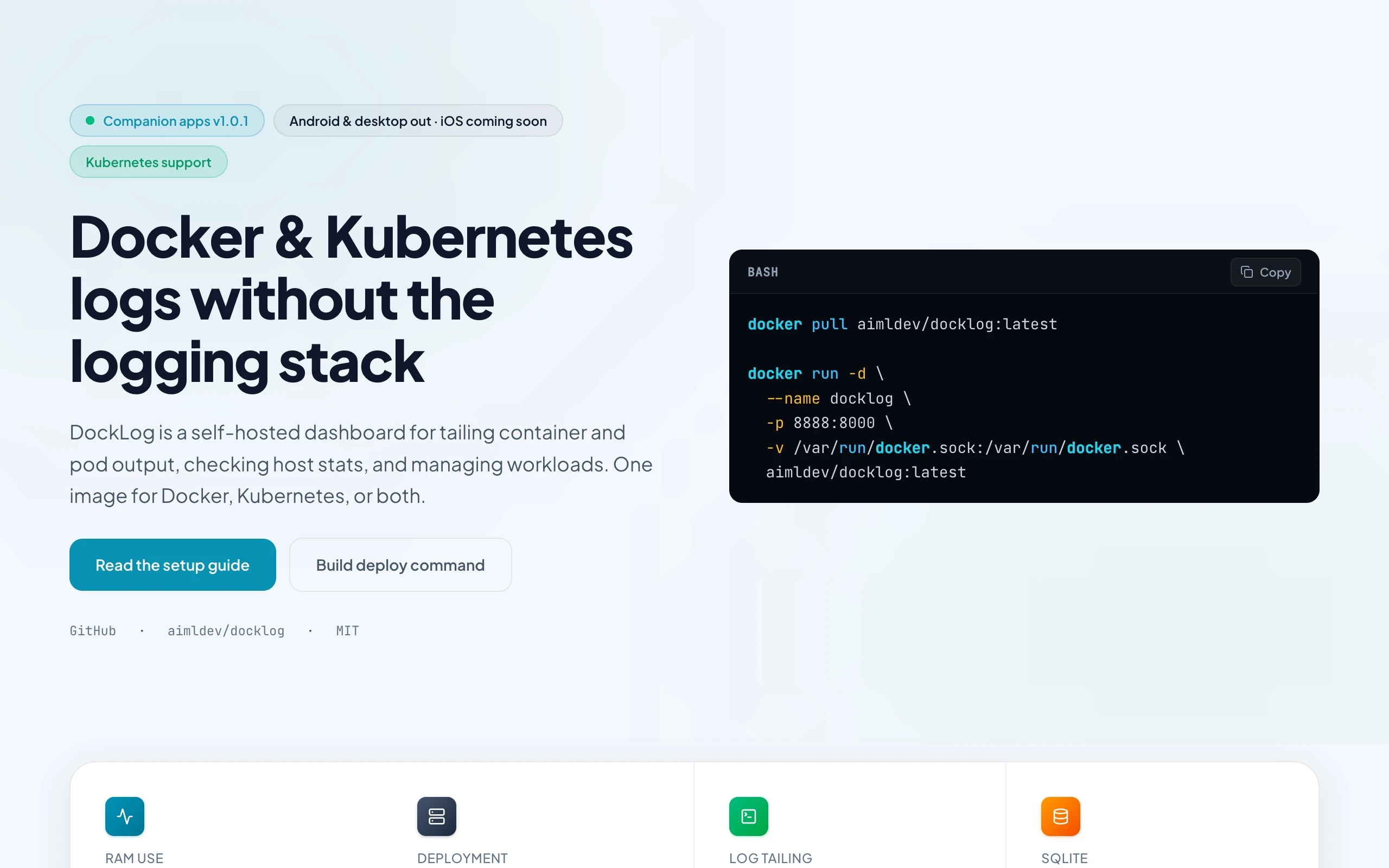
DockLog is a self-hosted Docker observability platform that lets developers and platform teams monitor containers in real time. By mounting the Docker socket, it streams logs via WebSockets, tracks host resources, and manages container lifecycles without requiring heavy tools like Elasticsearch or Loki. It includes role-based access control, security audit logs, webhook alerts, and native desktop and Android applications.
DockLog was created in 2026 by developer Saurav Saini to address the excessive complexity of traditional logging stacks. Frustrated by heavy resource requirements when managing simple Docker environments, the project was built to provide instant real-time visibility, container control, and host monitoring inside a single lightweight package.