Loading SaaS profile...
Loading SaaS profile...
Frontier coding intelligence and background agentic execution.
Executes background coding agent tasks to resolve GitHub issues and multi-file feature requests. Runs automated tests, type checks, and lints, feeding failures back into the execution loop. Provides sub-second inline completions and quick edits through optimized fast model tiers. Integrates with tools like GitHub and Model Context Protocol servers for seamless workflow automation.
Leverages top-performing open-weight frontier models with monthly updates to ensure peak benchmark performance. Enforces strict runtime security barriers requiring explicit user approval for any file edit or shell action. Operates with zero data retention on US-hosted infrastructure to protect corporate code privacy. Provides high-throughput multi-tier pricing models offering extensive weekly usage allowances.
Category: AI & Automation
Team Size: 2-10
Visit Website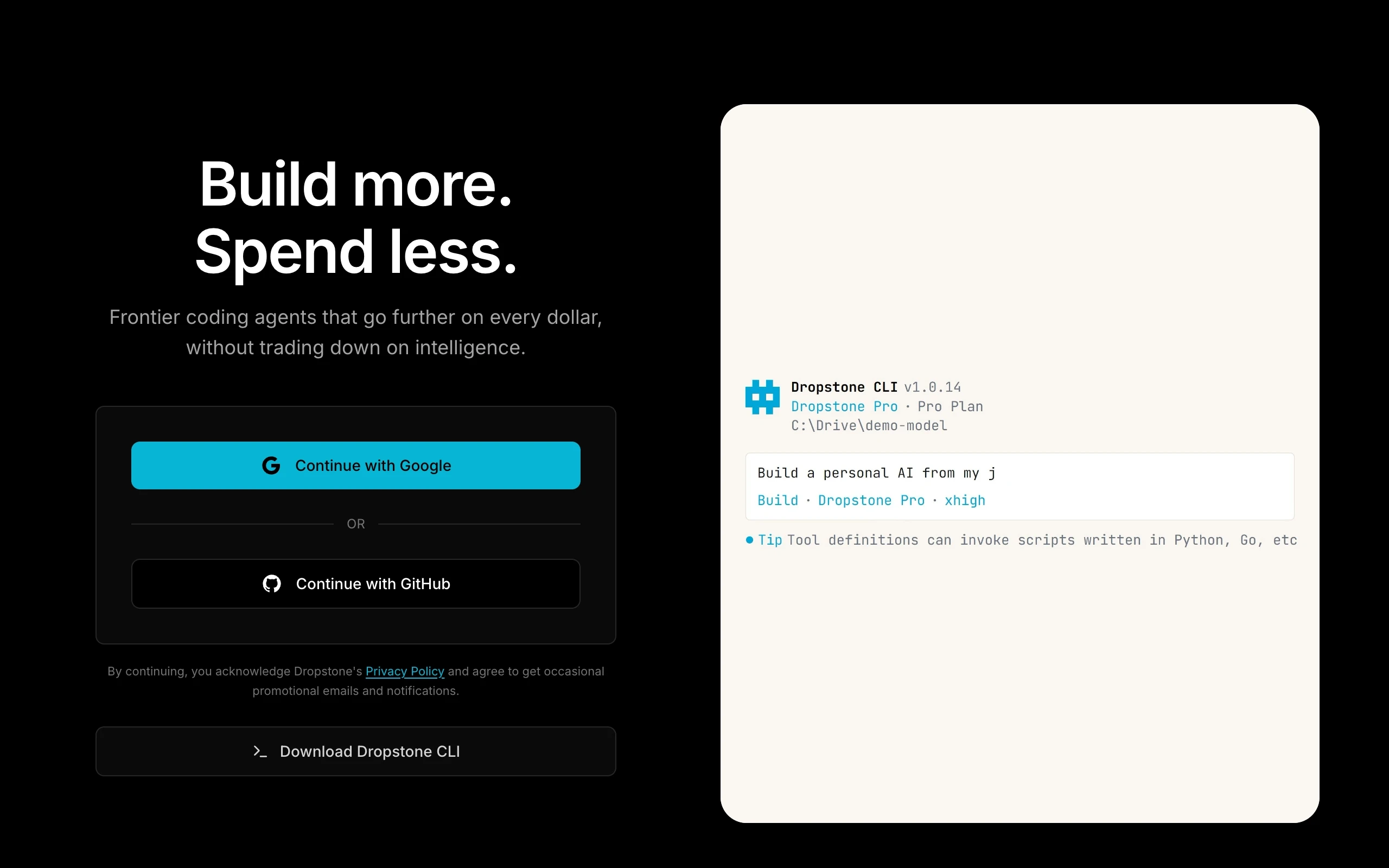
Dropstone 1.5 is an advanced agentic coding platform designed to handle complex software development workflows directly from the terminal or cloud sandboxes. By routing tasks through top-performing open-weight frontier models hosted securely on US infrastructure, it provides high-throughput editing, automated testing, and multi-file code refactoring. The tool features strict runtime permission checks to ensure human oversight before executing shell commands or code edits.
Developed by Blankline Research, Dropstone 1.5 was launched in June 2026 to bridge the gap between expensive closed-source coding models and accessible open-weight frontier intelligence. Headquartered in the United States, the project addresses the need for secure, high-capacity, and cost-efficient autonomous coding tools for engineers.