
Loading SaaS profile...
Loading SaaS profile...
Fastest generative media infrastructure platform for developers.
Provides API access to 600+ open-source and proprietary generative AI models for media production. Executes models on a serverless GPU cloud, automatically scaling resources for each request and deallocating them afterward. Offers a proprietary inference engine that delivers 2-3x faster performance compared to standard model implementations. Supports complex generative workflows, including multi-model chaining, real-time streaming, and fine-tuning with custom datasets. Enables enterprise features like private VPCs, audit logging, and dedicated GPU clusters for high-security applications.
Proprietary inference engine dramatically reduces latency, enabling responsive, real-time generative experiences that are difficult to achieve with standard implementations. Serverless architecture removes the heavy operational burden of GPU management, allowing developers to focus on application logic rather than infrastructure. Extensive model marketplace provides a one-stop-shop for the latest image, video, and audio models, reducing the need to integrate multiple disparate providers. Scalability across thousands of GPUs ensures that applications can handle viral spikes in traffic without manual capacity planning. Flexible integration through REST APIs and SDKs facilitates rapid adoption across diverse technology stacks and existing workflows.
Category: AI & Automation
Team Size: 100+
Visit Website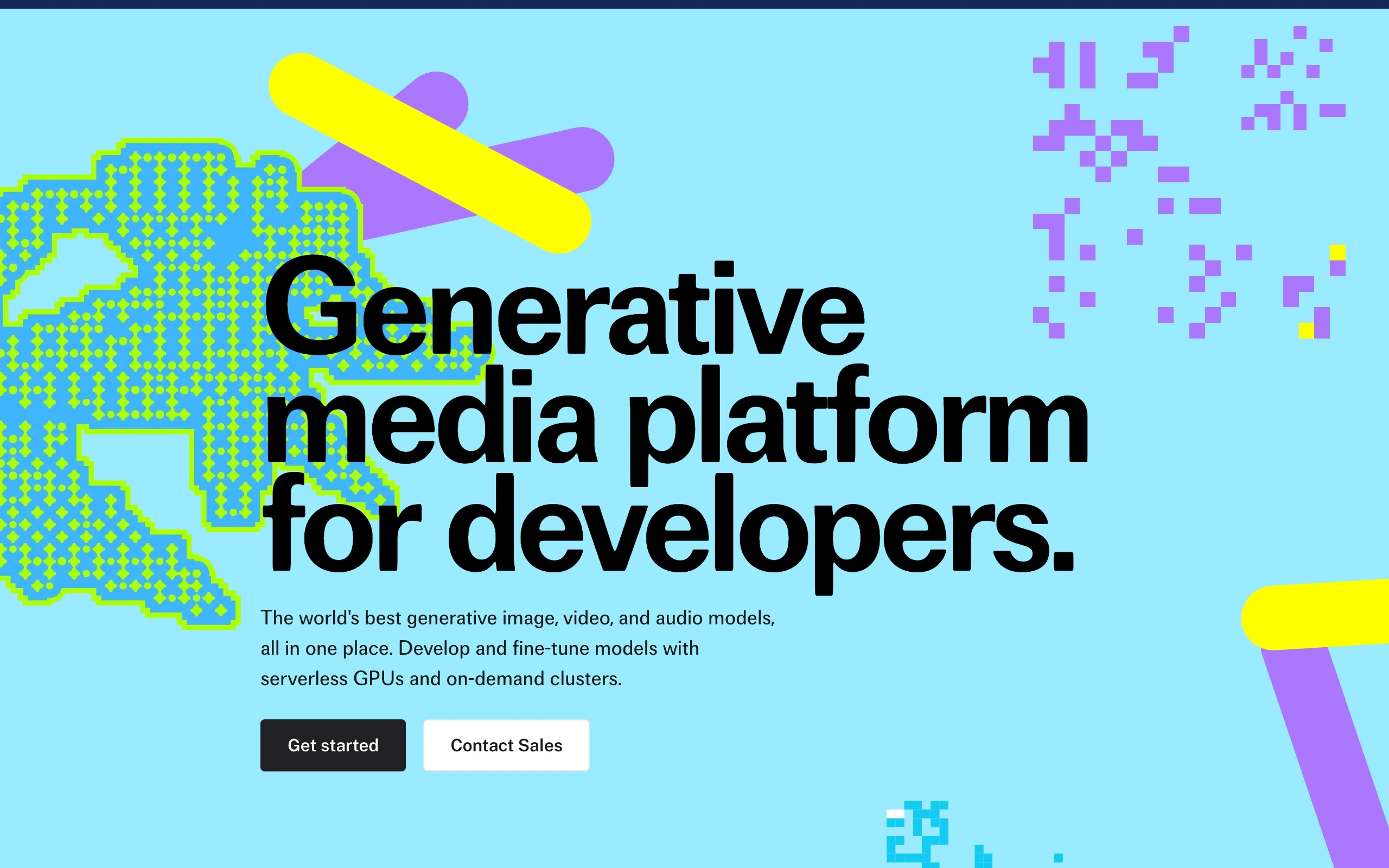
Fal AI is a generative media infrastructure platform providing developers with API access to over 600 AI models for images, video, audio, and 3D content. The platform functions as a serverless cloud for AI, enabling developers to execute complex generative workflows without managing underlying GPU infrastructure. It is known for its proprietary inference engine that significantly optimizes performance for real-time media generation.
Founded in 2021 by Burkay Gur and Gorkem Yurtseven, Fal AI was born out of their shared experience with AI infrastructure challenges during their tenures at Coinbase and Amazon. The founders aimed to solve the industry-wide problem of slow inference speeds and high costs that hindered the real-world application of generative AI.