
Loading SaaS profile...
Loading SaaS profile...
The global online marketplace to buy and sell digital businesses, including SaaS, e-commerce stores, blogs, and domain names.
digital business brokerage online store valuations secure escrow coordination domain name auctions saas asset benchmarking
Massive global buyer pool exceeding two million active investors Direct API integrations with tools like QuickBooks for instant financial validation Standardized algorithmic data tools that issue rapid and free asset valuations Flexible platform structures serving both self-serve transactions and assisted premium broker deals
Category: Business & Operations
Team Size: 26-100
Visit Website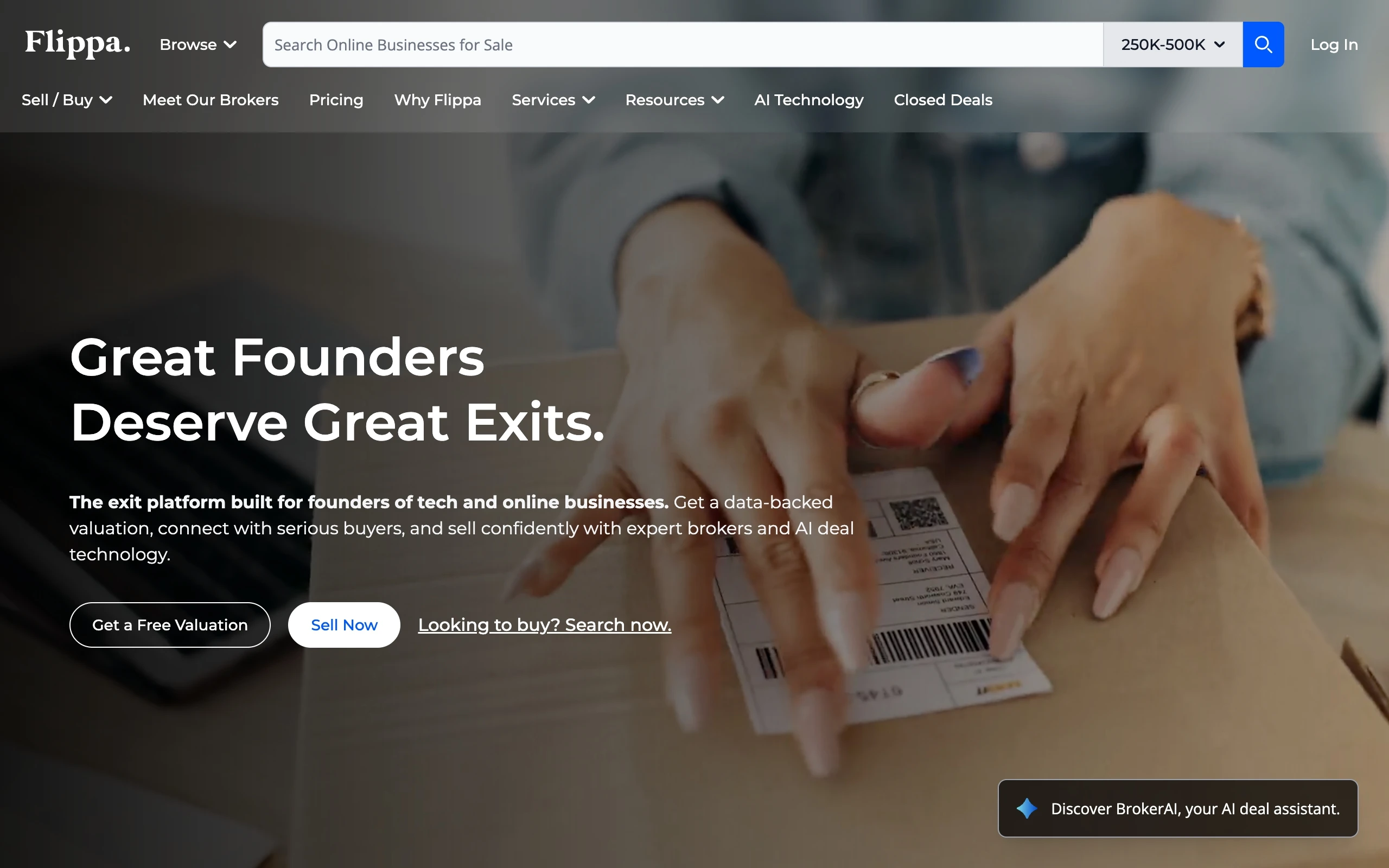
Flippa is the world's leading self-serve marketplace for buying and selling digital real estate and online companies. The platform connects acquisition entrepreneurs and institutional buyers with owners looking to sell websites, mobile applications, content blogs, domains, and SaaS tools. By providing integrated financial health tools, standardized business valuations, legal escrow partnerships, and data integrations, it removes friction from online business asset transfers. Flippa handles deals ranging from small micro-acquisitions under $50k up to large 8-figure institutional portfolios.
Flippa was originally founded in June 2009 by Mark Harbottle and Matt Mickiewicz in Melbourne, Australia. It began as the SitePoint Marketplace, a message board where developers traded digital properties. Realizing the immense unserved market for secure, transparent, and structured digital business transactions, they spun the marketplace off into an independent self-serve software application.