
Loading SaaS profile...
Loading SaaS profile...
An all-in-one messaging aggregator and workspace hub.
Brings over 75 messaging and email services together into a single unified desktop window. Runs each connected service inside an isolated container to preserve privacy and session states. Aggregates unread badges and native desktop notifications across all active communication channels. Integrates Google, Microsoft, and Apple calendars alongside messages for streamlined daily scheduling.
Isolated container architecture keeps individual service sessions secure and prevents cross-app token leaks. Cross-channel workspace organization groups apps by mode, team, or priority to reduce context-switching. Built-in AI assistant features summarize unread threads and draft context-aware replies effortlessly. Cross-platform support ensures identical performance across macOS, Windows, and Linux.
Category: Productivity
Team Size: 2-10
Visit Website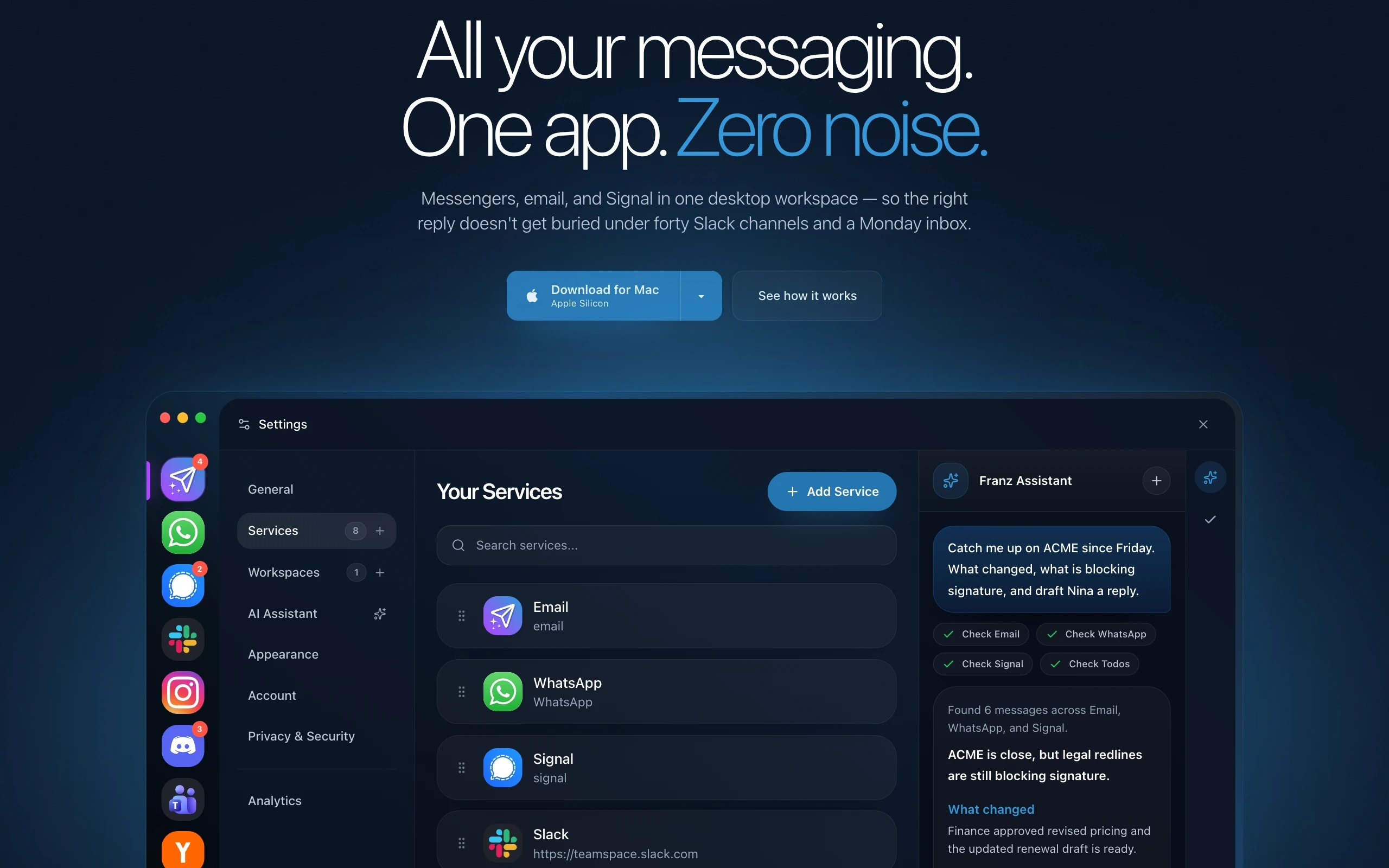
Franz 6 is a desktop-first messaging aggregator and workspace hub designed to consolidate dozens of communication tools into a single window. It allows professionals to manage over 75 services—including WhatsApp, Slack, Gmail, Signal, and Telegram—within isolated containers featuring unified notifications. The platform also integrates calendar management and AI catch-up features to streamline cross-channel workflows.
Franz was created in Vienna, Austria, by Stefan Malzner, growing from a basic messaging aggregator into a comprehensive communication and workspace hub. Version 6 introduced major upgrades including native calendar integration, privacy shields, and cross-channel AI assistants to help professionals manage fragmented digital workflows.