
Loading SaaS profile...
Loading SaaS profile...
An intelligent organizational design and headcount planning platform that connects structural mapping with real-time workforce capacity modeling.
Builds dynamic, collaborative organizational charts and structural maps seamlessly via intuitive drag-and-drop mechanics. Models complex hypothetical structural scenarios and future headcount hiring roadmaps without altering live data directories. Maps functional accountabilities, ownership lines, and direct team dependencies straight to individual position containers. Tracks financial payroll impact and budget forecasting constraints against changing organizational designs in real time. Identifies workflow vulnerabilities, resource bottlenecks, and structural redundancy nodes across scaling corporate layers. Generates automated operational gap reports and audit-ready talent placement charts for corporate leadership reviews.
Prevents data fragmentation by connecting structural company mapping directly with functional operational duties. Saves hundreds of planning hours by allowing leaders to simulate multiple cost models inside secure draft modes. Reduces post-merger integration friction by clarifying newly combined corporate tracking lines and structural layers visually. Improves cross-team collaboration with modern, synchronous editing features built for distributed executive boards. Minimizes headcount overspending errors by verifying personnel requests against macro financial budgets automatically.
Category: Productivity
Team Size: 2-10
Visit Website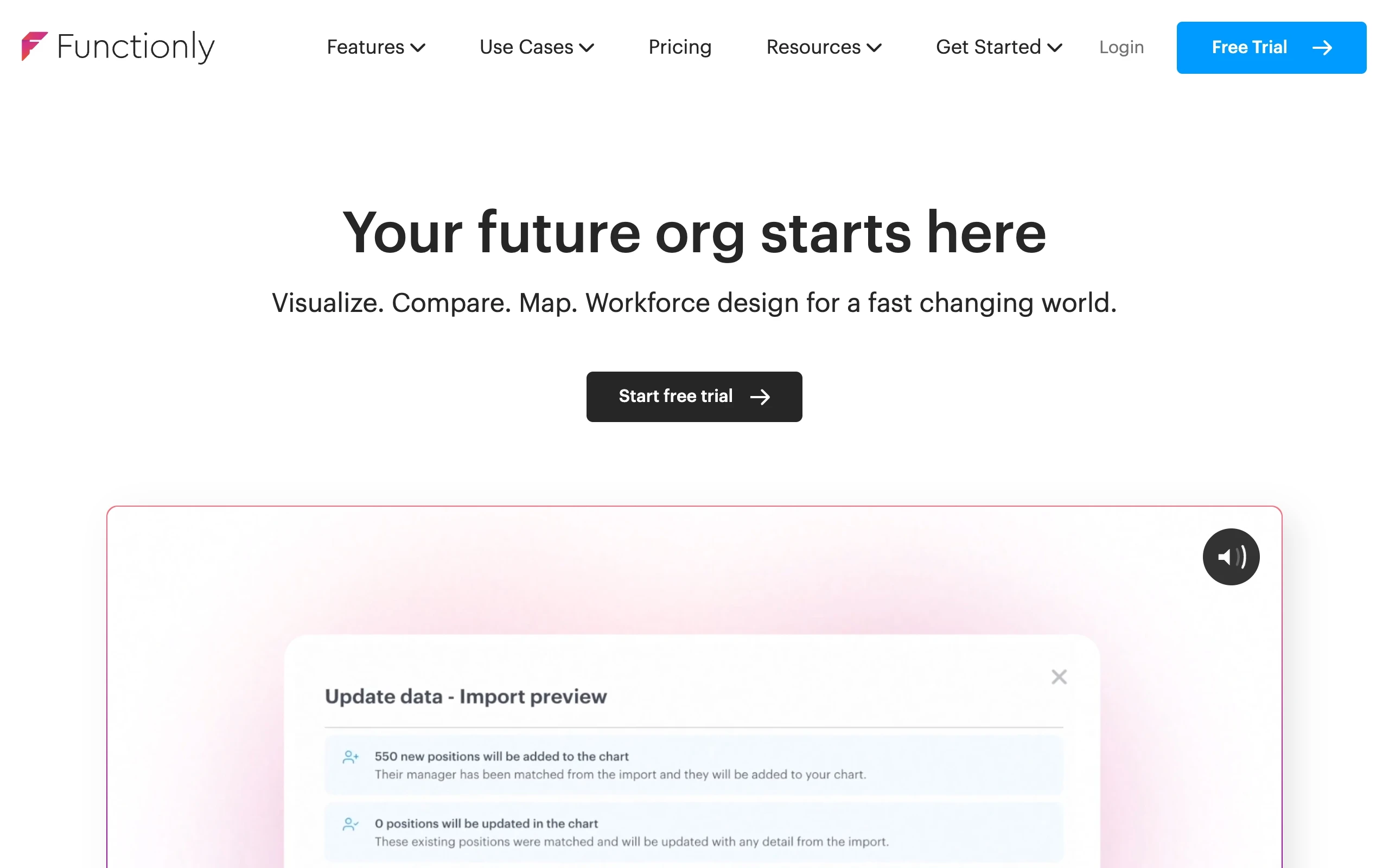
Functionly is an enterprise-grade collaborative organizational design platform built to modernize workforce modeling, talent mapping, and headcount planning. The cloud platform eliminates scattered spreadsheets and manual layout tools by combining smart drag-and-drop structural charting with deep functional accountability tracking. By mapping cross-functional responsibilities alongside structural employee entries, it gives business leaders absolute visibility into capacity constraints and organizational silos during growth or contraction phases. Ultimately, Functionly empowers HR executives and operations groups to run real-time scenario simulations, optimize team structures, and implement data-driven staffing roadmaps flawlessly.
Functionly was founded in 2018 by Tim Brewer, Damian Bramanis, and a group of software product pioneers in Perth, Western Australia. Having scaled high-growth technology enterprises previously, the founders noticed a systemic operational vulnerability: corporate leaders routinely mapped multi-million dollar headcount strategies using disconnected tools, static presentation graphics, and stale data lists. To fix this structural design disconnect, they built an intelligent, real-time organizational workbench that links human capacity directly to functional goals. Operating from Perth, the leadership group expanded Functionly's footprint to support scaling companies and remote human resources divisions internationally.