
Loading SaaS profile...
Loading SaaS profile...
A cloud-based unified communications platform that integrates voice, video, messaging, and collaboration tools into a single, scalable enterprise solution.
Enterprise IT managers Internal communications leaders Global remote team managers Unified communications architects Operations executives
Consolidates voice, video, and messaging into one interface, eliminating the need for fragmented communication apps Cloud-native architecture provides global scalability and enterprise-grade reliability for distributed workforces Deep integration with common business systems (CRM, ERP, and collaboration suites) ensures communication happens where work lives Advanced reporting and analytics provide IT leaders with granular insights into adoption and communication performance Robust security and compliance certifications meet the stringent requirements of large-scale corporate deployments
Category: Business & Operations
Team Size: 100+
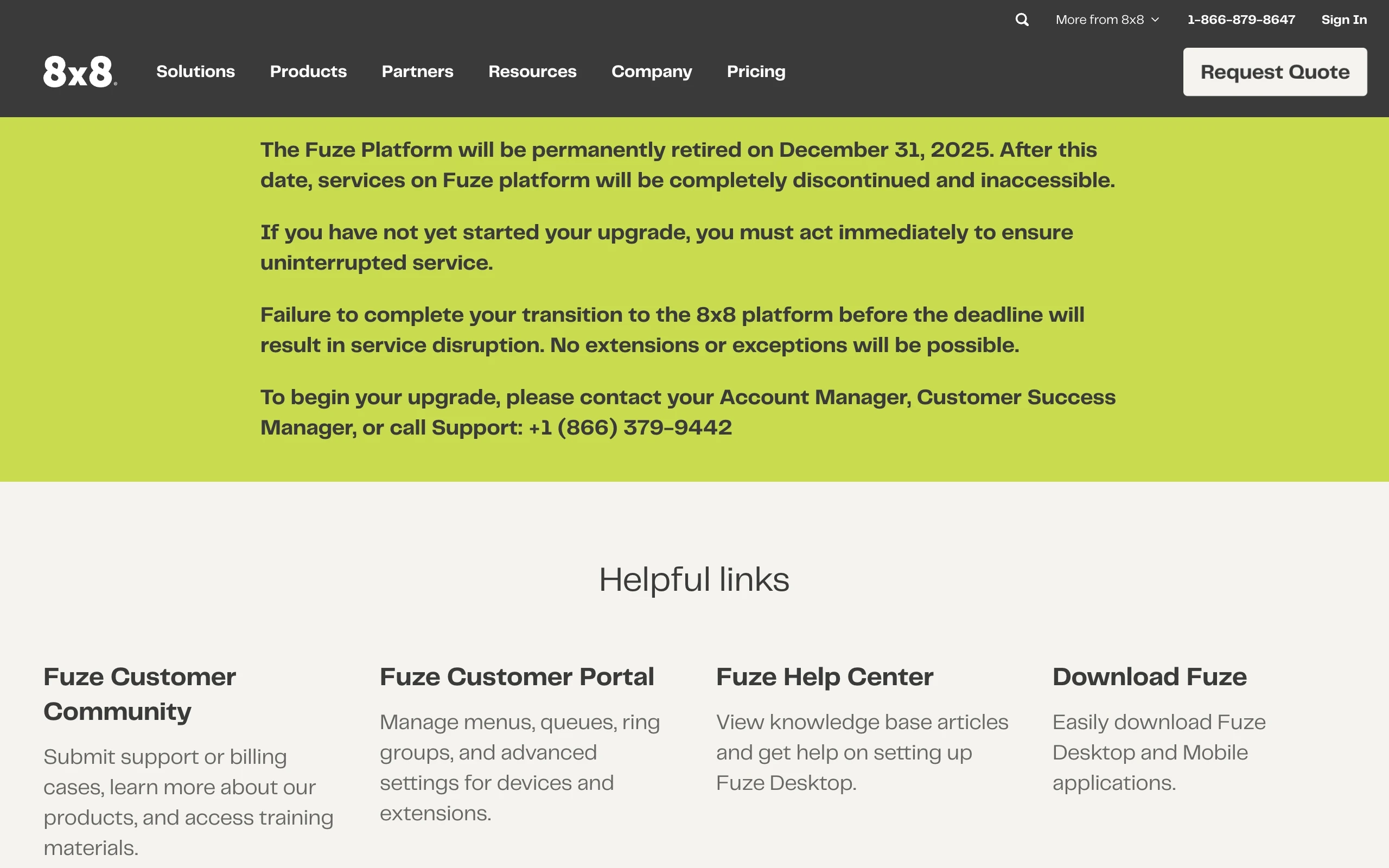
Fuze is an enterprise-grade Unified Communications as a Service (UCaaS) platform designed to modernize the way distributed teams communicate and collaborate. By consolidating disparate voice, video conferencing, and instant messaging tools into one cohesive cloud workspace, Fuze enables seamless connectivity across desktop and mobile devices. The platform caters to large-scale global organizations that require high reliability, enterprise-level security, and deep integration with existing business workflows. Following its acquisition by 8x8, Fuze continues to be recognized for its scalable architecture and commitment to improving organizational productivity through unified communications.
Fuze was founded in 2006 by Steve Kokinos and Derek Yoo in Boston, Massachusetts. Originally launching as ThinkingPhone Networks, they aimed to tackle the complexity of internal corporate communications by moving the entire telephony and collaboration suite to the cloud. Over nearly two decades, the company evolved into a leader in enterprise UCaaS before being acquired by 8x8 in 2022 to strengthen its position in the unified communications marketplace.