
Loading SaaS profile...
Loading SaaS profile...
A complete DevSecOps platform that enables teams to manage, plan, create, verify, secure, and deploy software in a single application.
Provides a comprehensive source code management system with robust branching and merge request workflows Offers built-in CI/CD pipelines for automated testing, building, and deployment Includes integrated security testing tools (SAST, DAST, dependency scanning) directly in the workflow Features project management capabilities like epics, roadmaps, and issue tracking Enables container registry and package management for cloud-native applications
Single application architecture eliminates integration friction between disparate dev tools Built-in security shifts security left, enabling faster vulnerability identification End-to-end visibility across the entire SDLC improves collaboration and throughput Highly scalable architecture supports teams of all sizes, from startups to global enterprises Extensive automation capabilities reduce manual operational overhead and human error
Category: Utilities & System Tools
Team Size: 2000-5000
Visit Website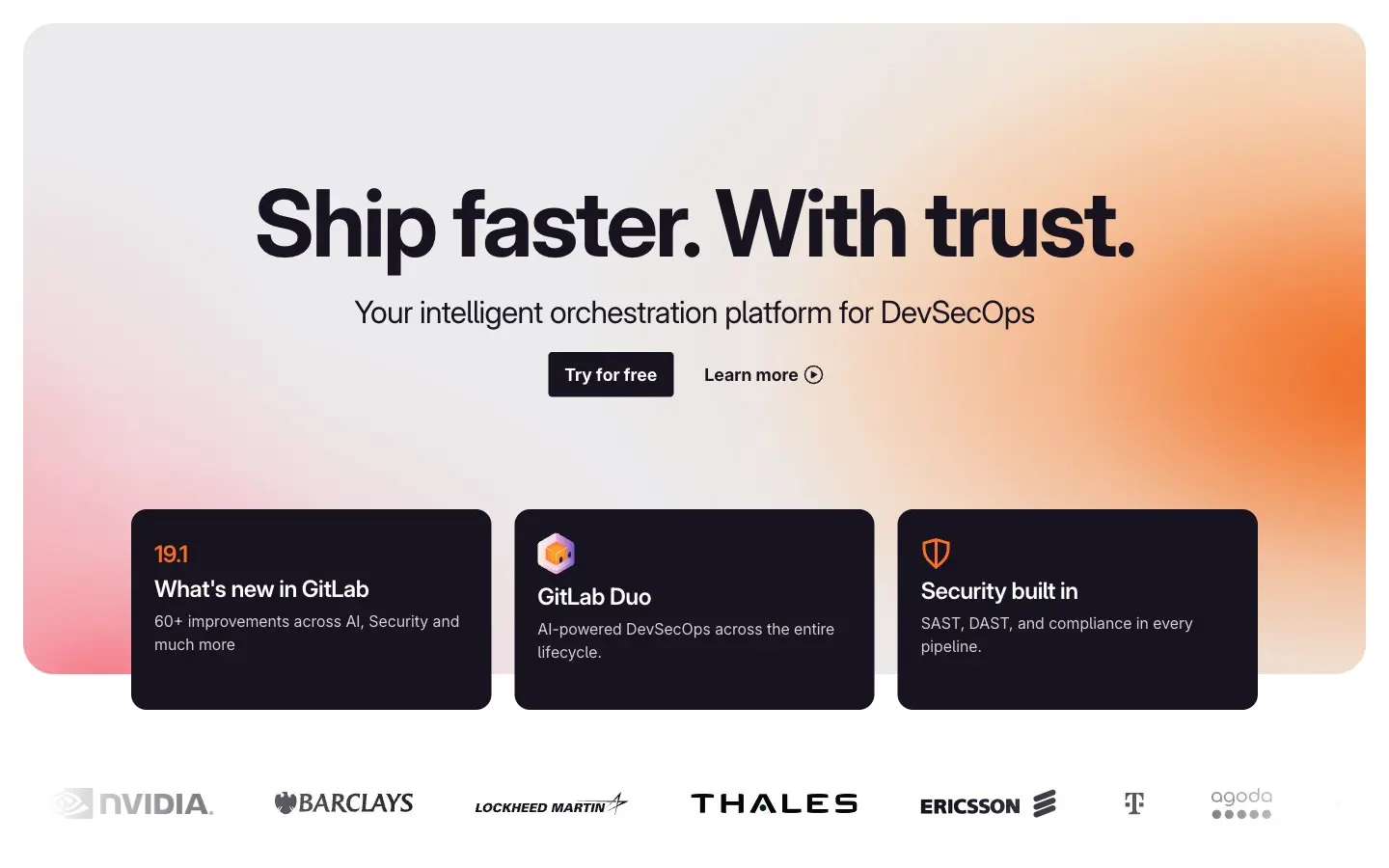
GitLab is an enterprise-grade DevSecOps platform that streamlines the entire software development lifecycle (SDLC) within a single, unified application. It eliminates toolchain sprawl by providing integrated capabilities for source code management, CI/CD pipelines, security scanning, project planning, and container registry, allowing development teams to ship secure software faster and more efficiently.
GitLab was founded in 2011 by Dmitriy Zaporozhets and Sytse Sijbrandi, originally starting as an open-source project to provide a better alternative for managing Git repositories. Based in a remote-first model, the company solved the problem of fragmented development workflows by evolving from a simple repository manager into a comprehensive, end-to-end DevSecOps platform that has grown into a publicly traded global leader.