Loading SaaS profile...
Loading SaaS profile...
An agent-first development platform and standalone workspace designed to orchestrate autonomous AI coding teams.
Orchestrates multiple autonomous AI agents in parallel to execute distributed front-end, back-end, and testing tasks asynchronously. Generates structured, verifiable 'Artifacts' including interactive task lists, implementation plans, code diffs, and post-execution walkthroughs. Grants agents direct local execution authority over integrated terminal windows to build apps, install dependencies, and run test suites. Provides native browser runtime sandboxes allowing agents to perform end-to-end UI logic workflows, click tests, and log screen recordings. Features a dual-interface architecture split into a traditional file Editor view and a macro-level parallel workspace Manager view. Supplies flexible autonomy controls ranging from granular agent-assisted validation passes to hands-free background project execution modes.
Agent-First Autonomy Paradigm: Departs from basic autocomplete text extensions to implement a framework where autonomous agents act as a complete, multi-role dev team. Transparent Trust Mechanics: Addresses agent hallucination risks by forcing the generation of highly explicit implementation and audit trails before making directory edits. Google Ecosystem Synergy: Couples native developer tooling integrations with generous local public preview rate tiers across high-context Gemini models.
Category: AI & Automation
Team Size: 100+
Visit Website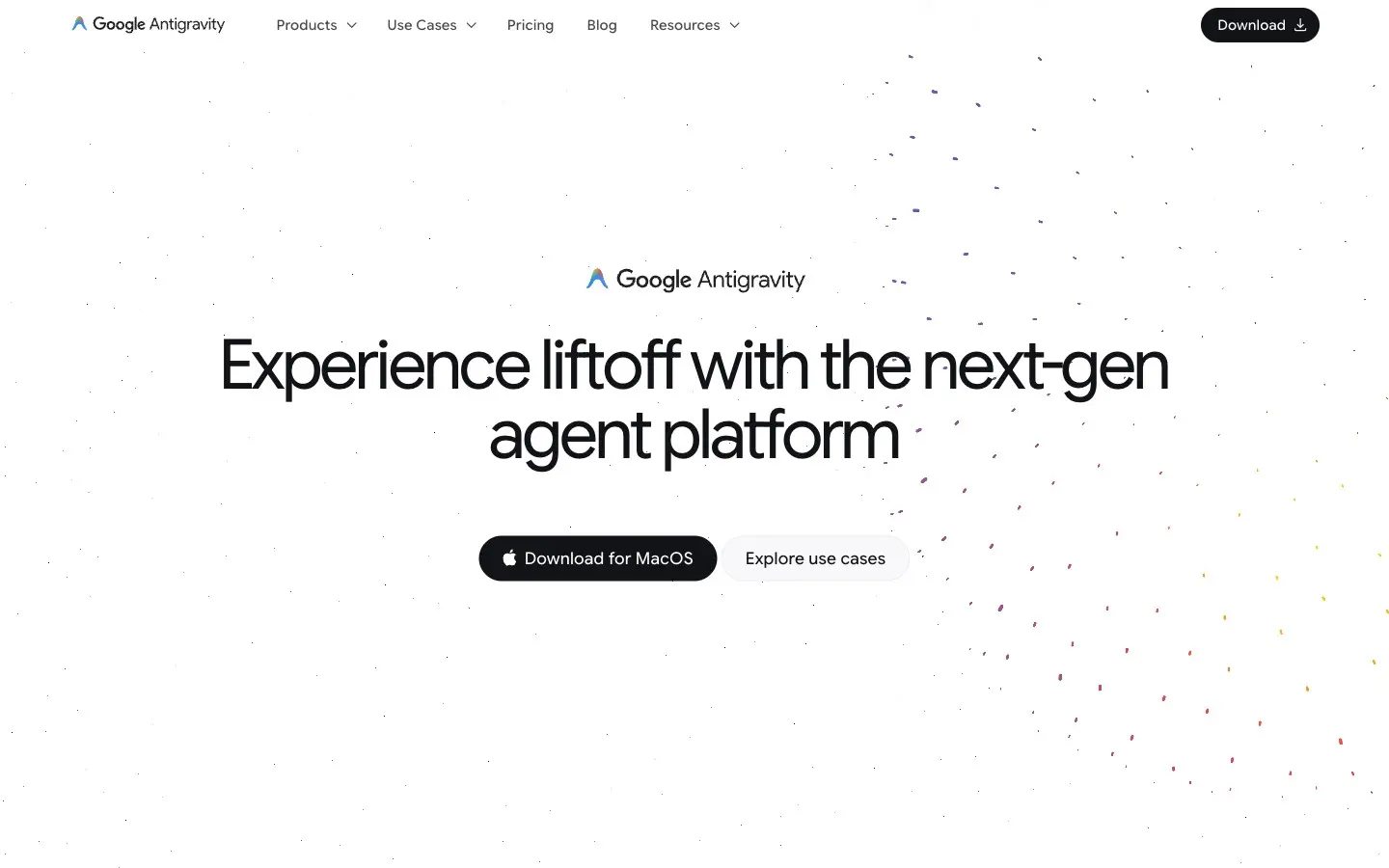
Google Antigravity is an enterprise-grade, agentic software development ecosystem engineered by Google to transition developers into project manager roles. Originally sharing its name with a legacy browser Easter egg, the modern platform stands as a sophisticated development environment consisting of a standalone application framework, a dedicated agent-first IDE (built as a heavily optimized fork of VS Code), a command-line interface, and an expansive developer SDK. Powered natively by the Gemini model family alongside third-party frontier LLMs, Antigravity coordinates multiple asynchronous AI agents to collaboratively write, debug, terminal-test, and visually audit complex codebases.
Google Antigravity was formally introduced to the tech landscape on November 18, 2025, during the public preview launch of the Gemini 3 model suite. Spearheaded by Google's core developer tooling divisions, the project was envisioned to move beyond isolated chat interfaces and solve the absolute friction of multi-file file synchronization. By integrating complete system-level terminal control and web rendering environments into a unified workspace layout, the engineering team realized a system where developers direct complex architecture while the agent layer handles the typing.