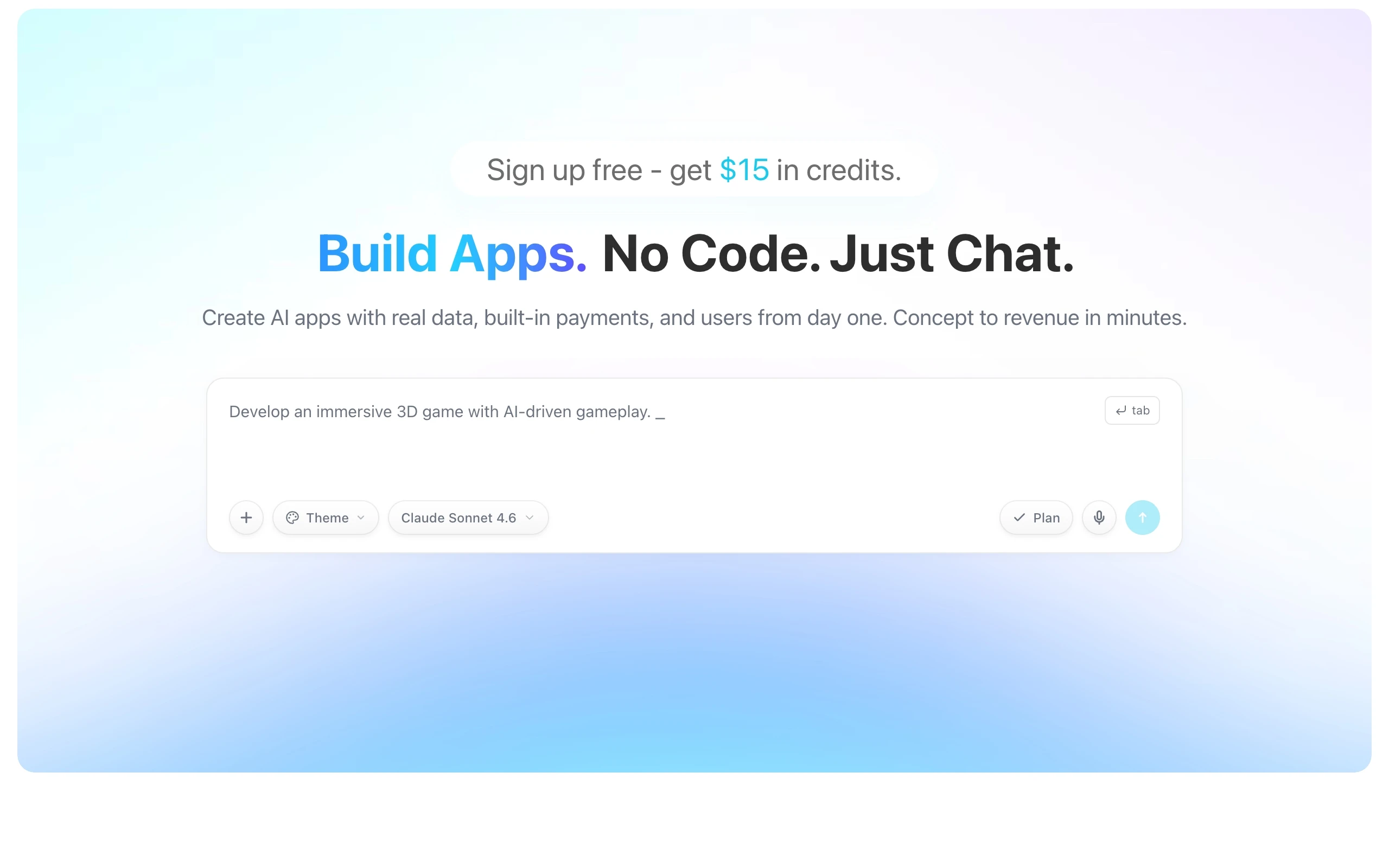
Turn plain-language ideas and reference documents into publishable, full-stack AI apps and games instantly.
Overview
HappySeeds is a comprehensive Vibe App development platform designed to take creators, founders, and product teams from raw concept to live, revenue-generating product in minutes. Driven by advanced reasoning models like Claude 4.6 Sonnet, the platform handles the complex, fragmented backend infrastructure that traditionally halts no-code builders—including persistent database storage, user authentication, direct Stripe-powered payment integrations, SEO optimization, and live single-click hosting on custom domains—enabling anyone to ship production-ready web tools and interactive games entirely through conversational refining.
Founded year:2026
Team size:2-10
Popularity:Demonstrated rapid early traction across global startup builder indices, scaling project milestones quickly since its mid-2026 product release.
HQ:San Francisco, CA, USA
Status:Active
Funding status:Funded
Revenue source:Subscriptions
Customer type:B2B2C
Funding:Pre-seed venture optimization capital backed by digital software accelerators and elite tech angels.
Pricing:Freemium
Tech stack:Next.js, Python, Anthropic Claude API, Supabase, Vercel, Stripe API
Platform:Web • API
Integrations:Stripe, PayPal, Claude 4.6 Sonnet, Google Cloud, AWS
Founder story
HappySeeds was introduced in 2026 by an agile development team seeking to dismantle the arbitrary wall dividing simple UI interface mockup generators from deployable software businesses. Frustrated by watching entrepreneurs build visually striking application prototypes that remained functionally dead without deep database scripting, they engineered a unified environment that merges frontend generation with fundamental production backend tools.
What it does
Maps out structured page outlines, user flows, and acceptance criteria using a built-in Plan Mode
Processes context inputs from multiple resource file formats including PDFs, sheets, slides, images, and videos
Assembles full-stack digital applications and interactive web games using conversational AI refinement loops
Provides native built-in payments and user authorization modules directly inside generated applications
Deploys completed applications online with one click complete with SEO setup and custom domain support
Who it's for
Indie Hackers & Founders
Product Teams & Managers
No-Code App Builders
Digital Content Creators
Rapid Prototyping Engineers
Why it works
Plan-to-Ship Execution: Structuring development into three distinct operational stages—Plan, Build, and Ship—bridges the messy gap between high-level conceptual ideas and live code logic
Commercial Battery Pack: Providing built-in user logins, database systems, and direct payment architectures removes the ultimate bottleneck holding back most low-code tools
Multi-Format Contextualization: Accepting unstructured references spanning video and spreadsheets enables the generation engine to inherit hyper-specific product context
Active Runtime Engines: Embedding live, active AI agents and text/image capabilities within the final consumer apps ensures they perform advanced runtime tasks.
Growth strategies
Capitalizing on viral community loops by allowing developers to browse, preview, and instantly remix public templates
Publishing highly visible showcase proof- of-concepts like their native web-based interactive 'Animal Cup' game deployment
Leveraging intense product hunt community launching tracks to drive high- volume onboarding signups
Deploying strategic social video campaigns highlighting the rapid transition from a raw textual prompt to a monetizable product site
Alternatives
Comparison overview
Integrates essential transaction infrastructure like Stripe natively instead of forcing manual database link-ups
Supports complex interactive games alongside standard form engines outclassing linear tool builders
Processes highly varied media data like video and slides as development references whereas typical tools only read clean text prompts
Maintains operational AI components active inside downstream user apps rather than utilizing models strictly during code building