
Loading SaaS profile...
Loading SaaS profile...
A 2.8T-parameter open-weight model for frontier reasoning and coding.
Executes complex, long-horizon coding tasks with minimal human supervision. Features a 1-million-token context window for processing massive documents and codebases. Integrates visual reasoning for tasks like game development, frontend engineering, and CAD. Operates as a multimodal agent capable of autonomous research, planning, and web navigation. Scales efficiency using Stable LatentMoE framework to optimize active parameters during inference.
8T parameter scale provides state-of-the-art reasoning and coding capabilities. Open-weight model distribution allows for flexible deployment and local optimization. Advanced architecture (KDA/AttnRes) improves computational efficiency for long-sequence tasks. Seamless integration with agentic tools like Kimi Code and Kimi WebBridge. Competitive pricing compared to US-based proprietary frontier models.
Category: AI & Automation
Team Size: 100+
Visit Website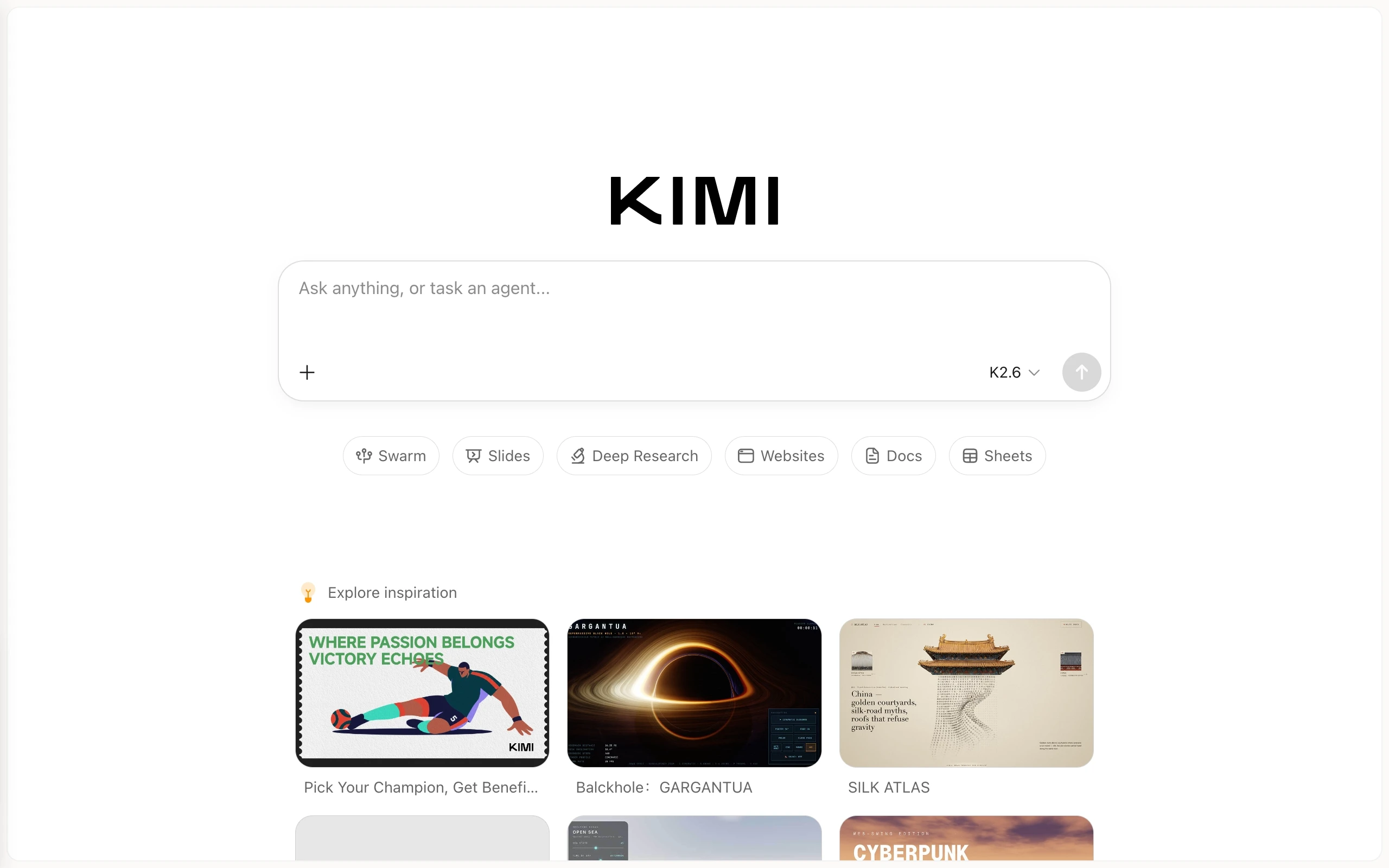
Kimi K3 is a flagship 2.8 trillion-parameter multimodal reasoning model developed by Moonshot AI. It excels in long-horizon coding, enterprise knowledge work, and complex agentic workflows. Built with Kimi Delta Attention and Attention Residuals, it offers a 1-million-token context window and competitive performance against leading frontier models, providing both API access and an all-in-one agentic workspace for users.
Moonshot AI is a Beijing-based startup founded by Yang Zhilin. Established to narrow the gap between Chinese and US AI capabilities, the company focuses on building powerful, agent-native models. Kimi K3 represents their flagship effort in 2026, leveraging massive scale and innovative architectural tweaks to handle complex, real-world engineering and research workflows.