
Loading SaaS profile...
Loading SaaS profile...
AI design engineer converting Figma into production-ready frontend code.
Converts Figma designs into responsive, high-quality UI code using deep learning and heuristics. Analyzes the existing codebase to reuse design tokens, components, and hooks natively. Generates logical DOM structures and React components with clean, human-readable class naming. Provides an editable browser canvas for refining designs before merging to production. Supports over 50 foundational AI models to balance cost and quality for specific tasks.
Processes actual Figma structural metadata instead of basic image screenshots for highly accurate UI mapping. Outputs structured code that fits natively into the user's existing repository without breaking compilation. Plugs directly into standard developer IDEs like Cursor and VS Code to minimize context switching. Automatically separates data logic from UI layout to produce clean, maintainable front-end code. Does not require specific manual tagging, naming, or grouping of Figma design elements to function.
Category: Design & Creative
Team Size: 11-25
Visit Website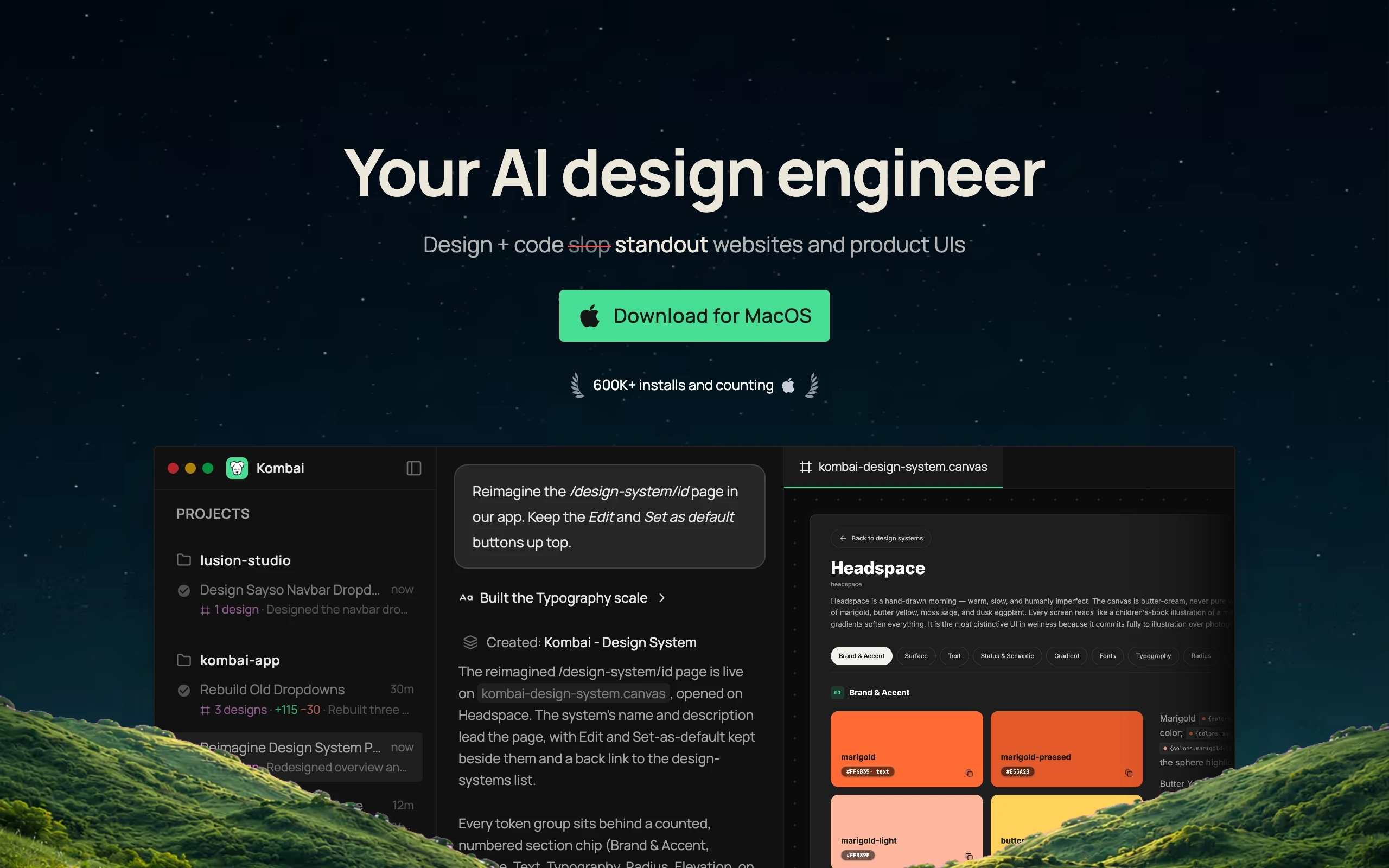
Kombai is an AI-powered design and coding agent that transforms Figma designs into production-ready front-end code. Built as an extension for modern IDEs, it operates as an autonomous design engineer. It creates responsive layouts, reuses existing components, and outputs clean React code by contextually interpreting design files. This allows developers to ship features faster without manually translating UI mockups.
Founded in 2022 by Abhijit Bhole and Dipanjan Dey in San Francisco, Kombai was built to solve the painful handoff process between UI designers and frontend engineers. The team introduced an AI agent that deeply understands both Figma structures and component-driven codebases, ensuring seamless translation without extensive manual tagging.