
Loading SaaS profile...
Loading SaaS profile...
Autonomous AI agent for end-to-end web application testing.
Explores web applications autonomously to map user flows and identify potential bugs without requiring manual navigation. Executes tests using natural language prompts, allowing users to describe specific flows rather than writing complex automation scripts. Features a self-healing test engine that automatically adapts to UI changes, eliminating the need for manual selector updates. Supports local deployment on any machine or server, enabling testing of private, firewalled, or local development environments securely. Provides comprehensive visibility into software performance and stability by catching functional regressions in real-world user paths.
Autonomous exploration removes the manual overhead of writing and updating test scripts for every UI change. Local runner deployment allows for secure testing of sensitive or internal environments without exposing them to the public cloud. Natural language interaction enables faster test creation and broader accessibility for team members without deep QA expertise. Self-healing technology dramatically reduces 'maintenance hell' associated with traditional automated testing frameworks. Focus on functional user journeys ensures that bugs are caught in actual usage paths rather than just unit-level code failures.
Category: Utilities & System Tools
Team Size: 1
Visit Website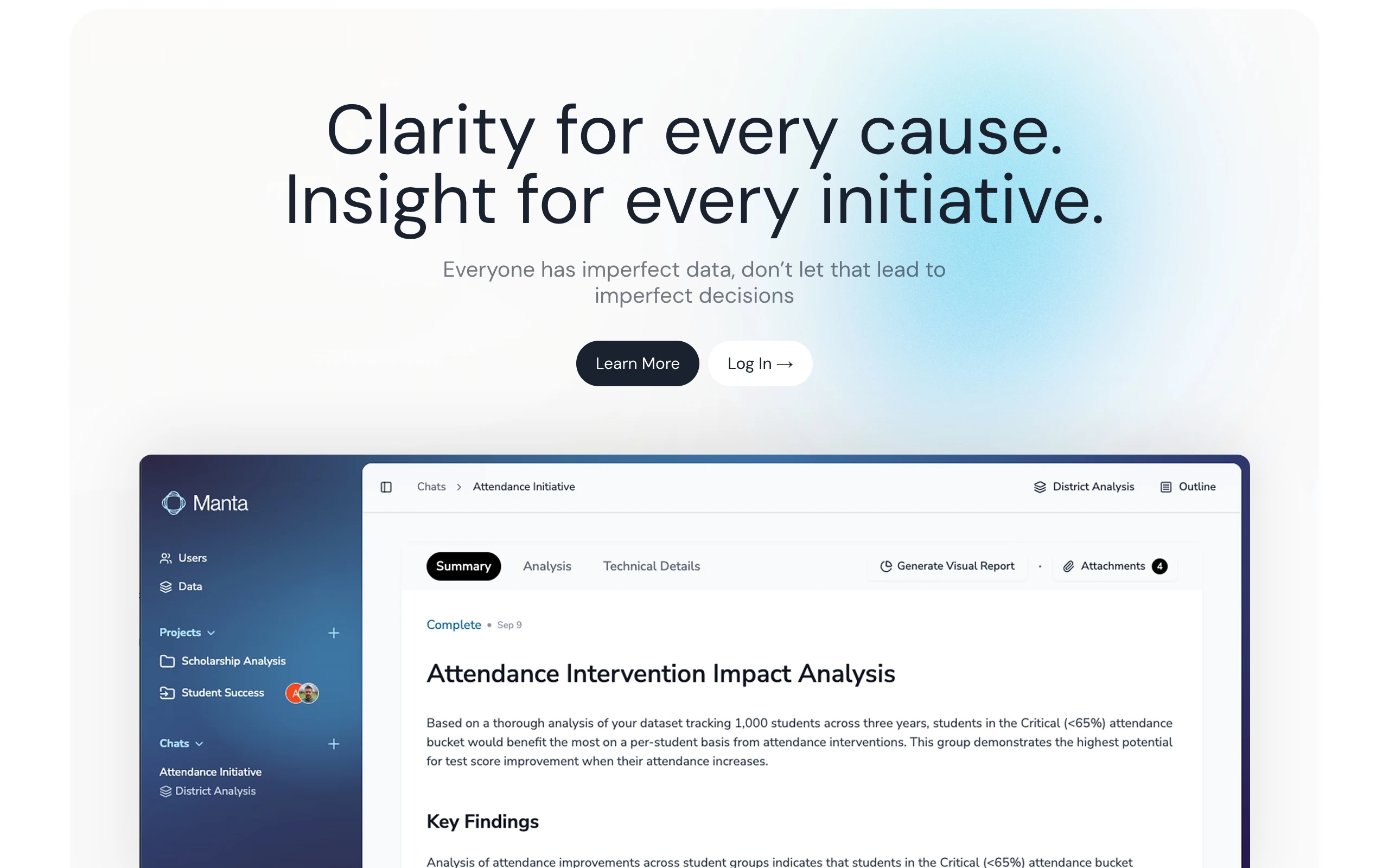
Manta AI is an autonomous testing agent designed to explore and validate web applications. It replaces brittle, script-based testing with a self-healing engine that learns user flows autonomously. Developers can test complex applications—including those behind firewalls or on localhost—without writing manual scripts or maintaining selectors, significantly reducing the QA burden during the development lifecycle.
Manta AI was founded in 2026 by AbdelRahman El-Sergani. Drawing from years of experience managing engineering teams in sectors like fintech and e-commerce, the founder identified the persistent crisis of brittle, manual QA processes. He built Manta AI to bridge the testing gap created by the rapid acceleration of AI-powered development tools.