Loading SaaS profile...
Loading SaaS profile...
Unified communication platform for chat, meetings, and collaboration.
Facilitates instant messaging, persistent chat, and video conferencing for both individual and group communication. Provides a shared workspace for real-time collaboration on documents, spreadsheets, and presentations via deep Microsoft 365 integration. Enables hosting of virtual meetings, webinars, and live events with advanced features like AI-powered note-taking and translation. Supports third-party app integrations and custom workflows to connect business processes directly into the collaboration hub. Ensures enterprise-grade security and compliance for data, communications, and identity management across the entire organization.
Deep integration with Microsoft 365 provides a familiar and unified environment for organizations already using the Microsoft suite. Omnichannel communication features consolidate disparate tools like email, chat, and phone into a single, cohesive workflow. Scalable infrastructure supports organizations of any size, from small startups to multinational corporations with thousands of users. Robust security and compliance certifications make it a trusted choice for highly regulated industries like finance and healthcare. AI-driven enhancements, such as intelligent summaries and real-time translation, continuously improve productivity and collaboration efficiency.
Category: Business & Operations
Team Size: 100+
Visit Website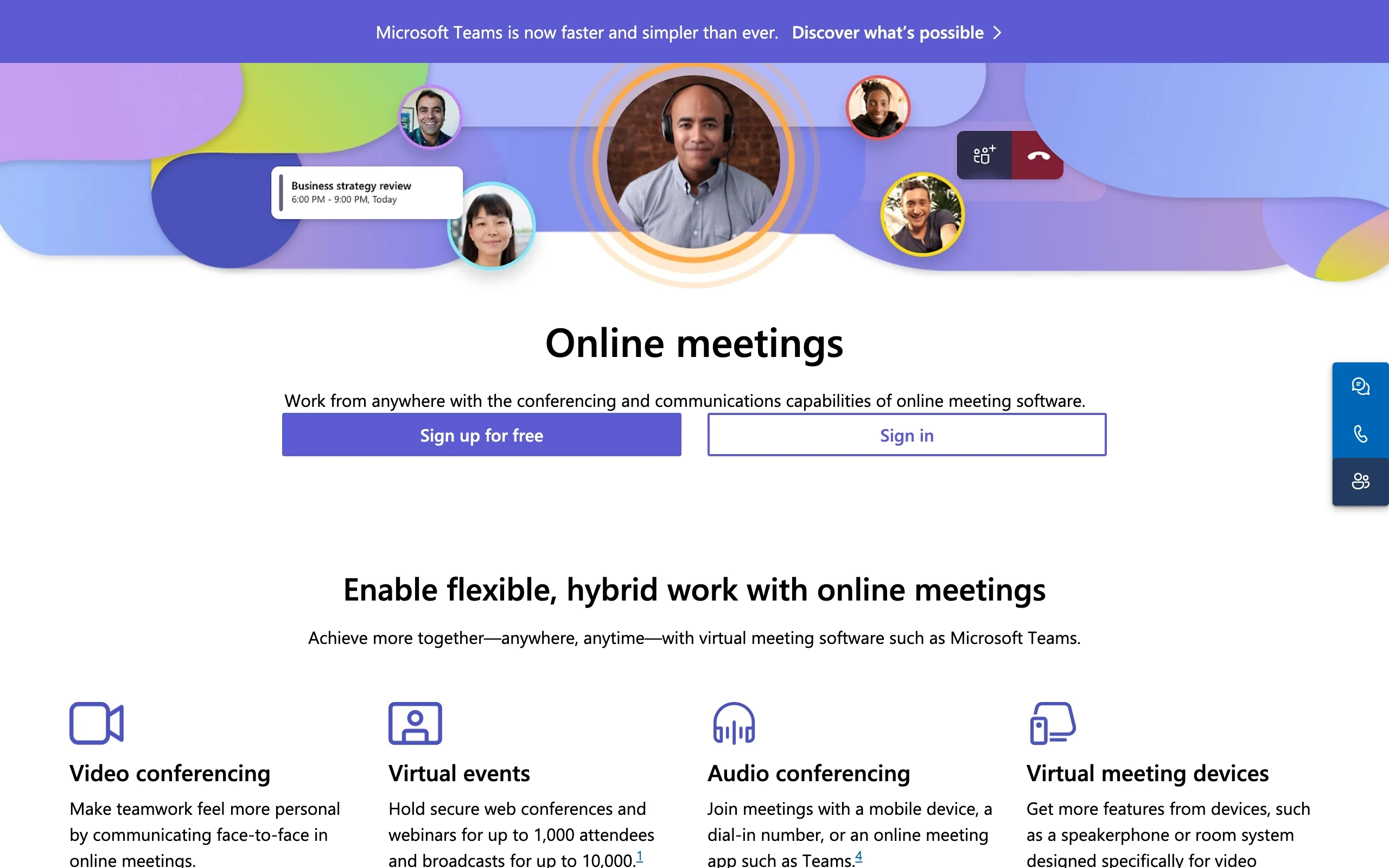
Microsoft Teams is an all-in-one communication and collaboration platform that integrates chat, video conferencing, file storage, and application integration. It serves as a central hub for teamwork within organizations, allowing users to communicate in real-time, schedule meetings, and collaborate on shared documents. As a core part of the Microsoft 365 ecosystem, it supports seamless integration with various business productivity tools.
Microsoft Teams was launched by Microsoft Corporation in 2017 as a response to the growing demand for business collaboration tools. Led initially by Brian MacDonald, the project was developed to compete in the enterprise communications market. It has since become a cornerstone product within Microsoft's broader software-as-a-service portfolio.