
Loading SaaS profile...
Loading SaaS profile...
Shared memory and context knowledge graph for autonomous AI agents.
Builds a living knowledge graph by mapping people, projects, and decisions from connected workspace applications. Exposes standard Model Context Protocol (MCP) servers so external AI agents can query shared context. Detects organizational terminology and noun patterns automatically without requiring manual schema definitions. Resolves entity identity and updates context continuously across tools to prevent knowledge fragmentation.
MCP protocol integration allows zero-friction context access across Claude, Cursor, and custom agent tools. Unified knowledge graph architecture prevents agents from operating on stale or isolated session data. Behavioral entity resolution updates context dynamically across software tool renames and updates. Source-cited graph responses ensure every agent output traces back directly to verified underlying documents.
Category: AI & Automation
Team Size: 2-10
Visit Website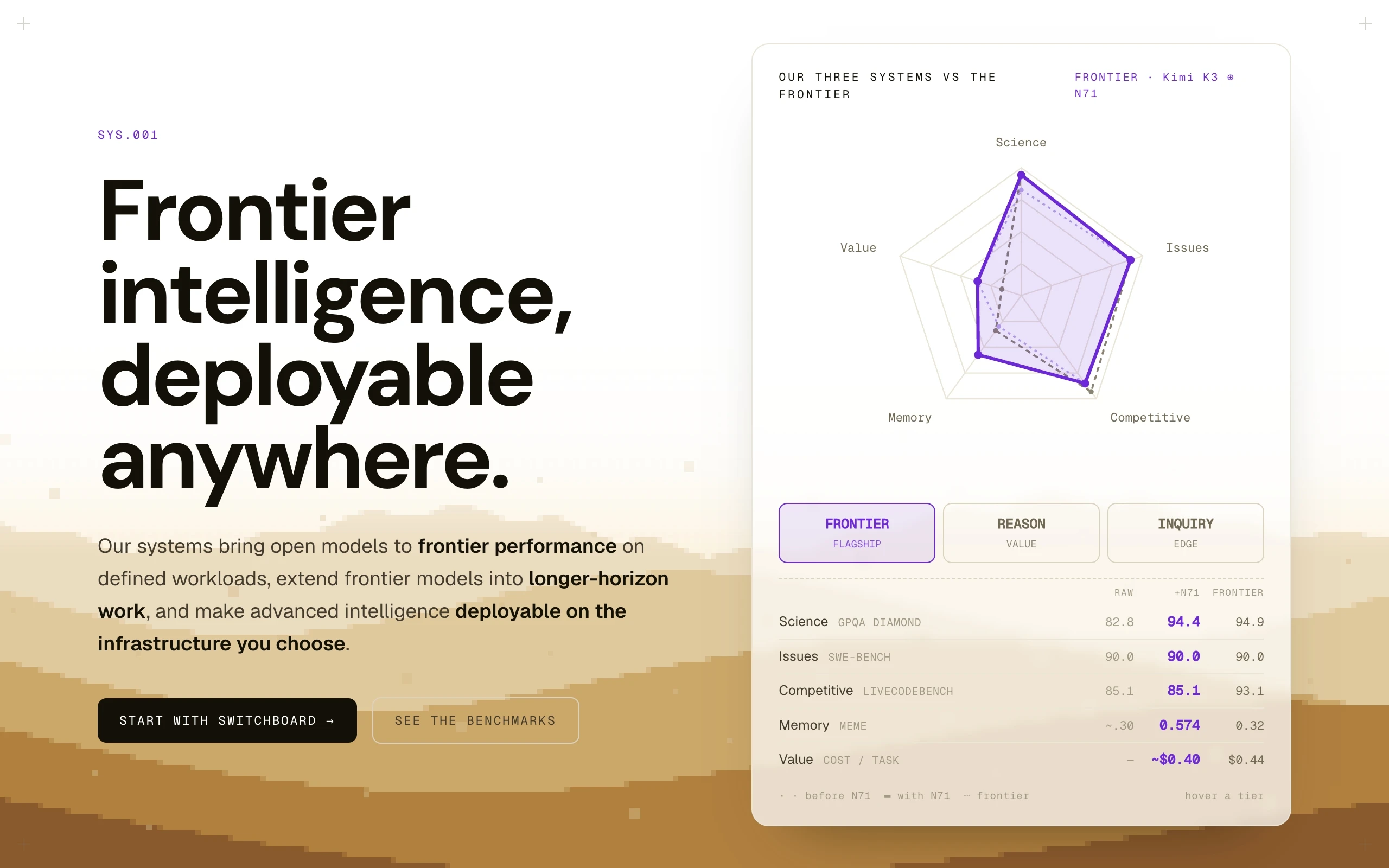
N71 is an AI infrastructure platform that provides a persistent, shared context layer for teams using multiple AI agents. By connecting workspace applications like Notion, email, calendars, code repositories, and chat over Model Context Protocol (MCP), N71 converts siloed workspace data into a living knowledge graph. AI agents across different clients read from this unified graph in real time, eliminating repetitive re-briefing while maintaining citations and source transparency.
N71 was founded in 2026 by Mira Charkawi, Sanad Yaghi, and Rafi in Abu Dhabi, UAE. Working across multiple AI agents like Claude, Cursor, and ChatGPT daily, the founders grew frustrated that every new chat session started from zero context. To eliminate re-briefing fatigue, they built N71 as a unified context and graph memory layer that lets all AI tools query a single, continuously updated organizational memory.