
Loading SaaS profile...
Loading SaaS profile...
An AI-powered chat-based builder that turns plain-language descriptions into installable personal Android APK files.
Transforms conversational plain-language application prompts into functional, native Android tools Generates comprehensive technical implementation outlines and credit budgets prior to compilation phases Compiles ready-to-install Android APK binaries bypassing typical web sandbox restrictions Deploys swift over-the-air updates wirelessly for simple post-installation feature expansions Secures private logs and dashboard assets using a strict local-first data architecture layer
Chat-First Design: Drops overwhelming drag-and-drop design builders for a fast, sentence-based code generation logic. Local-First Privacy: Protects structural activity records by storing user data on-device rather than on public servers. Native File Access: Provides standalone Android APK files that install natively instead of fragile browser demos. Transparent Pre-Builds: Displays clear project credit allocations so builders evaluate limits before initializing servers. Continuous Iteration: Enables smooth, conversation-based application upgrades post-install via simple chat requests.
Category: AI & Automation
Team Size: 1-10
Visit Website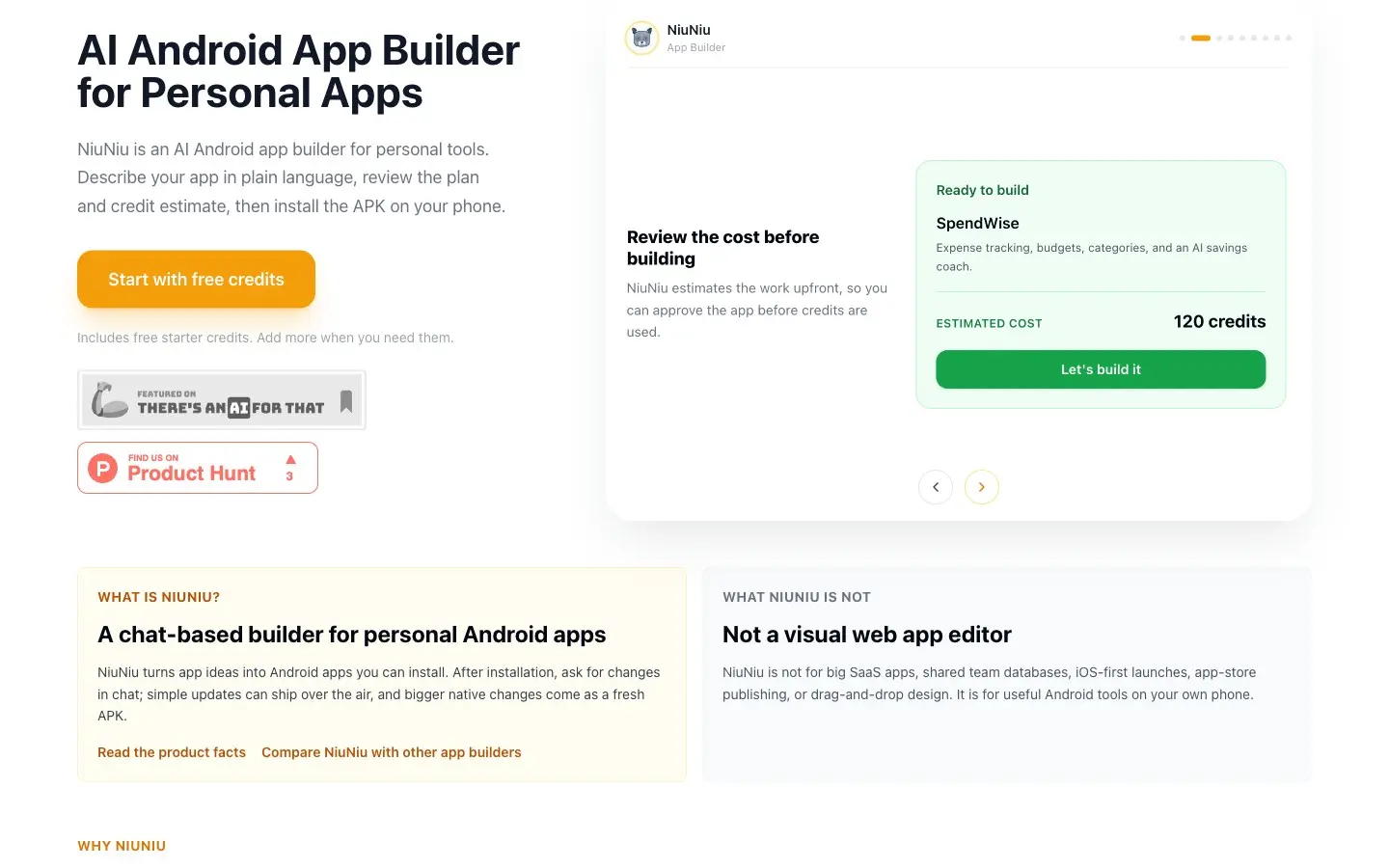
NiuNiu is an innovative, conversation-driven AI application builder specifically engineered to create personal mobile tools without standard canvas editors or programming requirements. By avoiding heavy drag-and-drop web setups, it lets users detail their unique software requirements inside a streamlined chat layout to generate full-featured, local-first Android apps. The platform translates natural language inputs directly into ready-to-install APK packages, enabling effortless creation of tailored trackers, workflow sheets, and private digital logs built exclusively for individual devices.
NiuNiu was launched in mid-2026 to dismantle the steep development roadblocks that keep casual smartphone users from having software tailored perfectly to their lives. Recognizing that large no-code suites are built primarily for commercial SaaS products and team databases, the engineers utilized React Native and Expo to build an automated engine focused strictly on lightweight, local personal utilities.