Loading SaaS profile...
Loading SaaS profile...
Build, host, and ship AI-native apps and MCP servers.
Allows developers to author AI-ready tools using a declarative TypeScript/Python SDK (server.ts). Hosts and governs apps as stable, multi-tenant URLs with built-in OAuth, security, and policy management. Enables cross-assistant deployment, ensuring the same business logic runs in ChatGPT, Claude, Gemini, and MCP clients. Provides just-in-time widgets that render only when an AI agent needs to display a specific UI component.
Unified declarative runtime eliminates the need to build separate front ends or platform-specific integrations. Multi-tenant architecture scales as the number of users or assistants grows without increasing host management overhead. Built-in security and governance tools like OAuth 2.0 and policy enforcement ensure production-readiness for business data. Headless design allows business logic to be exposed directly to AI agents, bypassing traditional UI/UX bottlenecks.
Category: AI & Automation
Team Size: 5-10
Visit Website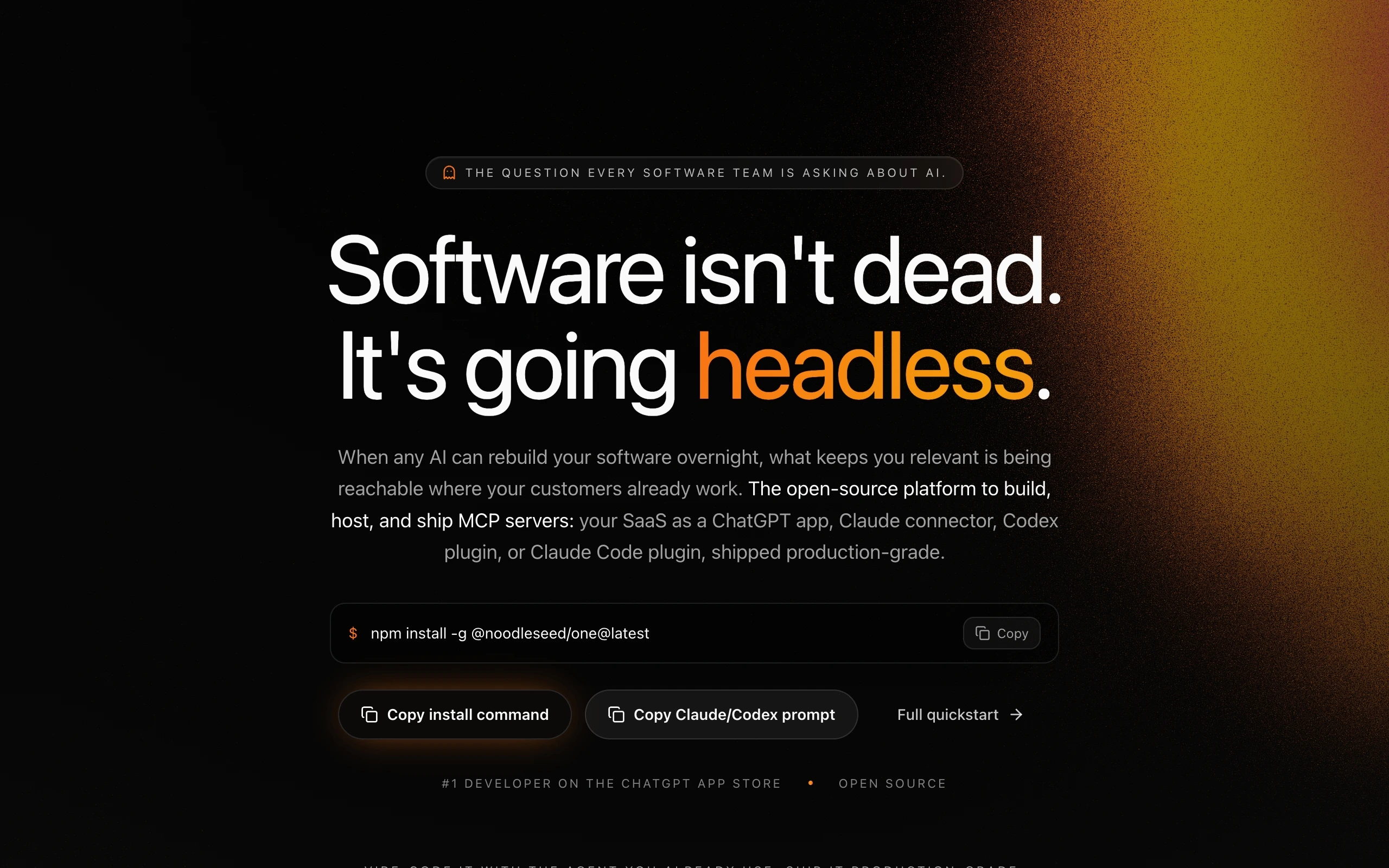
Noodle Seed is an agentic infrastructure platform that enables businesses to deploy apps and services directly inside conversational AI assistants like ChatGPT, Claude, and Gemini. By using a declarative server-side SDK, it allows developers to author AI-ready tools once and host them as governed, multi-tenant services. This approach transforms business data into actionable interfaces that appear just-in-time within the user's preferred AI environment.
Noodle Seed was founded in 2024 in Fremont, California, by Fahd Rafi and Asad Iqbal. Driven by the challenge of AI distribution, they aimed to solve the problem of business apps being buried in menus and tabs. The company focuses on moving business capabilities from static screens into the 'body' of AI assistants where users are already working.