
Loading SaaS profile...
Loading SaaS profile...
Open-source wearable AI pendant capturing conversations and generating notes.
Captures and transcribes audio continuously via a wearable pendant to prevent lost information. Generates smart meeting notes, summaries, and task lists automatically from everyday conversations. Syncs seamlessly across Mac, iOS, Android, and web to make memories instantly searchable. Empowers developers with an open-source hardware and software stack to build custom AI applications.
Leverages ambient computing to eliminate the friction of manually taking notes during interactions. Differentiates from competitors with a completely open-source hardware and dedicated developer ecosystem. Provides strong cross-platform continuity so action items are instantly available on phones or laptops. Features robust privacy controls including on-device processing options and encrypted data transmission.
Category: AI & Automation
Team Size: 2-10
Visit Website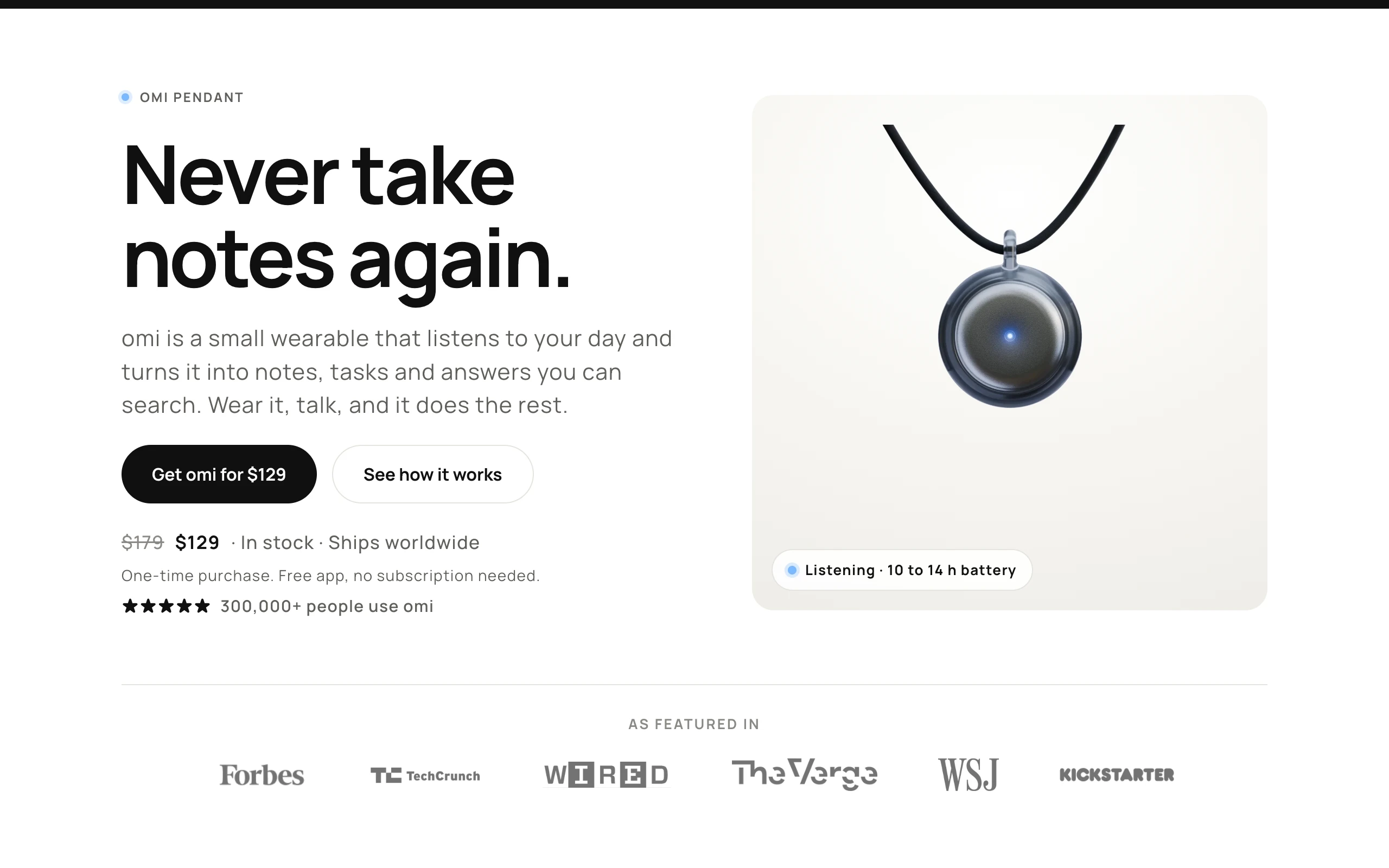
Omi is an open-source wearable AI device and software platform that acts as a continuous personal memory assistant. It captures everyday conversations, meetings, and thoughts, automatically turning them into searchable transcripts, summaries, and action items. The device syncs with mobile, desktop, and web apps to provide users with a comprehensive second brain.
Nik Shevchenko founded Based Hardware in San Francisco to create Omi in 2024. Originally starting as a project named Friend, Shevchenko pivoted and rebranded the open-source hardware to Omi. He aimed to build an ambient second brain that seamlessly captured the context of daily life without distracting the user.