Loading SaaS profile...
Loading SaaS profile...
Open-source PostgreSQL connection pooler, load balancer, and sharding proxy.
Multiplexes thousands of client connections over a tiny pool of Postgres server connections using real transaction mode. Distributes read queries across replicas and handles automatic primary failover detection like an application load balancer. Automatically routes queries and shards data across multiple databases without requiring database extensions or application rewrites. Executes atomic cross-shard transactions utilizing native Postgres prepared transactions and two-phase commit protocols.
Open-source licensing model ensures total transparency, community contribution, and free self-hosted deployment. Eliminates leaky abstractions by supporting native session states, SET commands, and advisory locks without connection pinning. Written in Rust to deliver multi-threaded, asynchronous performance capable of handling massive query throughput safely. Requires zero application code modifications or proprietary database extensions to achieve horizontal sharding.
Category: Utilities & System Tools
Team Size: 2-10
Visit Website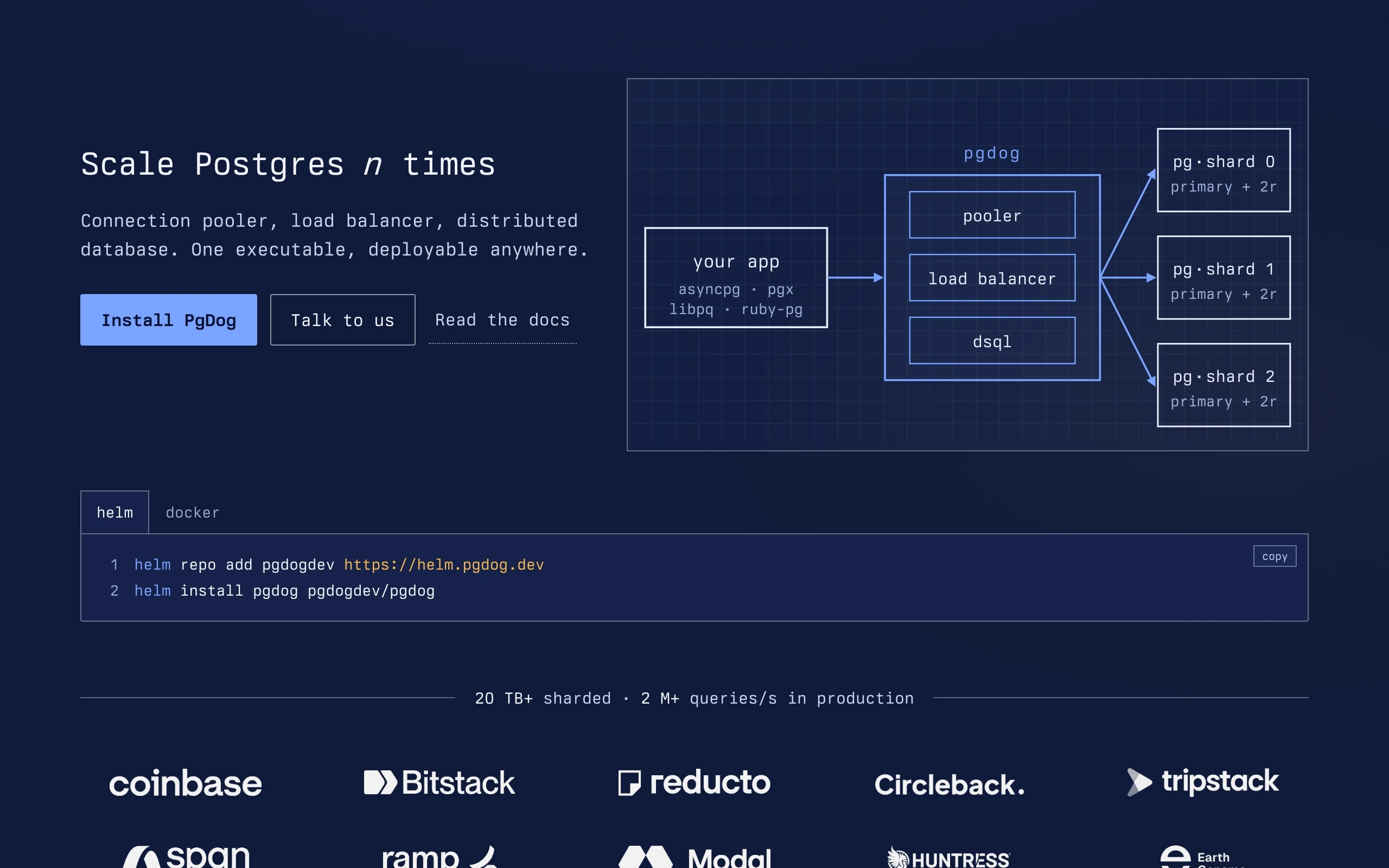
PgDog is a high-performance, open-source clustering middleware and proxy designed specifically for PostgreSQL. Written in Rust, it acts as a connection pooler, read-replicas load balancer, and database sharder without requiring application code changes. It preserves full session state compatibility, supports cross-shard atomic transactions, and handles heavy workloads efficiently. By sitting transparently between apps and databases, it scales Postgres infrastructure seamlessly.
PgDog was founded by Lev Kokotov, a technical founder with extensive background scaling large database systems at companies like Instacart. Recognizing the limitations of existing PostgreSQL routing and connection tools, the creator built a fast, extension-free Rust proxy to handle transparent sharding, load balancing, and connection pooling under heavy production traffic.