
Loading SaaS profile...
Loading SaaS profile...
A visual discovery and bookmarking platform for collecting, organizing, and sharing creative ideas.
Allows users to discover, save, and organize high-quality visual content into custom thematic pinboards. Utilizes native visual search and object recognition tools to identify items in real-world images and surface product links. Employs adaptive machine learning recommendation systems to curate highly personalized homepage discovery feeds based on pinning history. Features 'Promoted Pins' and specialized 'Shopping Ads' to dynamically insert brand assets into high-intent search paths. Provides detailed performance tracking dashboards for verified merchant profiles and creators to monitor impression conversions. Includes collaborative 'Group Boards' to facilitate group planning, mood-boarding, and cross-user community curation workflows.
Visual-First Intent: Capitalizes on early-stage lifestyle discovery, capturing prospective buyer focus long before standard commercial search intent kicks in. Persistent Content Lifecycle: Delivers compounding long-tail traffic as pins retain searchable value and continue to be re-saved over months or years, unlike chronological feeds. Frictionless Curation: Provides an incredibly intuitive 'Pin It' mechanism that makes saving web items a highly addictive, satisfying organizational habit.
Category: Social & Community
Team Size: 100+
Visit Website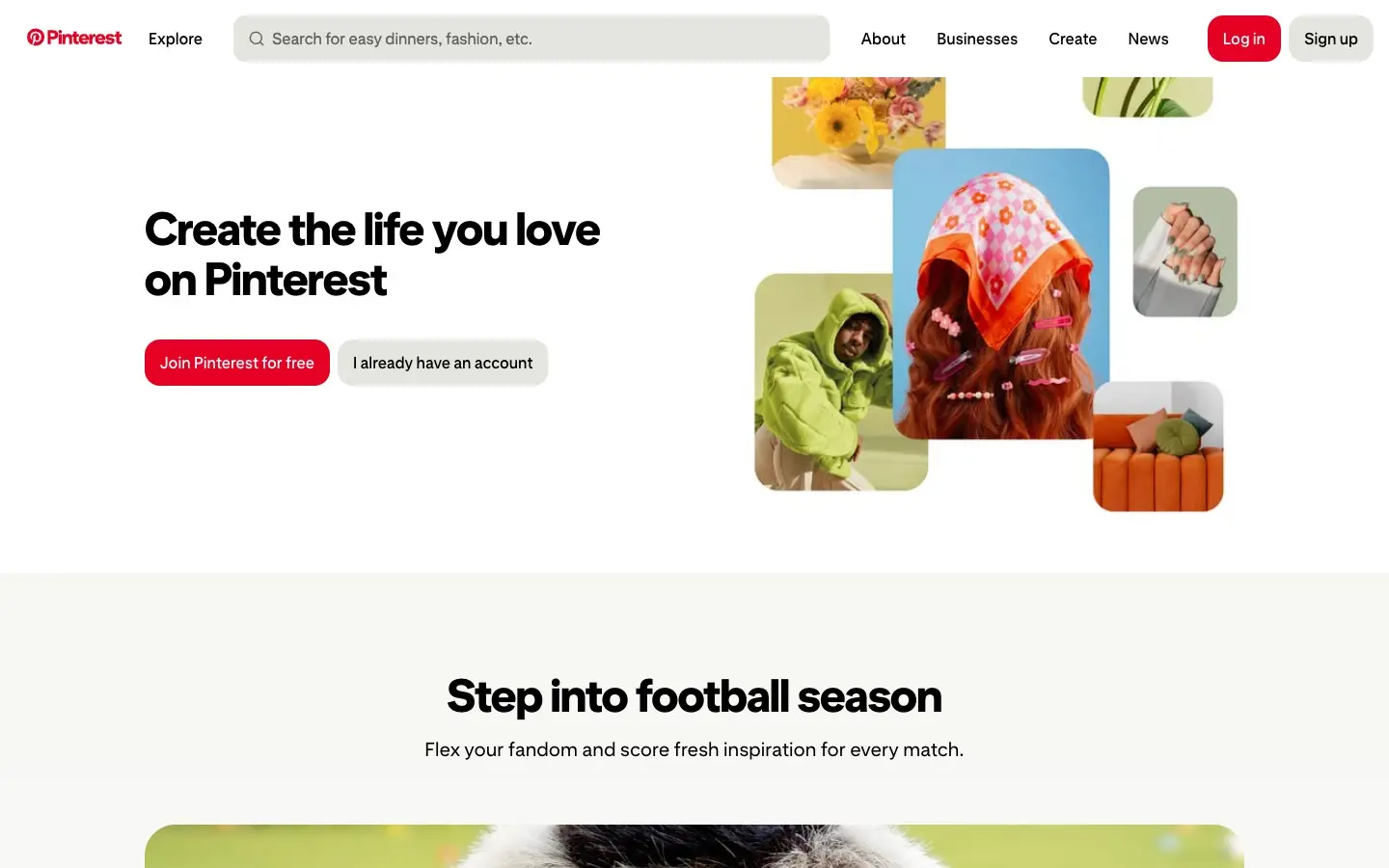
Pinterest is a globally dominant visual discovery, search, and social bookmarking platform that operates as a virtual curation space. The platform allows users to find, collect, and organize media—such as images, animated GIFs, and videos—onto thematic, personalized virtual boards known as 'pinboards'. By blending native visual search engines, machine learning recommendation systems like PinRec, and high-intent retail discovery elements, Pinterest connects millions of consumer search trends with brand assets, enabling ecommerce merchants and creators to scale targeted traffic globally.
Pinterest was born after co-founders Ben Silbermann and Paul Sciarra abandoned an iPhone mobile shopping application they had developed called Tote. Observing that users were using Tote not to shop, but rather to collect and save beautiful photos of clothes to show friends later, Ben envisioned a dedicated digital pinboard mirroring the physical shadowboxes of bugs he collected as a child. Teaming up with architecture student Evan Sharp to execute the layout design, they launched the initial prototype in March 2010.