
Loading SaaS profile...
Loading SaaS profile...
An autonomous Kubernetes resource management platform that continuously rightsizes pod resources and optimizes infrastructure in real-time to ensure performance and reduce cloud costs.
Automatically rightsizes CPU and memory requests/limits for pods in real-time based on actual usage Optimizes node utilization through intelligent pod placement and bin-packing Manages replica counts dynamically to scale ahead of demand Provides deep cost visibility and real-time monitoring across clusters, namespaces, and applications Supports autonomous GPU workload rightsizing and automated pod healing to prevent throttling and OOM kills
Eliminates the manual effort of constantly tuning Kubernetes resource requests and limits Enhances performance and stability by reacting to real-time spikes rather than historical averages Maintains security and compliance by being a fully self-hosted solution that keeps data local to the cluster Works alongside existing native autoscalers (HPA, VPA, Karpenter) to enhance, not replace, trusted tooling Reduces cloud infrastructure spend significantly by reclaiming wasted, over-provisioned capacity
Category: Utilities & System Tools
Team Size: 51-200
Visit Website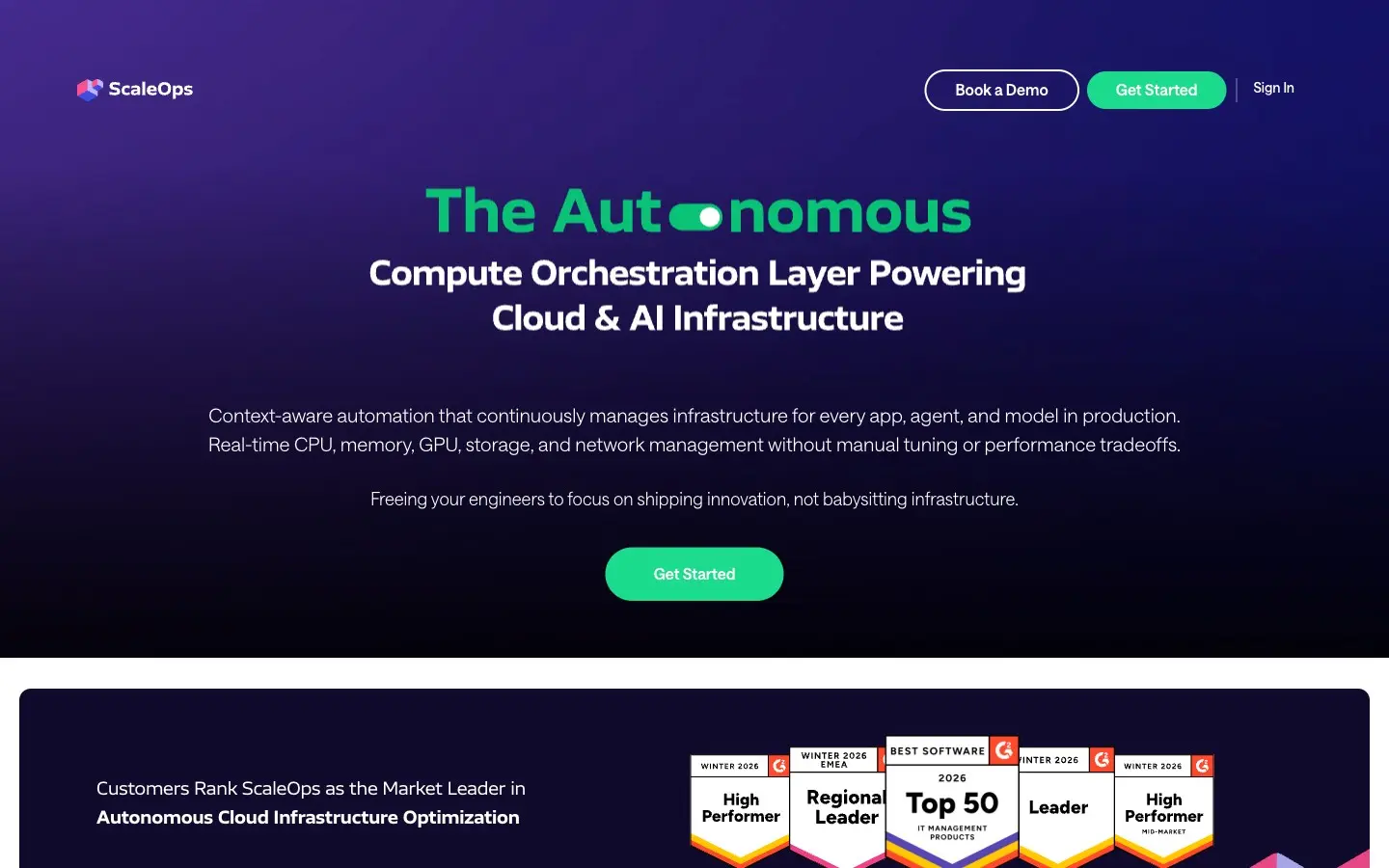
ScaleOps is an autonomous cloud infrastructure platform that continuously manages and optimizes Kubernetes resources for every application, agent, and model in production. By replacing manual, static resource tuning with real-time, context-aware automation, ScaleOps ensures that workloads receive exactly the resources they need based on live demand. It integrates seamlessly with existing autoscalers, runs self-hosted to maintain data privacy, and is designed to eliminate over-provisioning and operational overhead without requiring changes to infrastructure or cloud commitment strategies.
ScaleOps was founded to solve the inherent friction of manual Kubernetes resource management, where infrastructure often drifts faster than human operators can correct it. The platform was built to allow engineering teams to focus on shipping innovation and building applications, rather than spending time babysitting infrastructure configurations and balancing cluster efficiency.