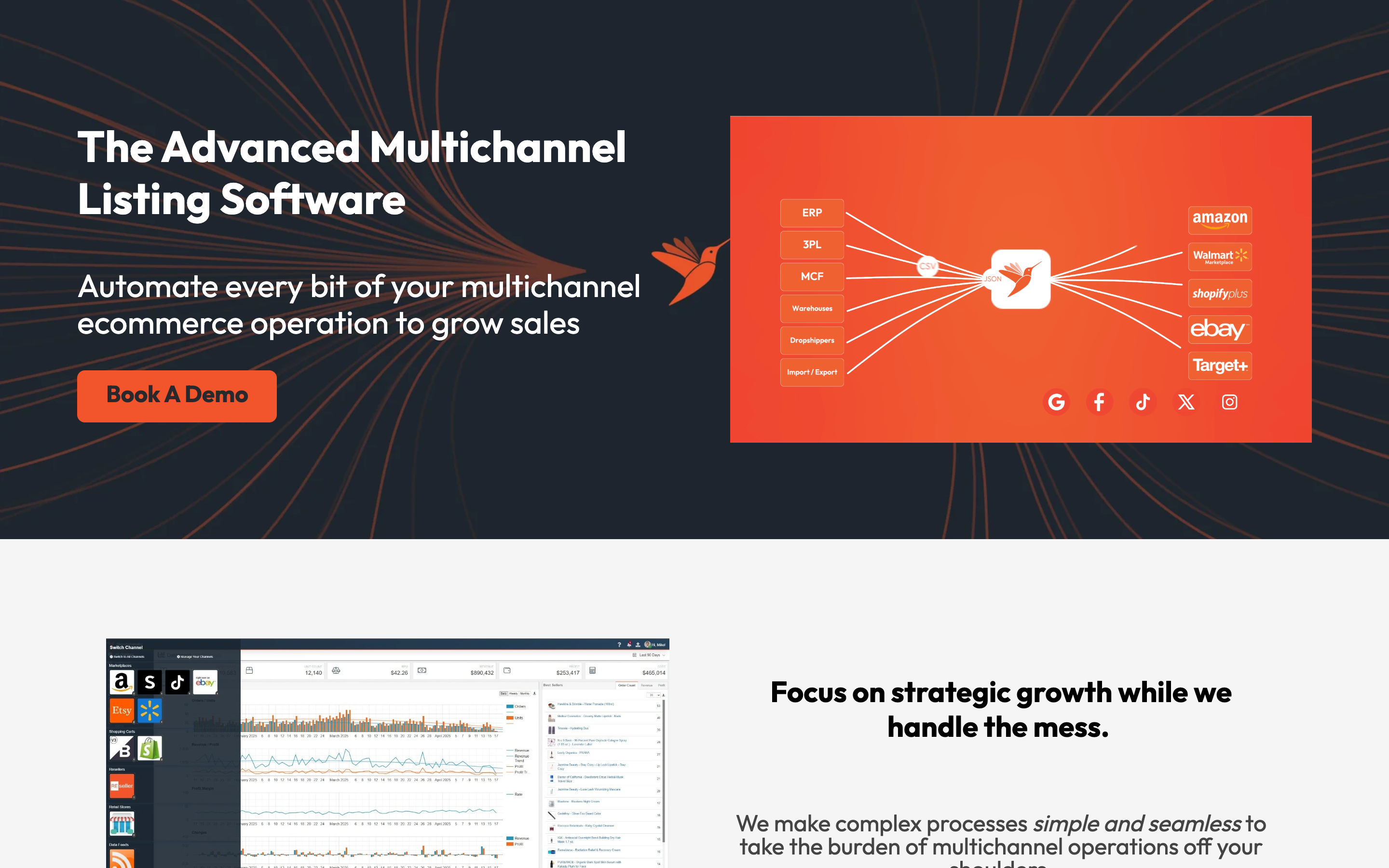
Multichannel e-commerce listing and inventory management.
What it does
Synchronizes product listings across multiple global marketplaces.
Maps complex product data and variations for different channel requirements.
Syncs live inventory levels to prevent overselling.
Routes orders automatically to designated fulfillment centers.
Manages multi-currency pricing and localized storefronts.
Why it works
Complex Catalog Mastery: Excels at handling incredibly complex parent-child product variations (like size and color matrices) that simple inventory tools break on.
Marketplace Specificity: Every marketplace has different rules for listings; StoreAutomator actively transforms your master product data to perfectly match the strict requirements of Amazon, Walmart, or eBay.
Oversell Prevention: Automatically syncs stock levels across every channel simultaneously, protecting sellers from account suspensions caused by out-of-stock orders.
Global Expansion: Easily manages multi-region, multi-currency listings, allowing brands to launch into international Amazon marketplaces seamlessly.
Alias Management: Allows sellers to list the exact same physical product under different aliases or bundles to maximize search visibility.
Multichannel e-commerce listing and inventory management.
Overview
StoreAutomator is a multichannel e-commerce management platform that helps brands and distributors synchronize their product listings, inventory, and orders. It allows merchants to manage massive catalogs across Amazon, eBay, Walmart, and Shopify from a single, centralized dashboard.
Synchronizes product listings across multiple global marketplaces.
Maps complex product data and variations for different channel requirements.
Syncs live inventory levels to prevent overselling.
Routes orders automatically to designated fulfillment centers.
Manages multi-currency pricing and localized storefronts.
Who it's for
E-commerce brands
Wholesale distributors
Amazon sellers
Retail enterprises.
Why it works
Complex Catalog Mastery: Excels at handling incredibly complex parent-child product variations (like size and color matrices) that simple inventory tools break on.
Marketplace Specificity: Every marketplace has different rules for listings; StoreAutomator actively transforms your master product data to perfectly match the strict requirements of Amazon, Walmart, or eBay.
Oversell Prevention: Automatically syncs stock levels across every channel simultaneously, protecting sellers from account suspensions caused by out-of-stock orders.
Global Expansion: Easily manages multi-region, multi-currency listings, allowing brands to launch into international Amazon marketplaces seamlessly.
Alias Management: Allows sellers to list the exact same physical product under different aliases or bundles to maximize search visibility.
Founder story
Gokhan Erkavun spent years in the e-commerce consulting space, watching massive distributors struggle to sell their products across different marketplaces. The problem wasn't marketing; it was data. Managing a catalog of 50,000 products across Amazon, Walmart, and a personal website meant fighting three completely different sets of rules and inventory systems. In 2018, he launched StoreAutomator to act as the ultimate data translator and central hub, allowing complex retail brands to scale their multichannel presence effortlessly.

Alternatives
Comparison overview
ChannelAdvisor: The absolute giant in enterprise multichannel commerce (acquired by CommerceIQ), known for massive scale but highly expensive and complex contracts.
Linnworks: A heavily UK-based powerhouse that manages deep inventory and warehouse routing alongside marketplace listings.
Sellbrite: A highly popular, user-friendly multichannel tool (acquired by GoDaddy) designed specifically for smaller SMB merchants.
Zentail: An AI-driven e-commerce platform that heavily automates the mapping of complex product categories across marketplaces.
While Sellbrite is great for small beginners and ChannelAdvisor demands massive enterprise budgets, StoreAutomator perfectly serves the mid-market. It is highly praised for its unmatched flexibility in handling complex parent-child product variations and aliases, offering enterprise-grade data management without the multi-year lock-in contracts of legacy giants.