
Loading SaaS profile...
Loading SaaS profile...
Visual Kanban board tool for flexible team project management.
Organizes projects and workflows using visual boards, customizable lists, and moveable cards representing individual tasks. Automates repetitive tasks, rule-based board actions, and due-date reminders via built-in Butler automation engines. Integrates external applications and productivity tools directly into workflows using modular Power-Ups and add-ons. Provides multi-view layouts including calendar, timeline, table, and dashboard configurations for program visibility.
Utilizes a freemium SaaS subscription model driving massive organic adoption through intuitive self-serve onboarding. Positions as an ultra-accessible, visual task manager requiring zero technical training to achieve immediate team alignment. Leverages robust distribution backed by parent enterprise ecosystem integrations following its acquisition by Atlassian. Offers flexible workflow extension through thousands of community-built Power-Ups and API connectors.
Category: Productivity
Team Size: 100+
Visit Website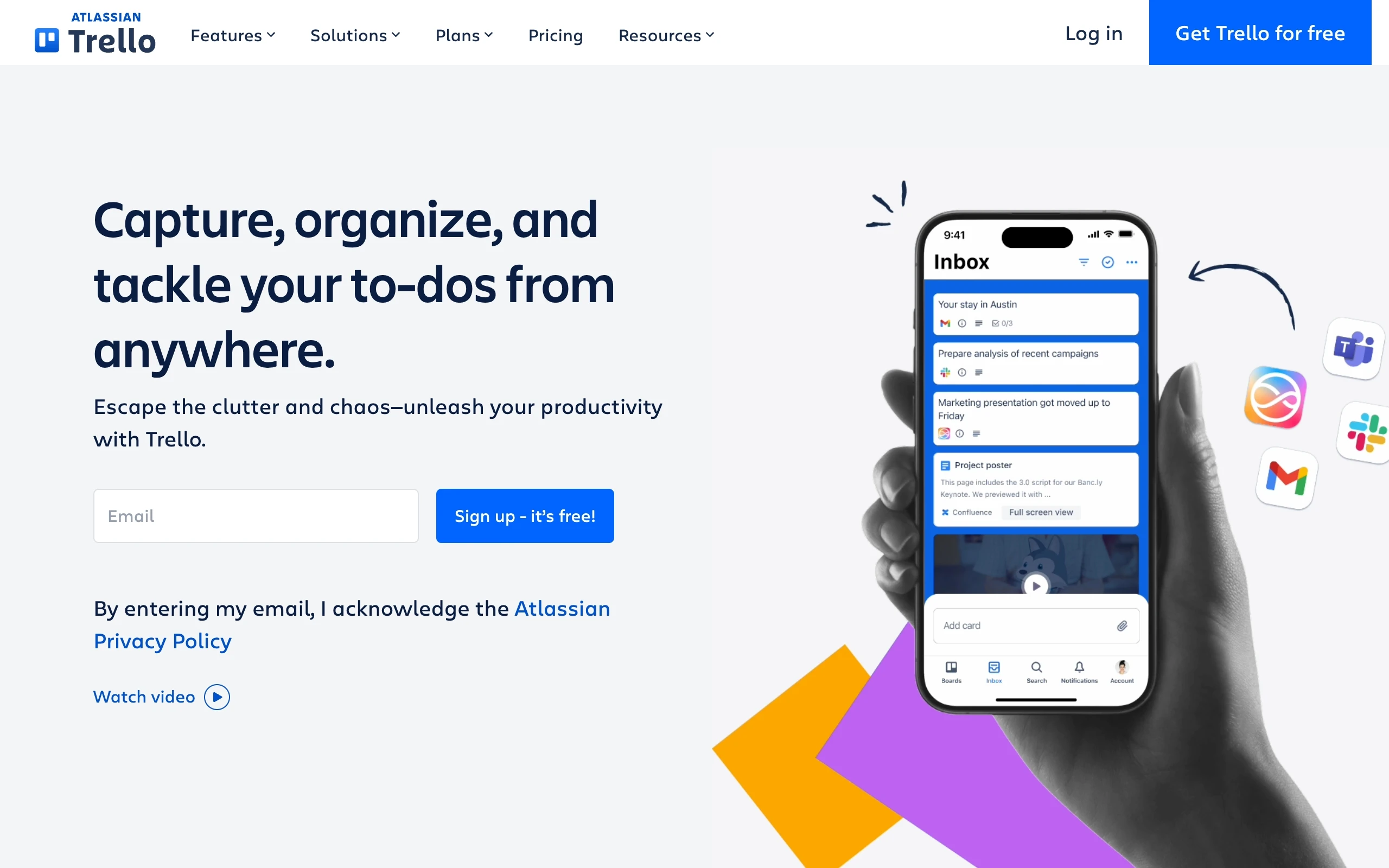
Trello is a popular web-based Kanban-style project management and collaboration platform that helps teams organize tasks using visual boards, lists, and cards. The software simplifies workflow tracking, task assignment, and real-time team communication through an intuitive drag-and-drop interface. It scales from personal to-do lists to complex enterprise programs via custom fields and automation rules. Millions of users worldwide rely on the platform to streamline execution and manage projects effectively.
Trello was originally conceived as an internal project management tool called Trellis at Fog Creek Software in New York City. It was publicly launched in September 2011 at TechCrunch Disrupt by co-founders Joel Spolsky and Michael Pryor. After spinning out as an independent entity with Series A funding in 2014, the company was acquired by Atlassian in January 2017 for $425 million.