Loading SaaS profile...
Loading SaaS profile...
MCP-native self-updating personal context layer for your AI.
Syncs personal and professional data from 20+ apps into a single context layer. Uses MCP-native technology to provide instant, structured data access to AI agents. Continuously updates your context vault so AI tools stay synchronized with your work. Enables granular permission controls to keep private or confidential data secure.
Directly integrates with MCP-compatible tools for seamless data access. Reduces token usage by efficiently structuring data compared to traditional RAG methods. Eliminates repetitive context setting across fragmented AI environments. Provides a portable, private identity vault that moves with you between tools.
Category: AI & Automation
Team Size: 2-10
Visit Website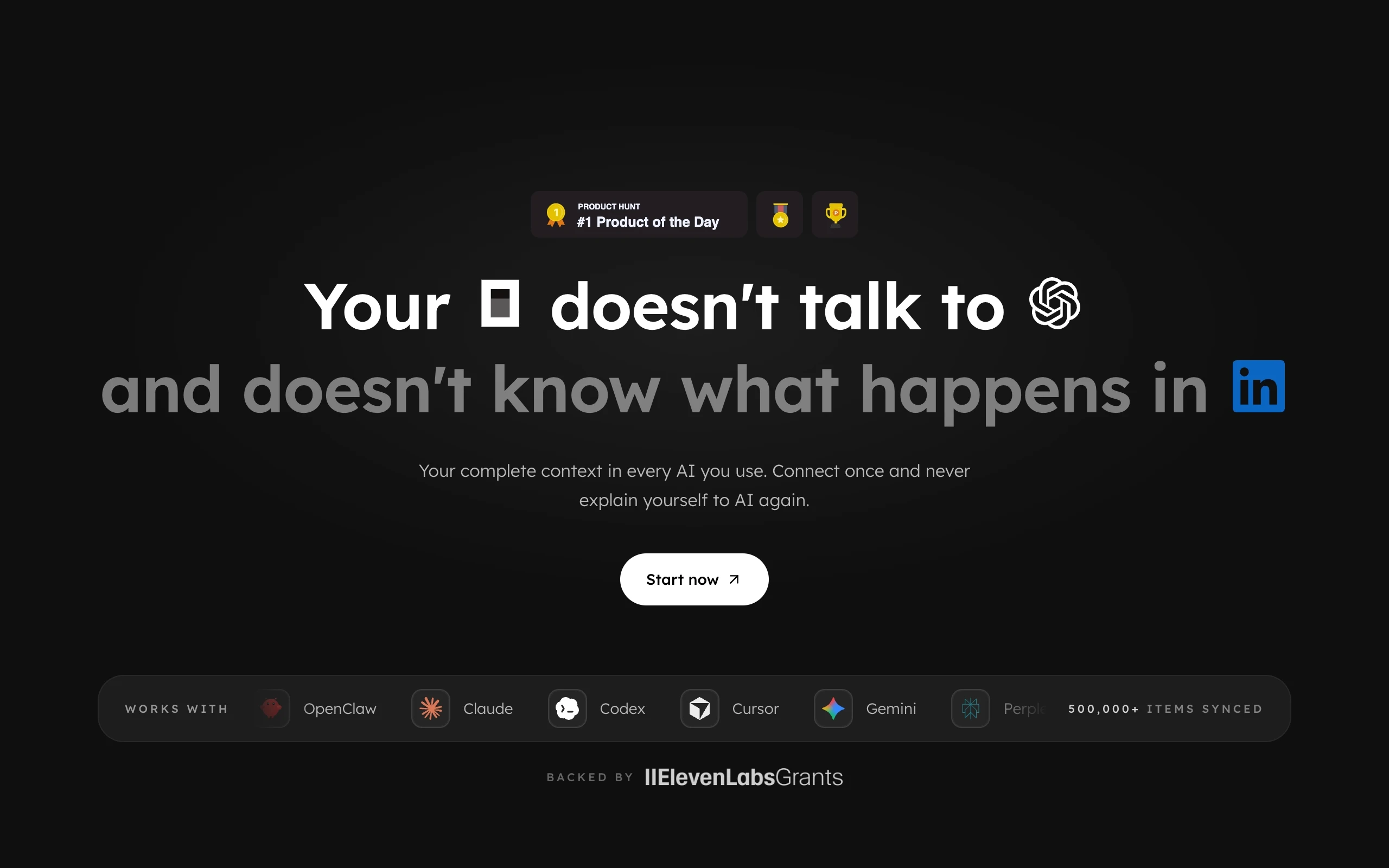
Unabyss acts as a universal, persistent context layer for AI tools like Claude, Cursor, and others. It connects to your existing apps—including email, GitHub, Notion, and Slack—to extract and structure your personal and professional context. This creates a secure, self-updating knowledge vault that eliminates the need to manually re-explain your background or preferences to every new AI agent you use.
Unabyss was founded in 2026 and is headquartered in Warsaw, Poland. The company addresses the frustration of AI context fragmentation, where users must repeatedly re-introduce themselves or their projects to different AI tools. By building a universal, MCP-native context layer, the founders aim to create a consistent, intelligent memory that empowers AI agents to work with deep knowledge of the user's specific workflow.