
Loading SaaS profile...
Loading SaaS profile...
Receive webhooks on localhost directly.
Forwards incoming webhooks to localhost without public IPs. Creates secure, bidirectional tunnels for internal APIs. Distributes a single webhook to multiple distinct destinations. Logs and inspects webhook payloads for easy debugging. Replays failed webhook requests automatically.
Bypasses NAT/Firewalls: It allows developers to test webhooks on their local machines without messing with router configurations or exposing their home network. Fan-out Delivery: Can take one webhook from Stripe and securely fan it out to five different internal microservices simultaneously. Security First: Offers end-to-end encryption and token-based authentication so private networks stay entirely isolated. Uninterrupted Testing: The ability to replay payloads means developers don't have to constantly trigger live events in third-party apps just to test their code. Lightweight Client: Runs via a very simple, lightweight CLI agent that connects effortlessly in seconds.
Category: Utilities & System Tools
Team Size: 1
Visit Website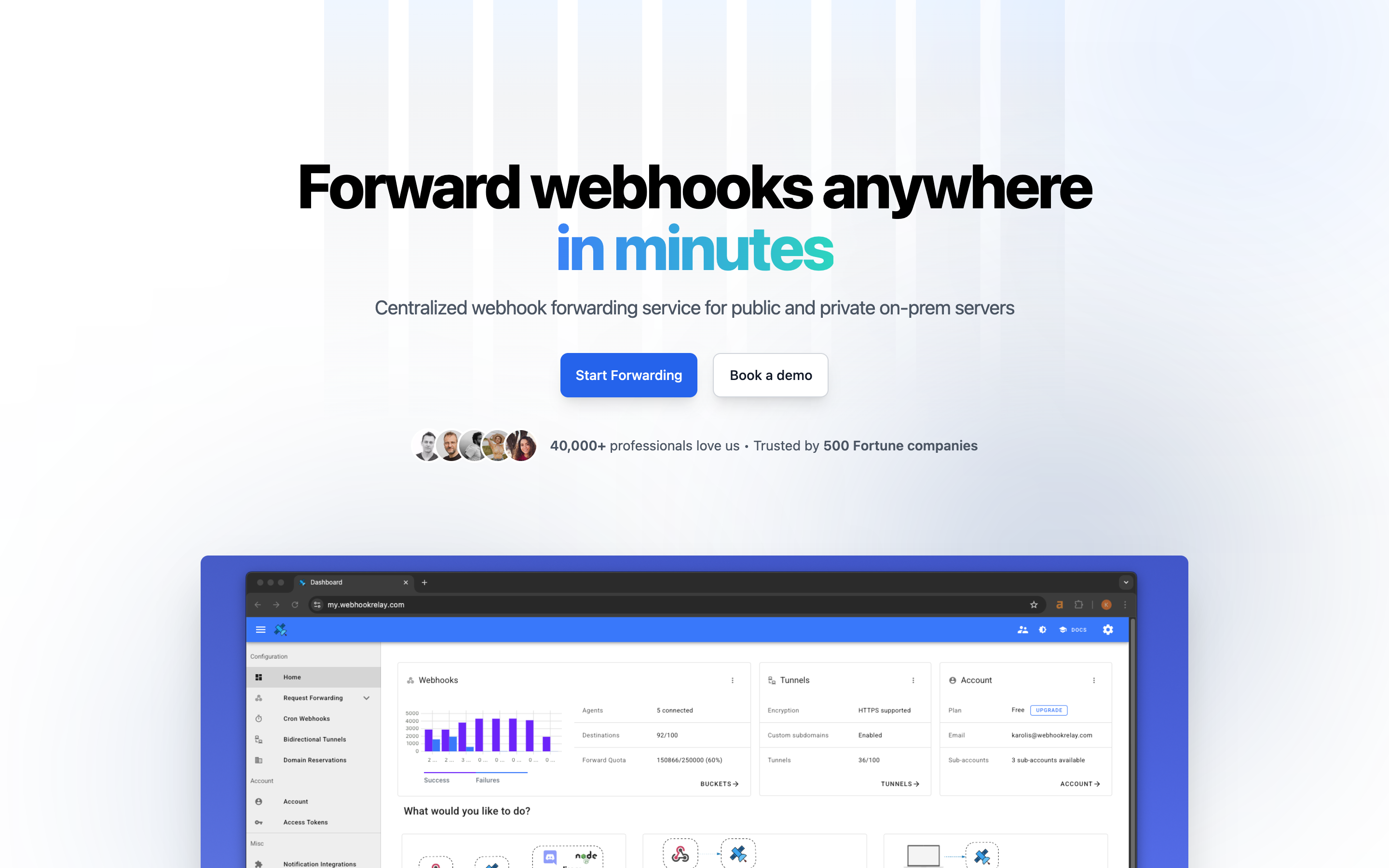
Webhook Relay is a developer tool that creates secure tunnels to route webhooks directly to local development environments or private networks. It eliminates the need to configure complex routers or public IPs, allowing developers to test API integrations from Stripe, GitHub, or Docker seamlessly.
As a DevOps engineer, Karolis Rusenas frequently needed to receive webhooks from GitHub and DockerHub on his local machine and internal private networks. Frustrated by the constant hassle of configuring firewalls, dynamic IPs, and complex routers, he decided to build a simple, secure tunnel specifically for webhooks. He launched Webhook Relay as a solo, bootstrapped side project, growing it steadily into a highly profitable SaaS generating six figures.