
Loading SaaS profile...
Loading SaaS profile...
Unify your institutional knowledge in a single shared context layer to build and deploy custom autonomous AI agents and apps.
Consolidates multi-platform files, transcripts, and chat threads into a permissioned shared context layer Builds and schedules specialized, context-aware AI agents utilizing open Model Context Protocol (MCP) standards Generates custom no-code dashboards, pipeline trackers, and automated briefing tools via single-prompt inputs Routes workloads dynamically between cost-effective and frontier AI models to lower operational compute costs Maintains data isolation architectures that keep all organizational memory strictly controlled by the client enterprise
Compounding Intelligence: Designing an architecture where every agent execution reads from and updates the same workspace guarantees institutional memory never resets. Model-Agnostic Routing: Implementing continuous algorithmic routing reduces processing bills by roughly ten times compared to baseline frontier system costs. Native Tool Interoperability: Adopting standardized Model Context Protocol integrations cuts out months of dedicated infrastructure setup and onboarding overhead. Absolute Ownership: Giving enterprises full portable control over their contextual data prevents vendor lock-in and protects corporate privacy boundaries.
Category: AI & Automation
Team Size: 2-10
Visit Website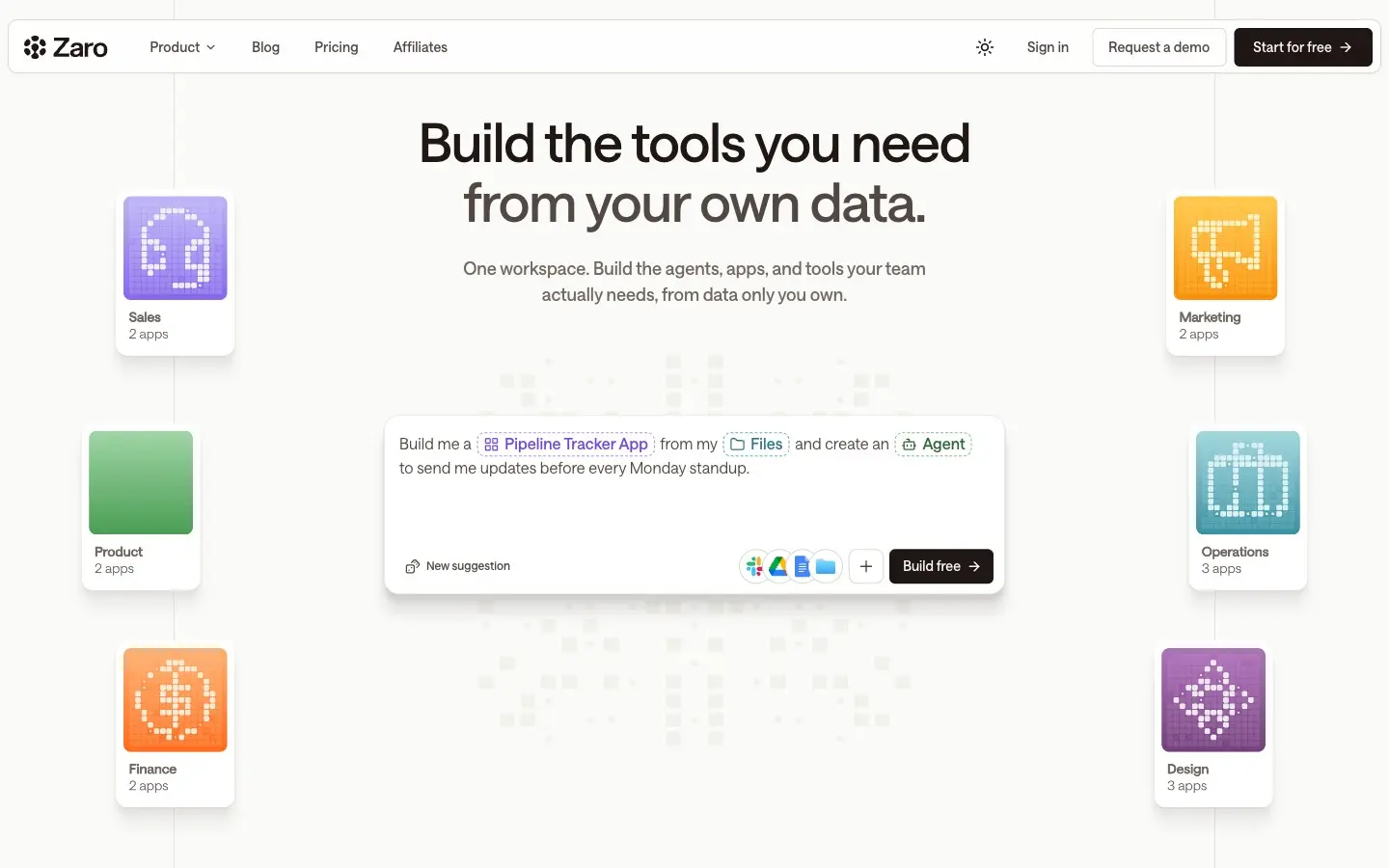
Zaro is an enterprise-grade AI workspace and orchestration layer that enables organizations to unify scattered corporate intelligence from platforms like Gmail, Slack, and Notion into a single, company-owned repository. Founded by veterans from PolyAI, Convergence, and Salesforce's Agentforce team, the platform bridges the gap between disconnected workflows by introducing a persistent shared context layer—ensuring every custom AI agent and auto-generated internal application reads from, builds upon, and compounds organizational knowledge seamlessly without resetting after individual sessions.
Zaro was founded in London in 2026 by Michael Bajwa and Qian Zheng, both seasoned veterans within the conversational intelligence and enterprise software ecosystems who previously worked with innovative teams at PolyAI, Convergence, and Salesforce's Agentforce unit. Frustrated by watching corporate teams drown in fragmented tool switching and disconnected workflows that forced organizational intelligence to reset constantly, they designed Zaro to serve as the definitive shared operational layer for the modern enterprise.