
Loading SaaS profile...
Loading SaaS profile...
Deploy an open-source AI coding agent across your IDE, terminal, and cloud worktrees with full model flexibility and zero vendor lock-in.
Orchestrates complex code refactoring, system architecture planning, and debugging tasks across entire repositories Generates production-ready full-stack applications with functional frontends, backends, and APIs from plain English text Deploys always-on cloud-hosted OpenClaw agents that execute long-running background tasks, cron jobs, and terminal scripts Integrates a transparent token routing layer allowing developers to connect directly using their own API keys Executes automated code reviews directly inside version control pull request pipelines to flag exploitable vulnerabilities
Zero Inference Markup: Allowing developers to bring their own keys eliminates the inflated operational toll common among corporate wrappers. Specialized Agent Modes: Provisioning distinct runtime modules like Code, Architect, and Debug keeps context windows clean and highly specialized. Persistent Background Execution: Moving workflows from local editors to always-on managed cloud servers prevents scripts from pausing when local machines close. Complete Code Portability: Outputting fully standard Next.js and Python structures avoids the rigid database boundaries of walled-garden low-code tools.
Category: AI & Automation
Team Size: 11-25
Visit Website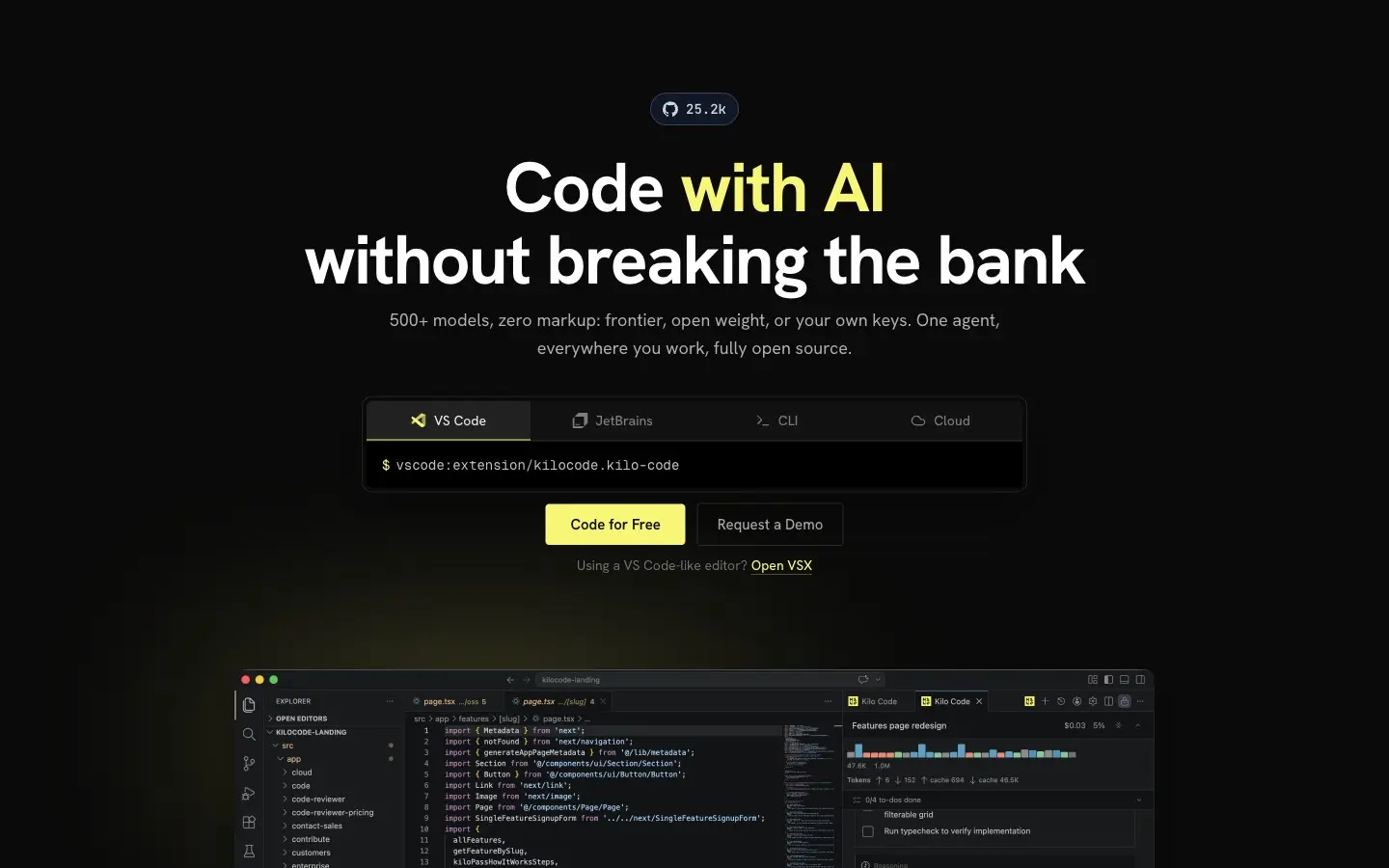
Kilo AI (also featuring Kilo App Builder and KiloClaw) is an all-in-one open-source AI coding platform and autonomous developer agent ecosystem. Built to put developers back in control of their software engineering pipelines, Kilo provides an advanced multi-mode AI companion—operating seamlessly across VS Code, JetBrains, CLI, and fully managed cloud environments—that allows engineers to leverage over 500 distinct frontier and open-weight models, generate full-stack web applications via natural language, and deploy always-on background automation workflows with zero middleware markup or vendor constraint.
Kilo AI was launched in response to the growing fragmentation and restrictive licensing frameworks dominating the initial wave of artificial intelligence development tools. Recognizing that engineers were drowning in expensive monthly software commitments that forced silent model switching, masked contextual prompts, and locked code within sandbox ecosystems, the founding engineering group designed a portable, fully inspectable open-source engine built for complete data sovereignty.