Loading SaaS profile...
Loading SaaS profile...
Undetectable browser automation engine purpose-built for scalable AI agents.
Delivers a privacy-focused web browsing experience. Blocks intrusive advertisements and hidden web trackers natively. Optimizes page loading speeds by removing heavy scripts. Protects user data from unauthorized third-party harvesting.
Achieves complete avoidance across modern anti-bot fingerprinters natively Reduces language model token consumption via text-based Agent Rendering pipelines Executes automated CAPTCHA solving sequences under two seconds cleanly Isolates cookies and proxy settings across parallel session threads simultaneously Supports local execution setups using a built-in zero-dependency architecture
Category: AI & Automation
Team Size: 2-10
Visit Website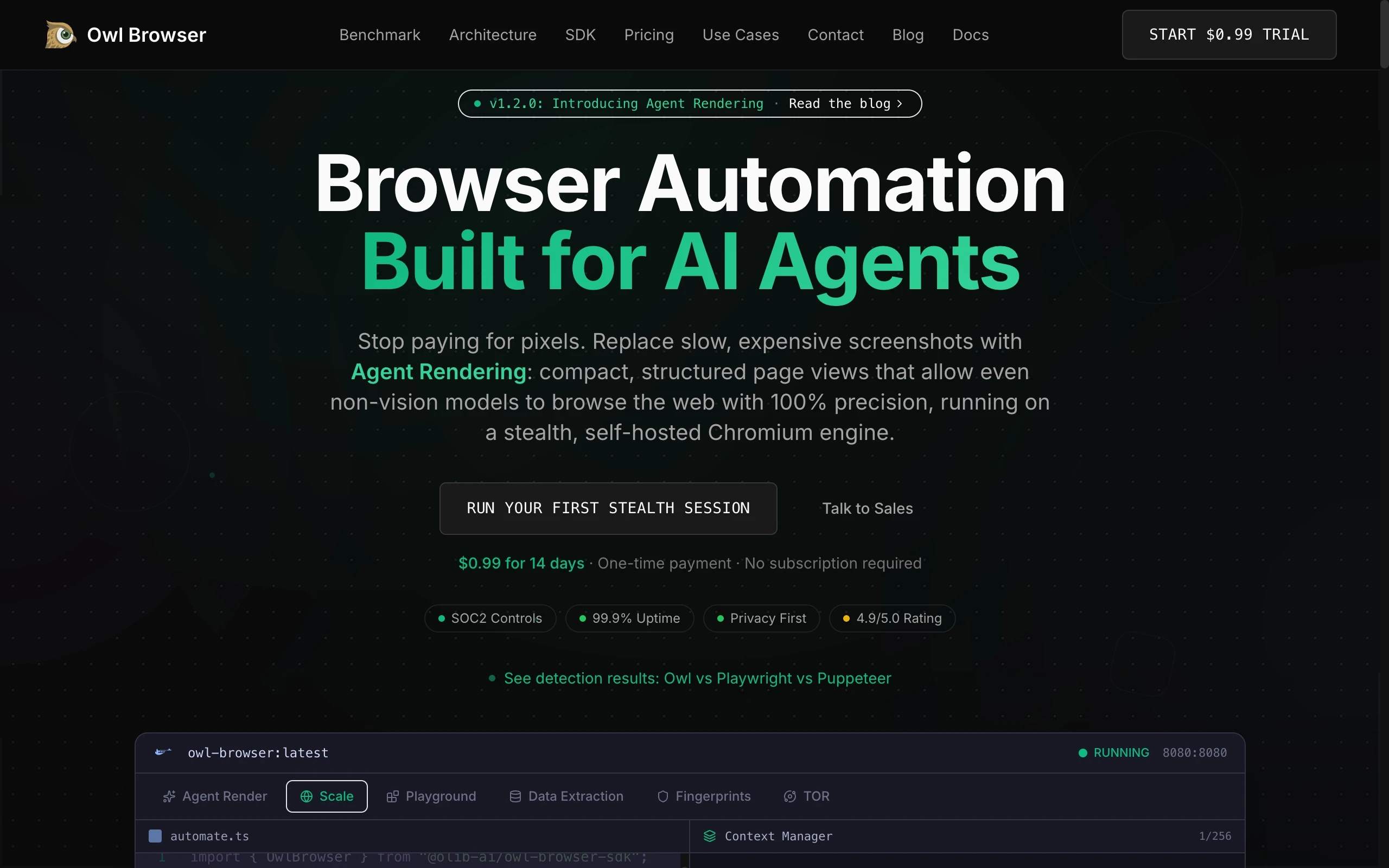
Owl Browser is a stealth-focused browser automation engine designed to prevent AI agents and scraping pipelines from being blocked by anti-bot infrastructure. Built directly from scratch on the Chromium Embedded Framework (CEF), the platform replaces expensive screenshot logic with Agent Rendering to deliver compact, structured page views. It passes bot detection across all major threat categories using multi-process architectures, automated CAPTCHA bypasses, and per-context IP routing rules.
Launched in early 2026 by Olib-AI, Owl Browser was developed to eliminate the chronic instability plaguing programmatic web scrapers. Seeing that standard headless frameworks failed basic bot classification challenges, the engineering team designed a hardened Chromium alternative. The software introduces a native C99 HTTP server and custom layout engines to handle mass automation without telemetry leaks.