
Loading SaaS profile...
Loading SaaS profile...
AI-assisted accessibility scanning for WCAG and EAA compliance.
Performs automated WCAG 2.1/2.2 AA scanning using axe-core and real-browser simulation to identify accessibility barriers like keyboard navigation failures or missing labels. Uses AI vision models to evaluate content quality, such as confirming whether image alt text actually describes the visual content. Provides calibrated confidence scores for issues, separating deterministic automated findings from those requiring manual human judgment. Offers structured Markdown and PDF/CSV exports that can be fed directly into AI coding assistants like Cursor or GitHub Copilot for remediation. Drafts accessibility statements and integrates directly with official regulatory reporting workflows, such as uustatus.no.
Transparent methodology builds trust by clarifying that automation only detects 30-40% of issues, reducing over-reliance on black-box tools. AI-assisted analysis significantly reduces the time spent on manual auditing by flagging items that specifically need a human eye. Real-browser scanning through Playwright ensures that dynamic states, authenticated pages, and complex interactions are tested accurately. Regulatory alignment with WCAG, EAA, and EN 301 549 standards ensures findings are legally relevant for the user's specific region and sector. Developer-friendly outputs allow for seamless remediation by feeding structured reports directly into modern AI-driven coding environments.
Category: AI & Automation
Team Size: 2-10
Visit Website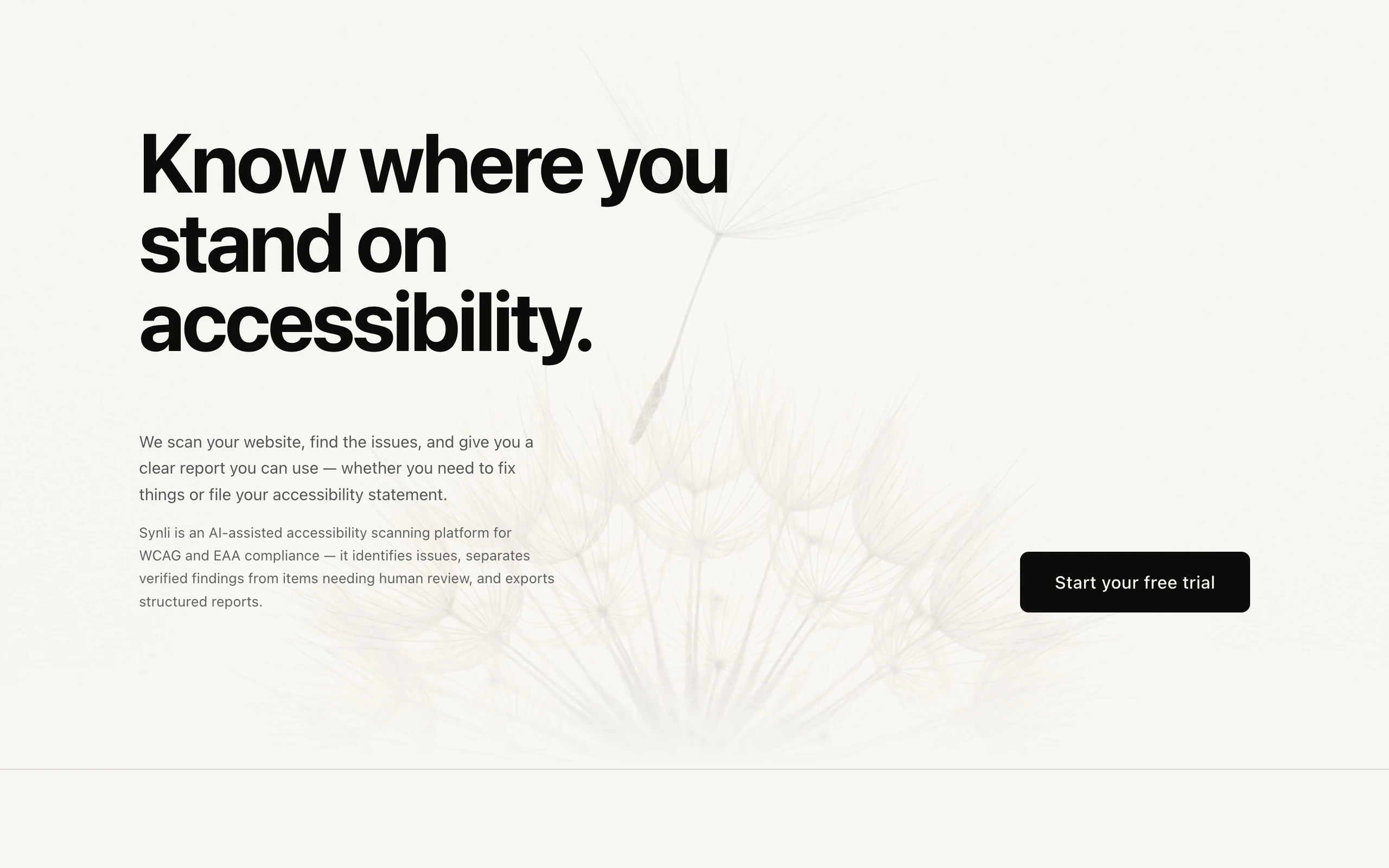
Synli is an AI-assisted accessibility scanning platform that helps organizations identify and remediate WCAG and EAA compliance issues. By combining automated checks with AI-driven vision analysis, it distinguishes between confirmed findings and items requiring human review. The platform streamlines the creation of accessibility statements, offering direct integration with workflows like the Norwegian uustatus.no portal and various developer coding assistants.
Synli was founded with the mission to bring more accuracy and transparency to digital accessibility compliance. Based on an AI-assisted scanning methodology, it addresses the common industry problem where automated tools over-promise on compliance. The company focuses on the European market, specifically aligning with EAA and WCAG standards to help teams maintain valid accessibility statements.