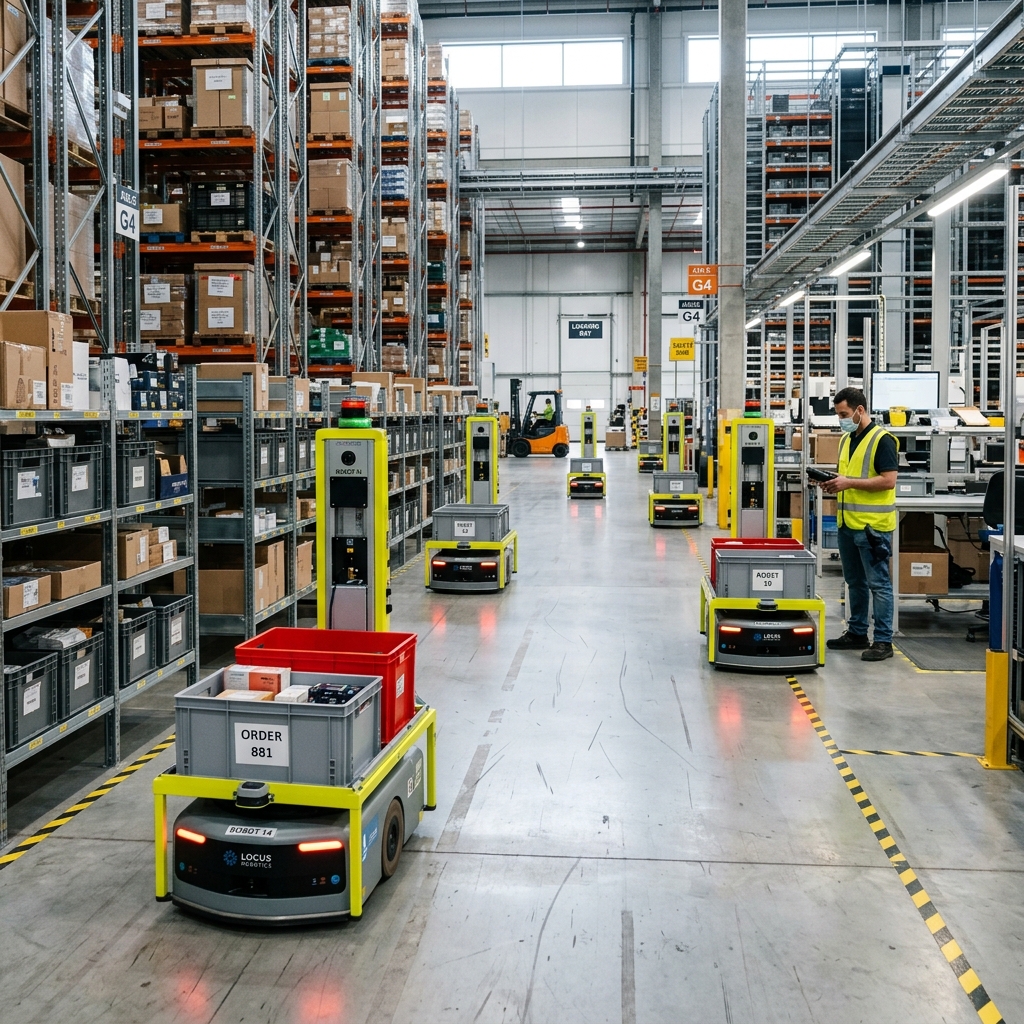
AI is leaving the screen. The biggest opportunity may not be another chatbot, but machines that actually do the work.
The next great AI company may not look like an AI company at all.
It might look like a cleaning company, a warehouse operator, a security business, a farm, or a maintenance contractor, with software and autonomous machines quietly transforming its economics.
[!NOTE] The thesis
The most interesting Physical AI businesses may sell outcomes rather than robots. The machine is infrastructure. The customer buys cheaper, faster, safer, or more reliable physical work.
The AI Revolution Is About to Get Physical
For the last few years, artificial intelligence has lived primarily inside computers.
It writes emails.
It generates images.
It summarizes documents.
It analyzes spreadsheets.
It writes code.
In other words, AI has become remarkably good at manipulating information.
But information is only half of the economy.
The other half is physical.
Someone still has to move the package.
Clean the building.
Inspect the pipeline.
Harvest the crop.
Unload the truck.
Maintain the equipment.
Monitor the construction site.
Patrol the property.
And these jobs have one inconvenient characteristic for businesses:
They require people to physically be somewhere.
That constraint is beginning to change.
The combination of increasingly capable AI, robotics, computer vision, sensors, cheaper hardware, cloud software, and autonomous systems is creating something much bigger than another software category.
It is creating Physical AI.
And the opportunity may be enormous.
1. What Exactly Is Physical AI?
Physical AI is, broadly, AI that can perceive, decide, and act in the physical world.
A traditional software AI might look like this:
DATA → AI → ANSWER
Physical AI looks more like this:
SENSORS → PERCEPTION → DECISION → PHYSICAL ACTION → FEEDBACK
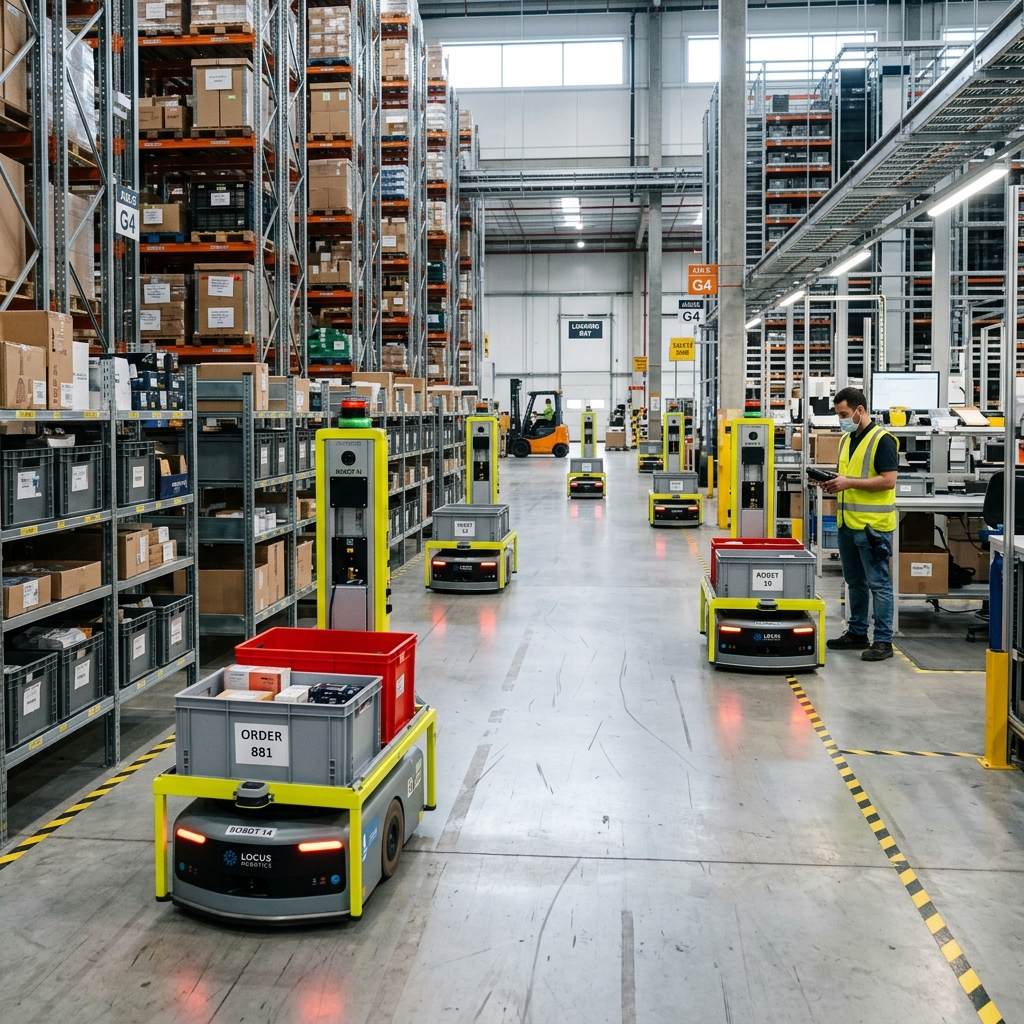
That feedback loop is important.
A robot doesn't simply tell you that a warehouse floor is dirty.
It can potentially:
- Detect the dirt.
- Determine the appropriate cleaning method.
- Navigate to the location.
- Clean the area.
- Verify the result.
- Report what it did.
That is a fundamentally different economic proposition.
The AI isn't merely producing information.
It is producing labor.
A Simple Mental Model
| Traditional Software | Generative AI | Physical AI |
|---|---|---|
| Processes information | Generates information | Acts on the physical world |
| Keyboard & mouse | Natural language | Sensors & actuators |
| Digital output | Digital output | Physical outcome |
| Mostly software cost | Mostly software + compute | Hardware + software + operations |
| Easy to copy | Relatively easy to scale | Requires deployment |
| Example: CRM | Example: AI assistant | Example: autonomous cleaning |
Key distinction: Software can often be deployed globally overnight. A robot has to survive doors, stairs, people, weather, cables, forklifts, dust and, because civilization apparently demands it, the occasional abandoned coffee cup.
That makes Physical AI harder.
It also creates defensibility.
2. Why Boring Industries Are So Interesting
Technology investors have historically loved glamorous markets.
Cloud computing.
Social media.
Fintech.
Crypto.
Consumer apps.
But some of the world's largest industries are remarkably unglamorous.
Consider:
- Commercial cleaning
- Waste management
- Warehousing
- Agriculture
- Construction
- Security
- Landscaping
- Industrial inspection
- Facilities management
- Logistics
- Equipment maintenance
These industries share an important characteristic:
They contain enormous amounts of repetitive physical labor.
And repetitive labor is precisely where automation can become economically compelling.
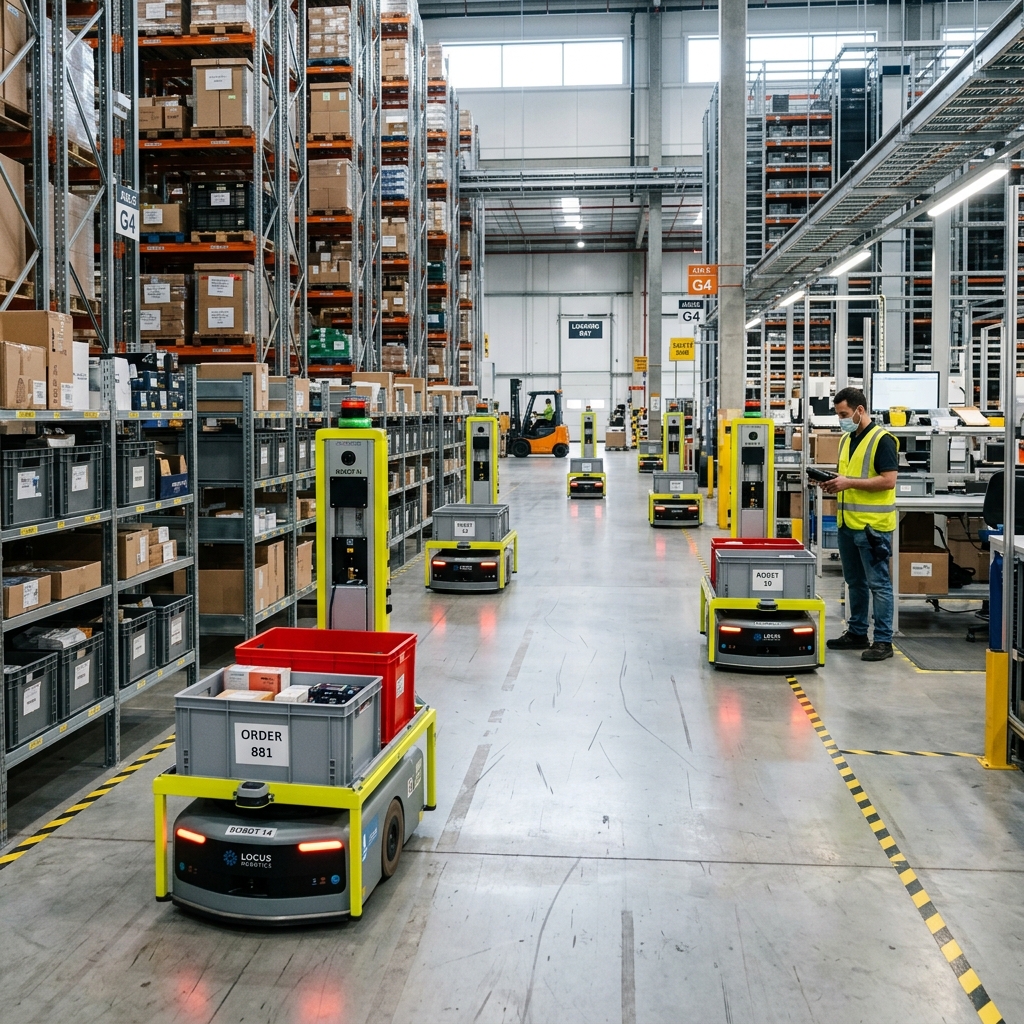
Imagine a company operating 500 commercial buildings.
Today, it may need hundreds of workers performing repetitive tasks across those properties.
Now imagine autonomous systems handling a meaningful portion of:
- Floor cleaning
- Security patrols
- Inventory movement
- Inspection
- Monitoring
- Waste collection
- Maintenance checks
The company hasn't merely purchased robots.
It has changed its cost structure.
3. The Real Product Isn't the Robot
This is where many robotics startups misunderstand the opportunity.
A customer usually doesn't wake up thinking:
“I desperately need a sophisticated autonomous mobile robot.”
They wake up thinking:
“My operating costs are too high.”
Or:
“I can't find enough workers.”
Or:
“This task is dangerous.”
Or:
“I need this facility monitored 24/7.”
That distinction matters.
The winning company may therefore sell an outcome, rather than a machine.
Instead of
“Rent our autonomous cleaning robot.”
Sell
“We keep your facility clean 24/7 for $X per month.”
The robot becomes infrastructure.
The customer buys the result.
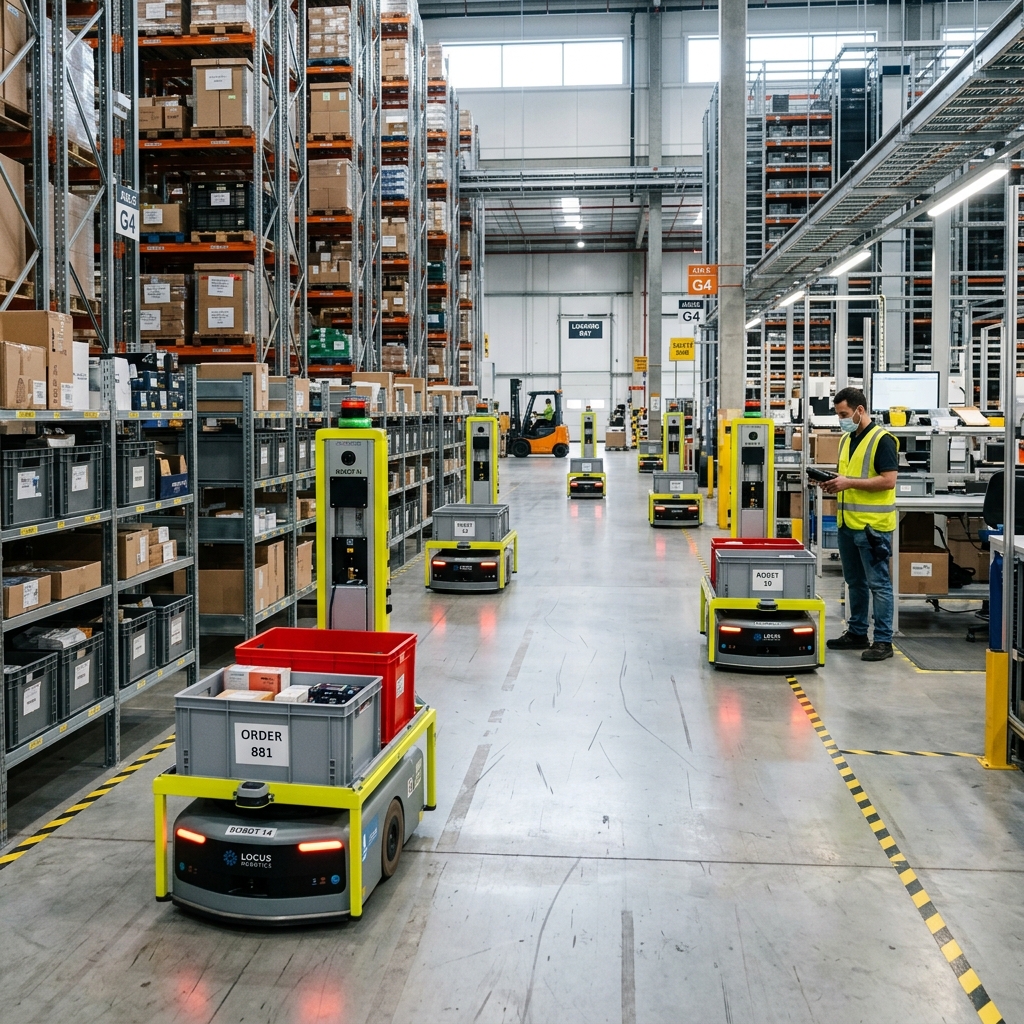
4. Where the Economics Get Interesting
Suppose a hypothetical commercial cleaning operation spends:
| Cost | Traditional Model |
|---|---|
| Labor | $1,000,000 |
| Management | $150,000 |
| Equipment | $100,000 |
| Supplies | $100,000 |
| Other operating costs | $150,000 |
| Total | $1,500,000 |
Now imagine automation doesn't eliminate all labor.
Instead, it changes the labor requirement.
Perhaps the company needs:
- Fewer workers
- More specialized operators
- Remote supervisors
- Better maintenance systems
- More software
The economics might become:
| Cost | Automated Model |
|---|---|
| Labor | $500,000 |
| AI/Software | $150,000 |
| Hardware depreciation/lease | $250,000 |
| Maintenance | $150,000 |
| Supplies | $100,000 |
| Other operating costs | $100,000 |
| Total | $1,250,000 |
The difference is $250,000 per year in this hypothetical example.
Multiply that across hundreds of locations and multiple years, and the economics become considerably more interesting.
And this is before considering the possibility of operating for longer hours.
[!WARNING] The numbers above are illustrative, not industry benchmarks.
The actual economics depend on machine utilization, labor costs, hardware life, financing, maintenance, uptime, deployment costs and the value of the service delivered.
5. Automation Doesn't Necessarily Mean "No Humans"
This is another common misconception.
The first generation of Physical AI businesses probably won't eliminate humans completely.
Instead, they may create a human + machine workforce.
Think of one operator supervising many autonomous systems.
That changes labor productivity.
The machine handles the repetitive physical execution.
The human handles:
- Exceptions
- Repairs
- Customer interaction
- Complex decisions
- Quality control
- Escalations
The economic value comes from increasing the amount of physical work each human can oversee.
6. The Most Attractive Opportunities
Not every physical task is equally suitable for automation.
The best opportunities often have several characteristics.
The Automation Sweet Spot
High labor cost + Repetitive task + Predictable environment + Clear measurable outcome + Large market + Low tolerance for human error = Extremely attractive automation opportunity
Consider warehouse inventory scanning.
A human worker may need to walk through enormous facilities looking for inventory discrepancies.
An autonomous system could potentially navigate the environment, scan products, identify anomalies and generate a report.
The customer doesn't care whether the machine looks impressive.
They care whether:
Inventory accuracy improves while operating costs fall.
That is the business.
7. A Useful Opportunity Matrix
| Industry | Repetition | Labor Intensity | Environment Predictability | Automation Potential |
|---|---|---|---|---|
| Warehousing | Very High | High | High | ★★★★★ |
| Commercial cleaning | Very High | High | High | ★★★★★ |
| Agriculture | High | High | Medium | ★★★★☆ |
| Industrial inspection | High | Medium | Medium | ★★★★☆ |
| Security patrols | High | High | Medium | ★★★★☆ |
| Construction | Medium | Very High | Low | ★★★☆☆ |
| Hospitality | High | High | Medium | ★★★☆☆ |
| Home services | Medium | High | Low | ★★☆☆☆ |
Important: Difficulty isn't necessarily bad. A difficult environment can create a stronger moat if a company eventually solves it.
8. Why Distribution May Matter More Than Robotics
Imagine two companies.
Company A
Has brilliant robotics technology.
But it has:
- 12 customers
- No distribution network
- No recurring contracts
- No operational infrastructure
Company B
Has decent robotics technology.
But it has:
- 2,000 commercial customers
- Long-term contracts
- Field technicians
- Established sales channels
- Operational data
- Thousands of deployed machines
Company B may ultimately be more valuable.
Why?
Because robotics is not only a technology problem.
It is a deployment problem.
Getting the first robot to work is impressive.
Getting 10,000 robots to work reliably across thousands of messy real-world environments is a business.
9. The Data Flywheel
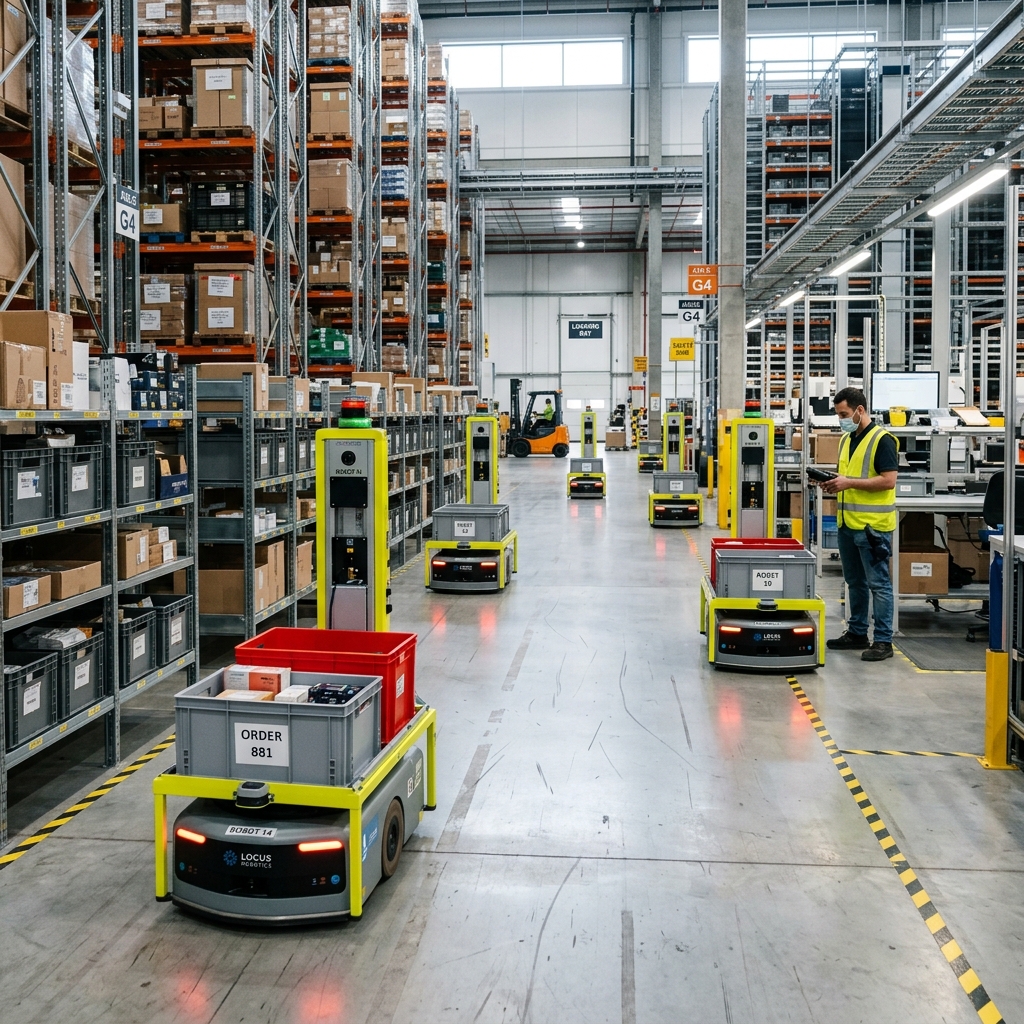
Every deployed machine can generate operational data.
Imagine a fleet of 10,000 autonomous machines.
Each machine encounters:
- Different floor layouts
- Different lighting
- Different obstacles
- Different human behavior
- Different failure conditions
- Different customer environments
That data can improve the system.
And the cycle repeats.
This is one reason scale can become particularly powerful in Physical AI.
10. The Hidden Moat: Operational Complexity
People often talk about AI models as the moat.
Sometimes they are.
But in physical businesses, the moat may instead be everything surrounding the model.
For example:
- Hardware integration
- Fleet management
- Maintenance networks
- Customer contracts
- Insurance
- Safety systems
- Deployment procedures
- Remote monitoring
- Proprietary operational data
- Regulatory approvals
- Supplier relationships
A competitor may be able to copy the software.
Copying the entire operating system around thousands of deployed machines is much harder.
The deeper the stack, the harder the business is to copy.
11. What Could Go Wrong?
Physical AI is not magic.
There are several serious challenges.
Hardware is expensive
Software can be copied almost infinitely.
Physical machines require:
- Manufacturing
- Shipping
- Batteries
- Repairs
- Spare parts
- Warehouses
- Technicians
Real environments are chaotic
A robot performing perfectly in a controlled demonstration is not the same thing as a robot operating 20 hours a day in a real facility.
Customers may resist change
Companies don't simply buy technology.
They buy risk.
A customer may ask:
“What happens when it breaks?”
That question can matter more than the AI benchmark.
Economics must actually work
If a robot costs $200,000 and replaces $50,000 of annual labor, the pitch becomes rather less magical.
The spreadsheet remains brutally indifferent to PowerPoint.
12. The Companies That Win May Look Weird
The most interesting Physical AI companies may not fit traditional categories.
They could simultaneously be:
Software company + robotics company + service company + financing company.
For example, a business could:
- Manufacture or source machines.
- Install them for customers.
- Charge monthly.
- Provide software.
- Monitor the fleet remotely.
- Maintain the machines.
- Guarantee a specific outcome.
That's much closer to an autonomous service utility than a traditional software startup.
And recurring revenue could become extremely valuable.
13. Robots as a Service
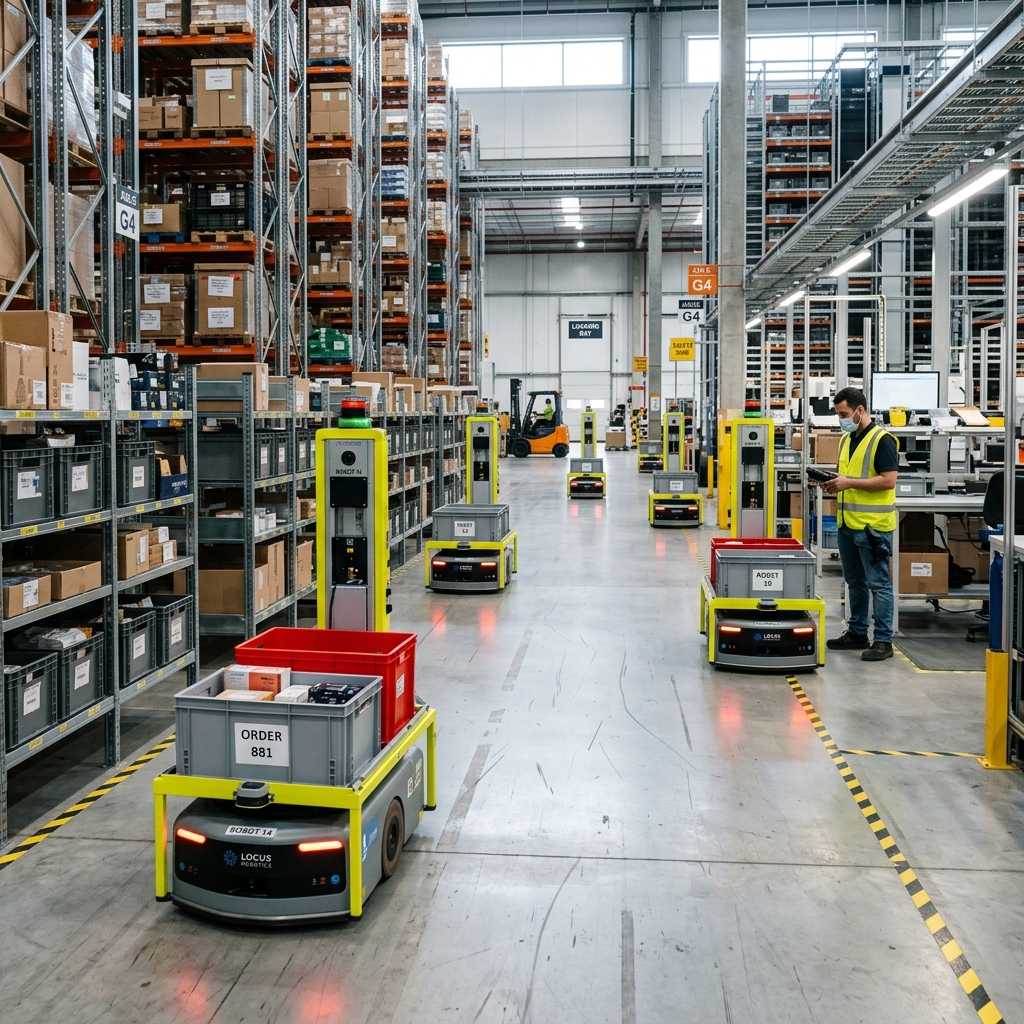
One particularly interesting model is Robotics-as-a-Service, or RaaS.
Instead of asking a customer to spend hundreds of thousands of dollars upfront, the company charges:
$X per month per location.
The customer gets the outcome.
The provider owns the hardware.
This can make adoption easier because the customer is effectively purchasing an operating expense rather than making a large capital investment.
It also creates recurring revenue for the robotics company.
Example
Instead of:
$150,000 robot
the offer might become:
$4,000/month autonomous cleaning service
with software, maintenance and monitoring included.
Now the sales conversation changes.
The customer is no longer asking:
“Should I buy a robot?”
They're asking:
“Is this cheaper and better than what I'm doing today?”
That's a much easier question to answer economically.
14. The Bigger Picture
The internet automated information.
Cloud computing automated infrastructure.
Generative AI automated parts of cognitive work.
Physical AI has the potential to automate portions of physical execution.
That is a much larger surface area.
Because physical work represents a massive part of economic activity.
The opportunity isn't necessarily:
“Replace every human.”
That's both unrealistic and unnecessarily simplistic.
The opportunity is:
Make every human dramatically more productive.
A technician with autonomous inspection tools could cover more sites.
A warehouse manager could supervise a larger operation.
A farmer could monitor more acreage.
A security operator could oversee more locations.
A facilities manager could operate buildings with fewer routine interventions.
The machine doesn't have to replace the human.
It just has to make the human economically powerful enough that the business model changes.
15. The Founder Question
For entrepreneurs, the important question isn't:
“What robot should I build?”
It is:
“What expensive physical outcome can I deliver better with machines?”
That's a much better starting point.
Start with the customer.
Find a painful recurring expense.
Understand exactly why it exists.
Then determine whether autonomy can change the economics.
Pain:
The customer spends too much money.
Task:
Identify the physical work causing the expense.
Automation:
Determine what portion machines can perform.
Outcome:
Define exactly what improves.
Contract:
Charge for the outcome.
Scale:
Repeat the deployment across customers and locations.
That sequence can turn robotics from an engineering project into a business.
16. The Opportunity Nobody Should Ignore
The most valuable AI businesses of the next decade may not always have the flashiest demos.
They may operate quietly.
In warehouses. Factories. Hospitals. Fields. Buildings. Ports. Distribution centers. Construction sites. Parking facilities. Industrial plants.
Their products may not go viral.
Their machines may not have millions of followers.
But if they can repeatedly transform:
$1 of human labor → $0.40 of automated cost
while maintaining or improving quality, they have created something extremely powerful.
And unlike another software feature, the economic impact can be measured directly in the physical world.
The Bottom Line
The first phase of the AI revolution taught machines to think about work.
The next phase will increasingly teach machines to do work.
That transition will be slower, messier and more capital-intensive than software AI.
It will also create enormous opportunities.
The biggest winners may not necessarily build the most sophisticated robot.
They may build the company that figures out how to deploy thousands of machines into boring industries, sell the resulting outcome on recurring contracts, collect the operational data, and steadily improve the economics.
In other words:
The future of AI may be less about artificial intelligence replacing the office worker and more about artificial intelligence becoming the operating system for the physical economy.
And if that happens, some of the world's most valuable AI companies might have remarkably unglamorous names.
They might clean floors.
Move boxes.
Inspect pipes.
Watch warehouses.
Harvest crops.
Maintain buildings.
Nothing particularly cinematic.
Just machines quietly doing economically valuable things at scale.
Which, inconveniently for everyone who wanted the future to involve flying cars, may be where the really big money is.
Key Takeaways
| Idea | Why It Matters |
|---|---|
| Physical AI | Brings AI into the physical economy |
| Outcome-based selling | Customers buy results, not robots |
| Human + machine teams | Automation can multiply worker productivity |
| Boring industries | Often contain huge repetitive labor markets |
| Deployment | May matter as much as underlying AI |
| Operational data | Can create a powerful improvement flywheel |
| RaaS | Turns expensive hardware into recurring revenue |
| Distribution | Can become a major competitive moat |
| Reliability | Matters more than impressive demos |
| Economics | Ultimately determine whether automation wins |
[!IMPORTANT]
One Sentence to Remember
Don't build a robot looking for a problem. Find an expensive physical problem, then build the autonomous system that makes it cheaper.