Loading SaaS profile...
Loading SaaS profile...
An AI-powered QA teammate that uses autonomous agents to simulate real user behavior and automate end-to-end software testing.
Simulates real user behavior across web apps and APIs using parallel AI agents Performs automated UI/UX audits, regression testing, and functional validation Conducts security analysis for common vulnerabilities (OWASP) and accessibility checks (WCAG) Integrates into existing CI/CD workflows and CLI environments Generates structured, plain-language bug reports with evidence and recommended fixes
Reduces testing cycles from weeks to minutes through massive parallelization Eliminates the need for manual, rigid script creation by using natural language descriptions Identifies edge cases and real-world issues that deterministic scripts often miss Scales elastically to evaluate larger applications by fanning out tasks across multiple agents Provides a non-intrusive way to augment existing test suites (Playwright, Cypress, etc.) with autonomous coverage
Category: Utilities & System Tools
Team Size: 1-10
Visit Website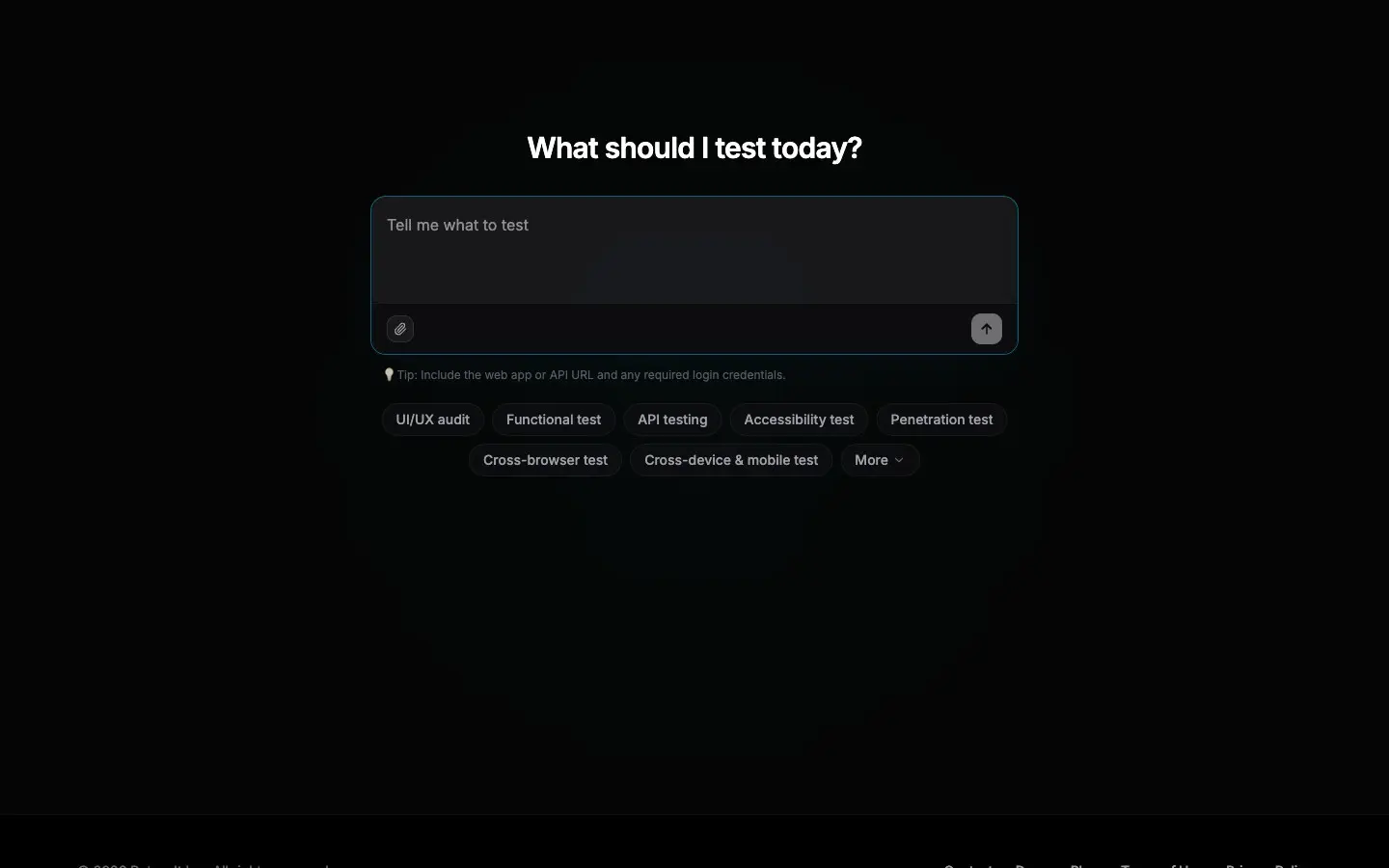
Bytesalt is an AI-native quality assurance platform that replaces weeks of manual testing with minutes of automated, parallelized coverage. By deploying autonomous agents that simulate real user behavior, the platform inspects web applications and APIs for functional, visual, and security issues. Designed to complement deterministic test suites like Playwright and Selenium, Bytesalt fills coverage gaps and provides actionable, plain-language bug reports that include remediation guidance.
Bytesalt was founded in 2025 in the United States to address the speed discrepancy between modern AI-driven code generation and traditional, slow software validation methods. The platform aims to provide engineering teams with a 'QA teammate' that can keep pace with accelerated development cycles.