
Loading SaaS profile...
Loading SaaS profile...
Continuous compliance and security automation for modern enterprises.
Automates evidence collection by connecting directly to cloud infrastructure, identity providers, and software services for continuous monitoring. Provides a centralized, dynamic Trust Center that displays real-time security posture and compliance status to auditors and customers. Supports 20+ compliance frameworks, including SOC 2, ISO 27001, HIPAA, PCI DSS, and GDPR, with automated mapping of controls. Uses AI-driven risk assessments and vulnerability monitoring to predict compliance gaps and provide proactive remediation guidance. Integrates seamlessly with CI/CD pipelines and DevOps tools to embed security and compliance checks directly into development workflows.
Continuous monitoring replaces the 'point-in-time' audit stress with a state of perpetual audit readiness, reducing friction for security teams. Automation-first architecture significantly lowers the manual effort required for evidence gathering, allowing companies to scale their compliance programs efficiently. Deep integrations with the existing tech stack ensure that security controls are validated in real-time, preventing compliance drift over time. Unified GRC platform centralizes documentation, vendor risk management, and policy enforcement, providing a single source of truth for security posture. Proven ability to scale from small startups to large enterprises makes it a reliable partner for fast-growing companies navigating increasing regulatory complexity.
Category: Business & Operations
Team Size: 26-100
Visit Website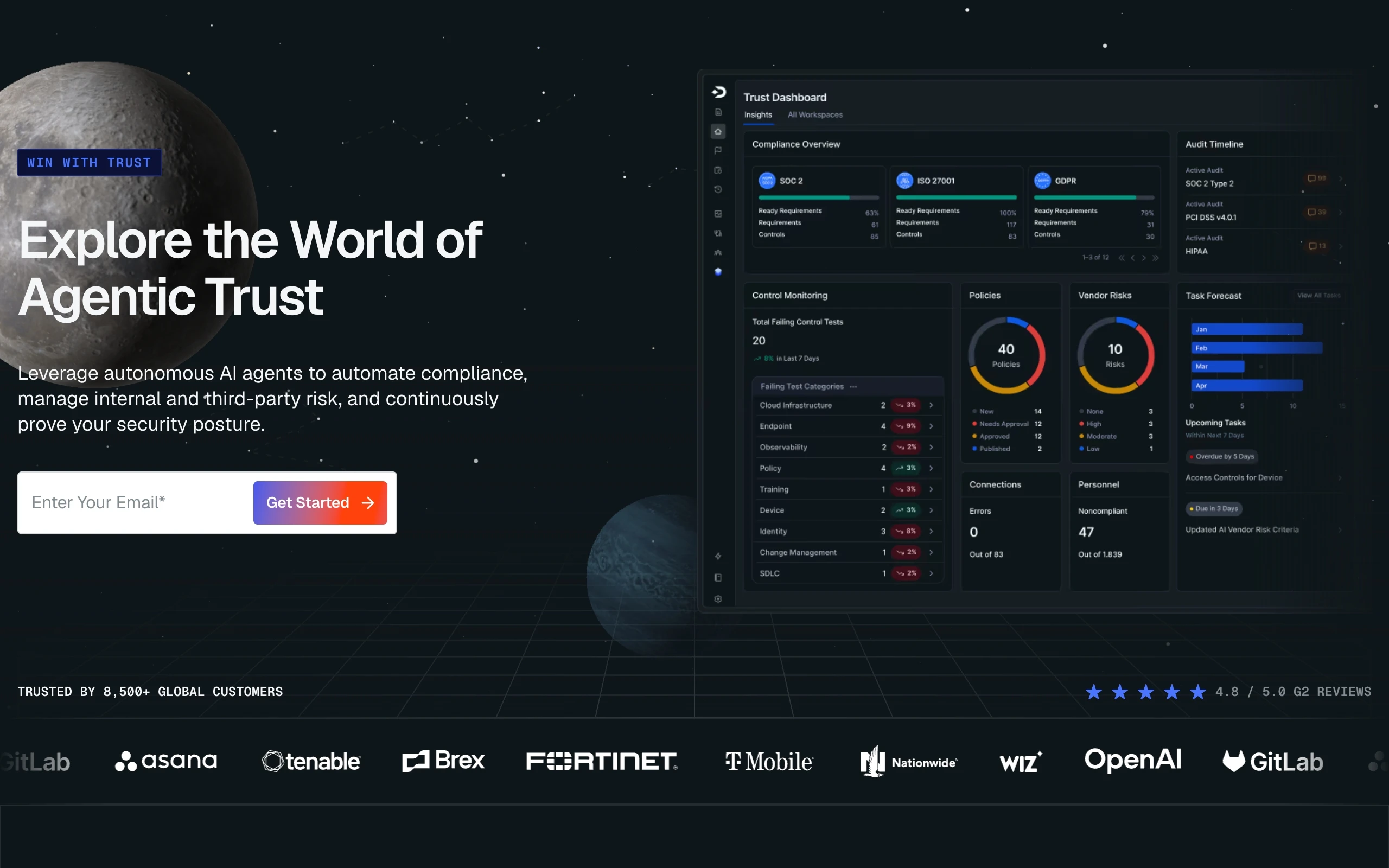
Drata is a leading trust management platform that automates the governance, risk, and compliance (GRC) process for organizations. By continuously monitoring security controls and streamlining evidence collection, Drata helps companies maintain audit readiness for frameworks like SOC 2, ISO 27001, HIPAA, and GDPR. The platform integrates directly with an organization's tech stack to replace labor-intensive manual compliance workflows with real-time, automated monitoring.
Drata was founded in 2020 in San Diego by Adam Markowitz, Daniel Marashlian, and James Loper, who experienced the frustrations of manual audit processes at their previous startup. Recognizing that compliance was a major hurdle for fast-growing tech firms, they built an automation-led platform that grew rapidly to unicorn status within two years. Today, it is a leading player in the GRC sector.