
Loading SaaS profile...
Loading SaaS profile...
Unified cloud directory platform for identity, access, and devices.
Delivers a cloud-based Directory-as-a-Service for IT administrators. Manages user identities and access across varied operating systems. Secures network access through single sign-on and multifactor authentication. Eliminates the need for legacy on-premise Active Directory servers.
Centralizes identity and device management into a single, unified control plane Modernizes IT infrastructure by replacing legacy on-premises Active Directory systems Supports heterogeneous environments with cross-OS device management and protocol support Increases security posture through FIDO2-compliant passwordless auth and conditional access Scales easily to support remote workforces and distributed global teams
Category: Business & Operations
Team Size: 26-100
Visit Website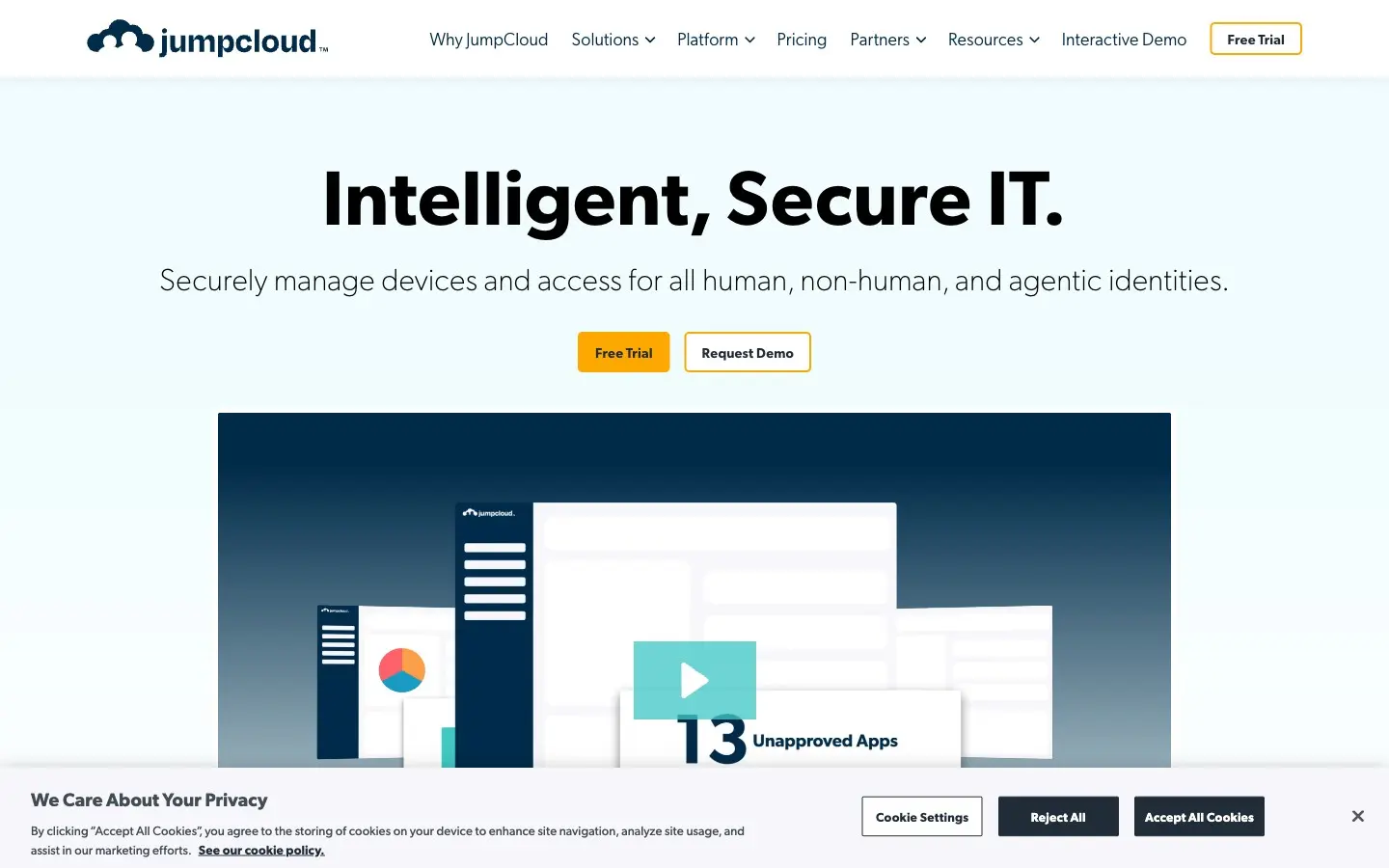
JumpCloud is a unified, cloud-based directory platform that centralizes identity, access, and device management for both human and non-human identities. It enables IT teams to securely manage user identities, provide single sign-on (SSO), enforce multi-factor authentication (MFA), and perform unified endpoint management (UEM) across Windows, macOS, Linux, iOS, and Android. The platform is designed to replace traditional on-premises directory services like Microsoft Active Directory with a modern, cloud-native architecture.
JumpCloud was founded in 2012 by Rajat Bhargava and Larry Harris in Boulder, Colorado. The founders sought to modernize corporate directory services for the cloud era, addressing the mismatch between legacy on-premises identity management and the rise of diverse, cloud-centric IT environments. The platform launched its first MVP in early 2013, focusing on cloud LDAP for Linux server management before expanding into a full-scale Open Directory Platform.