Loading SaaS profile...
Loading SaaS profile...
Deploy, operate, and maintain high-volume critical infrastructure projects with a complete asset lifecycle management cloud.
Centralizes high-volume site deployment documentation, permissions, and compliance metrics Tracks structural asset deployment workflows and construction milestones dynamically across thousands of locations Monitors project budgets, vendor expenditures, and dynamic capital allocation metrics in real time Coordinates distributed field service dispatch operations and mobile tracking routines Generates predictive analytical forecasting maps regarding infrastructure deployment velocity and performance timelines
High-Volume Optimization: Managing identical operational processes hundreds of times beats treating every asset like an isolated bespoke build. Lifecycle Centralization: Connecting planning, field construction, and downstream operations avoids critical technical document silos. Predictive Forecasting: Built-in business intelligence tools accurately identify infrastructure project deployment bottlenecks before they break timelines. Mobile Ecosystem Alignment: Synchronizing native mobile application data dynamically keeps off-site contractors and C-suite executives perfectly aligned.
Category: Business & Operations
Team Size: 201-500
Visit Website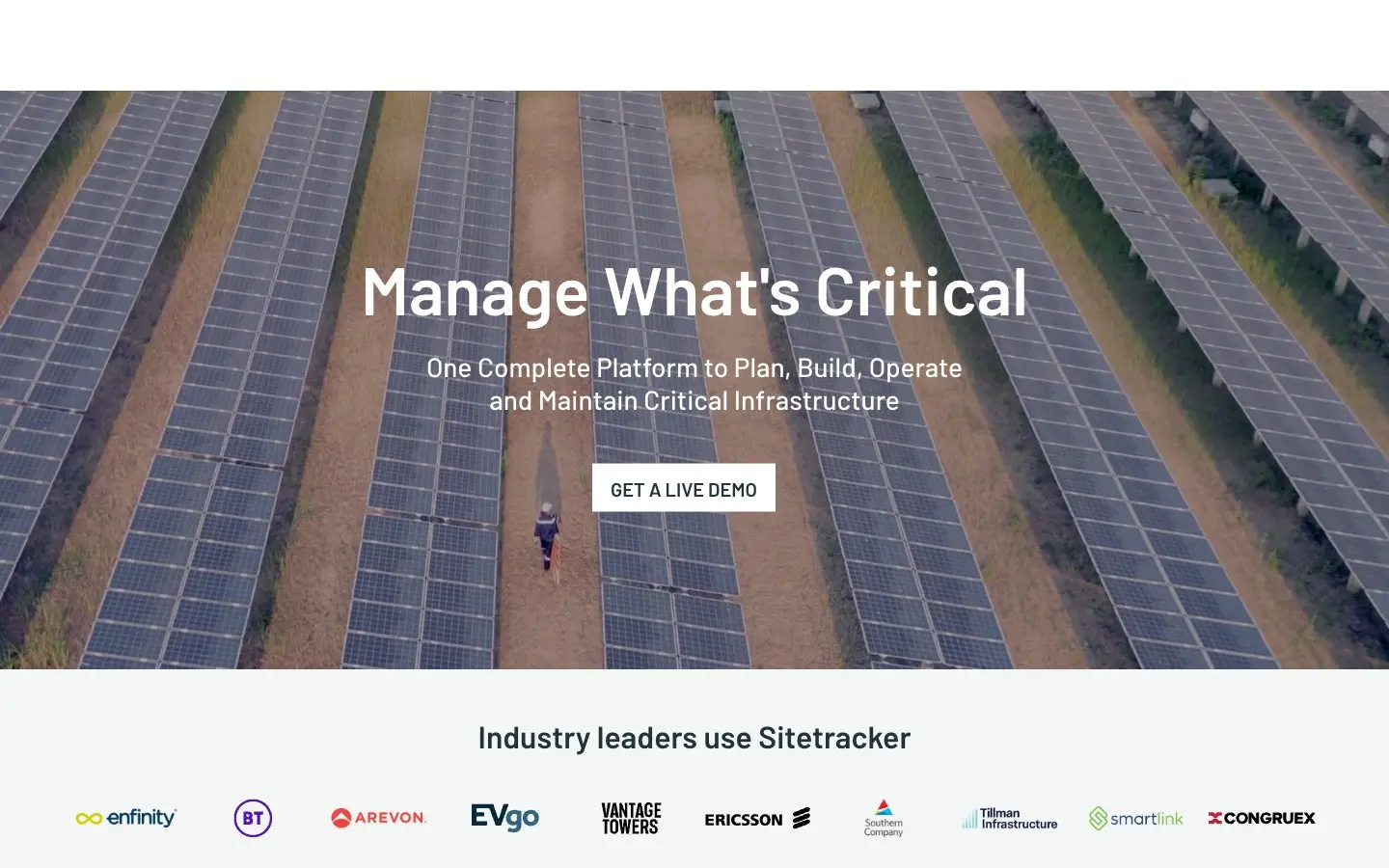
Sitetracker is an enterprise-grade asset lifecycle management platform engineered specifically for organizations managing massive portfolios of critical infrastructure. The software centralizes and standardizes operational workflows across digital infrastructure, energy transition, utilities, and telecom markets—empowering teams to seamlessly coordinate high-volume site acquisitions, permitting pipelines, project field crews, and financial budgeting metrics from a single source of truth.
Sitetracker was established in 2013 by technical co-founders Timothy May and Brett Cupta in Palo Alto, California. Recognizing that the exploding international transition toward cellular network densification and alternative energy structures was causing standard project tracking spreadsheets to completely break down under massive volume scales, they engineered a purpose-built cloud platform built exclusively to manage high-volume distributed assets.